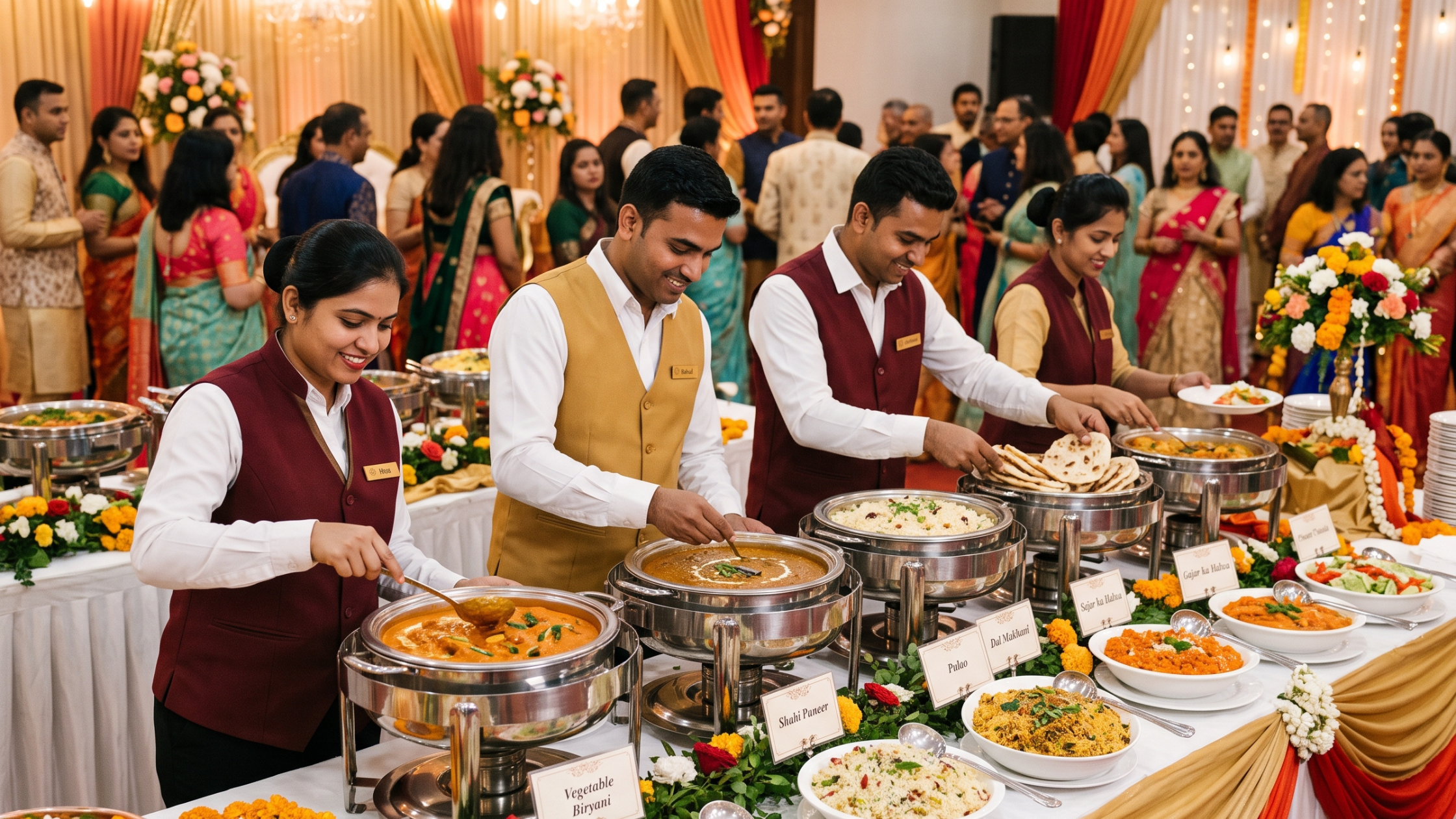
Anyone can cook good food for ten people. The real test begins when the guest list crosses a hundred. At large events—weddings, corporate gatherings, community functions—the biggest challenge isn’t the menu. It’s ensuring that the last plate served tastes as good as the first.
At Thali Moments, large-scale catering isn’t about shortcuts. It’s about systems, timing, and respect for food.
Start with the Right Menu Design
Not all dishes age the same. Some foods hold heat and texture better than others. A good caterer designs menus keeping this in mind.
For example, varan, amti, and slow-cooked sabzis retain flavour beautifully, while over-fried items or cream-heavy gravies lose quality quickly.
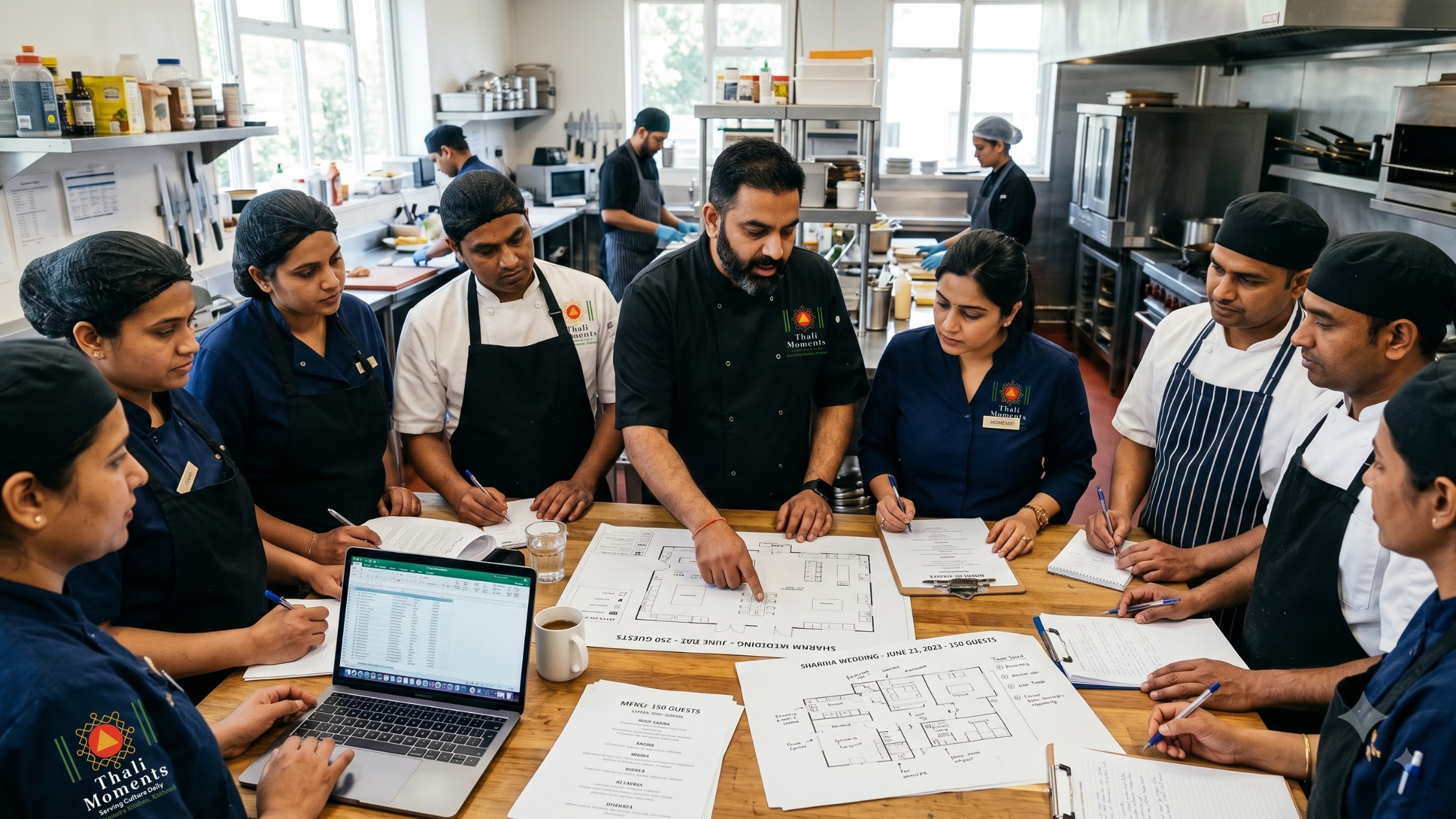
Menu planning is the first step in keeping food fresh—not the last.
Cook in Batches, Not All at Once
One of the most common mistakes at large events is cooking everything together. Food that sits too long loses aroma, texture, and soul.
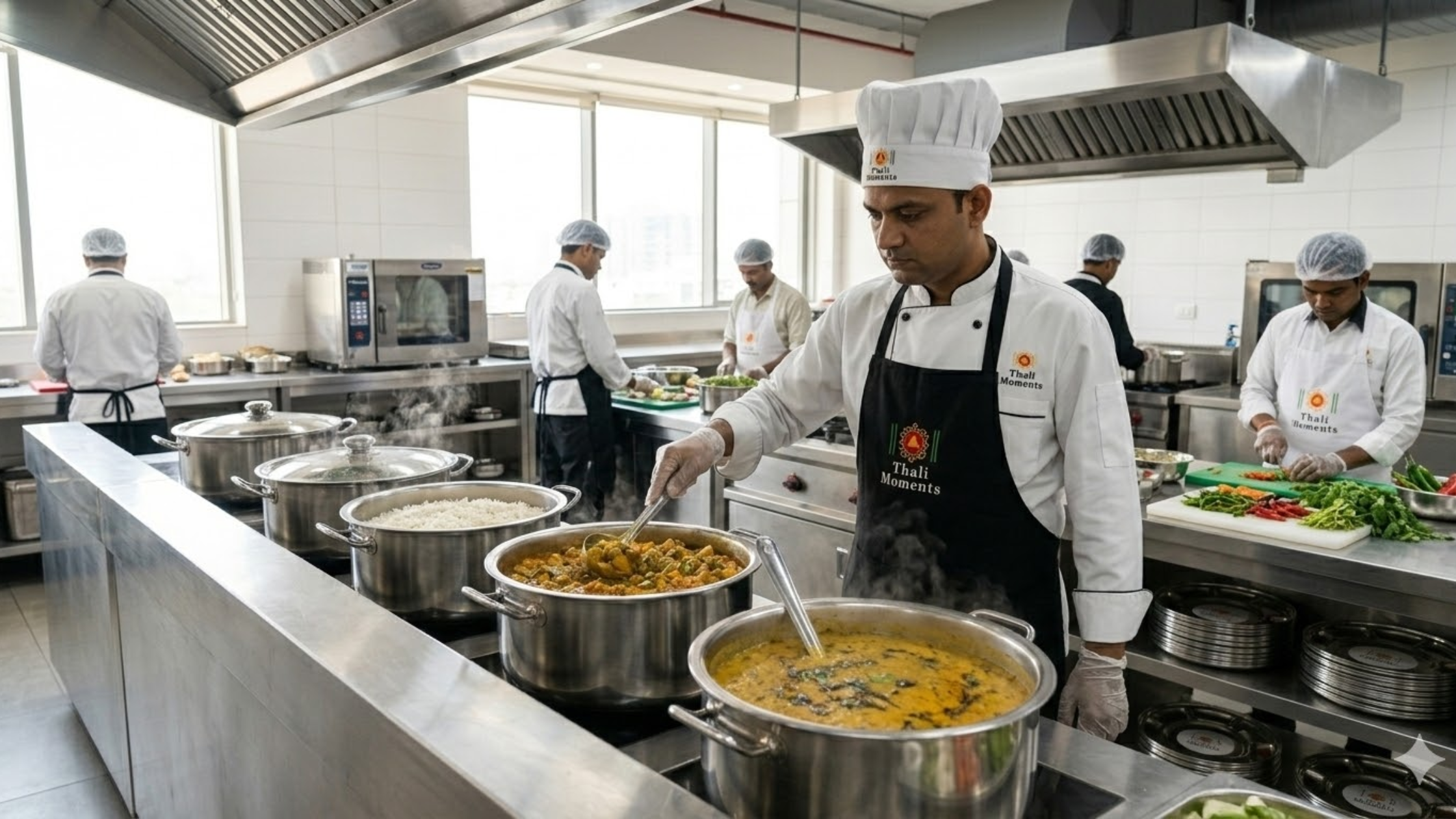
Experienced caterers stagger cooking. Rice, dals, and gravies are prepared in planned batches so that replenishments are always hot and fresh.
This requires manpower, planning, and discipline—but the difference is instantly noticeable.
Temperature Control Is Non-Negotiable
Large kitchens rely on insulated vessels, heavy-bottomed handis, and controlled heat zones.
Food isn’t just kept hot—it’s kept at the right temperature. Overheating ruins flavour. Underheating affects safety and texture.
For Maharashtrian food especially, gentle heat preserves balance. Too much flame, and the subtleties disappear.
Transport Matters More Than You Think
For off-site events, transport is where most food quality is lost.
At Thali Moments, food is packed in insulated containers, transported in planned sequences, and unpacked only when the service line is ready.
The goal is simple: the food should reach the plate, not wait for it.
Smart Service Flow
A chaotic serving line kills food quality faster than bad cooking.
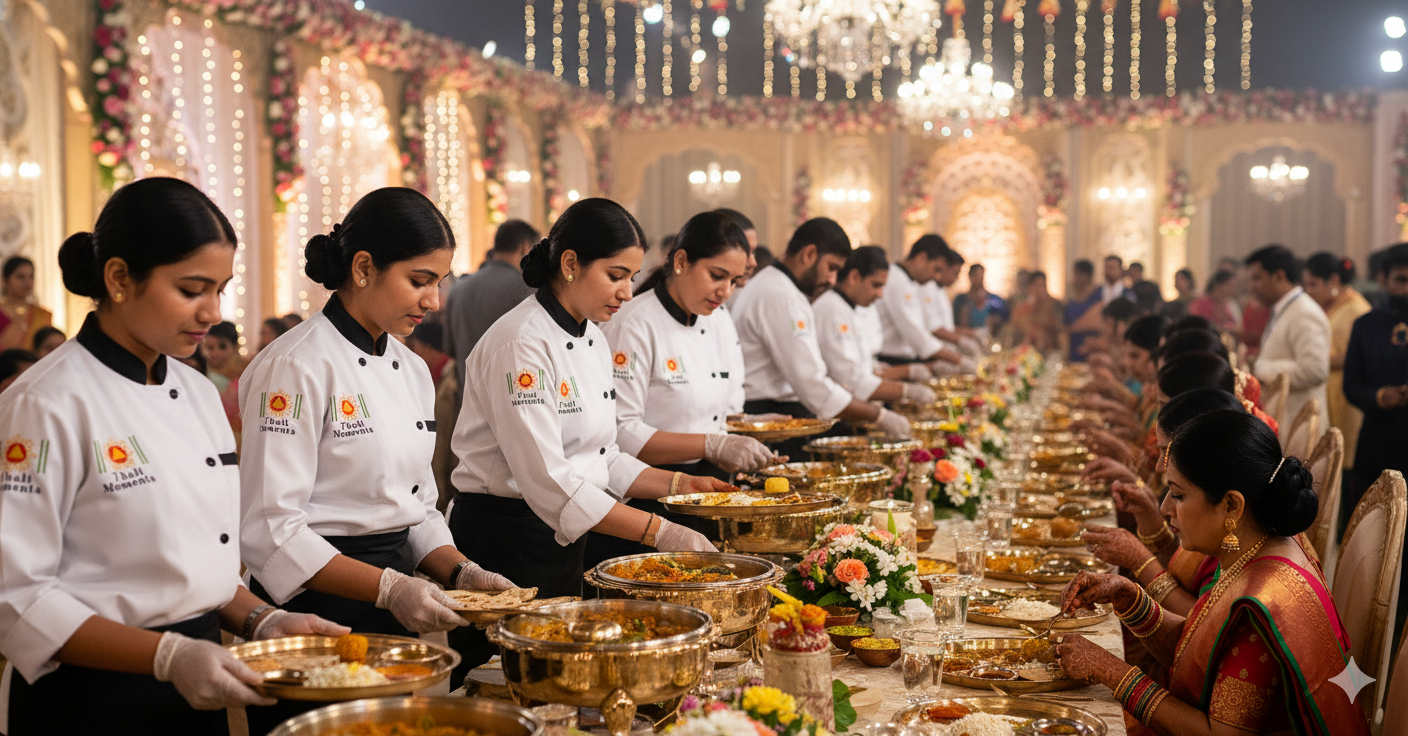
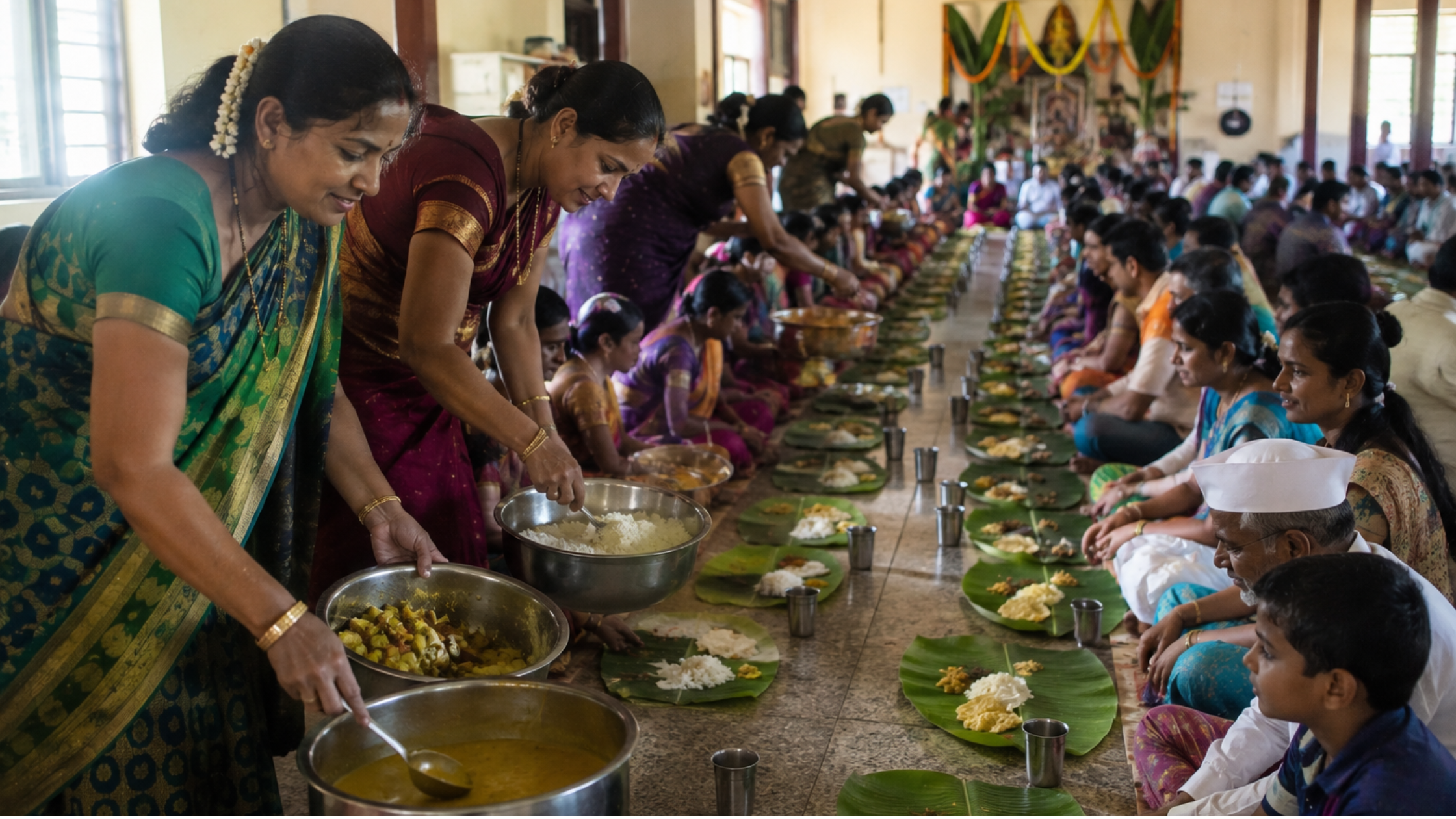
Well-trained staff, clear sequence, and controlled portions ensure that food moves continuously—not in bursts.
This keeps dishes fresh, plates warm, and guests satisfied.
The Final Check: Taste, Always
Before service begins, senior kitchen members taste every dish again. Adjustments are made quietly—salt, spice, consistency.
Large-scale catering demands this last-mile attention. Without it, even the best preparation falls flat.
The Truth About Good Event Food
When guests say, “Food was hot and tasted fresh,” they’re really complimenting the process behind it.
At scale, freshness is not accidental. It’s engineered—with care.
Bonus: The Symbolic Trio
A classic Maharashtrian thali always includes:
- Toop (Ghee) – for purity and richness
- Papad – for crunch
- Buttermilk (Taak) – to aid digestion
These aren’t placed in a fixed spot but usually float around the upper-mid section of the plate.
Thali Moments: Where we make every thali a ceremony
As a leading name in Maharashtrian catering in Pune, we follow this thali layout in every event — whether serving 50 guests or 500.
Our chefs prepare each dish fresh, the way families remember it:
- Varan with the right touch of ghee
- Puran poli as soft as festival mornings
- Bhakri puffed and light
- Thecha fiery and full of character
Authenticity isn’t just a selling point — it’s our identity. A thali isn’t just served — it’s arranged. A little care, a little tradition, and a lot of love turn a simple plate into an experience.Once you know where each item goes, you don’t just serve food — you serve heritage.
So when people search for the best catering services near me, we want Thali Moments to stand out not only for taste but also for respecting tradition.
Share On