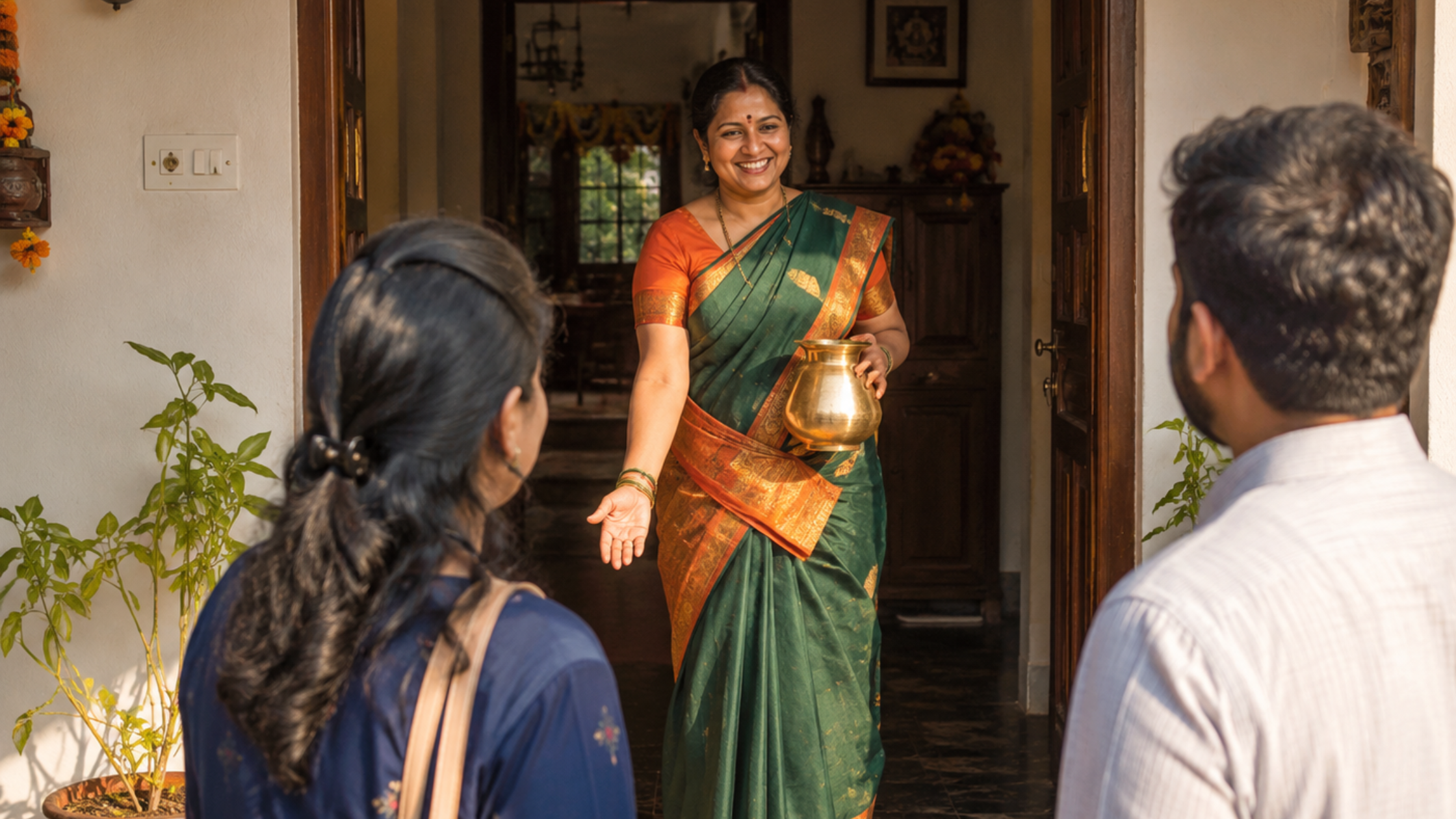
“Pahile paani ghya…” (“First, have some water.”)
If you’ve ever stepped into a Maharashtrian home, you’ve probably heard these words before you’ve even settled into your seat.
Within minutes, a glass of water is followed by tea, homemade snacks, and the inevitable question, “Ajun thoda ghya na?” (“Please have a little more.”)
Even after politely insisting you’re full, another serving somehow appears on your plate.
It isn’t persuasion.
It’s affection.
Across Maharashtra, hospitality has never been measured by the size of the house or the number of dishes served. Instead, it has always been measured by one simple question:
“Did our guest leave happy?”
Long before hospitality became an industry, it was simply a way of life. These traditions continue to shape family gatherings, festive meals, weddings, and even modern Maharashtrian catering today.
Atithi Devo Bhava: A Guest Is Like God
The philosophy of “Atithi Devo Bhava” isn’t unique to Maharashtra, but Maharashtrian homes have quietly lived by it for generations.
Guests are never considered an inconvenience.
They are welcomed as blessings.
Whether someone arrives with prior notice or unexpectedly in the afternoon, the first instinct is never, “Do we have enough food?”
It’s,
“Let’s make something quickly.”
Sometimes that means fresh pohe.
Sometimes it means hot tea with homemade chivda.
Sometimes yesterday’s vegetables are transformed into a delicious new meal.
Hospitality isn’t about abundance.
It’s about making people feel they belong.
Serving Guests Before Yourself
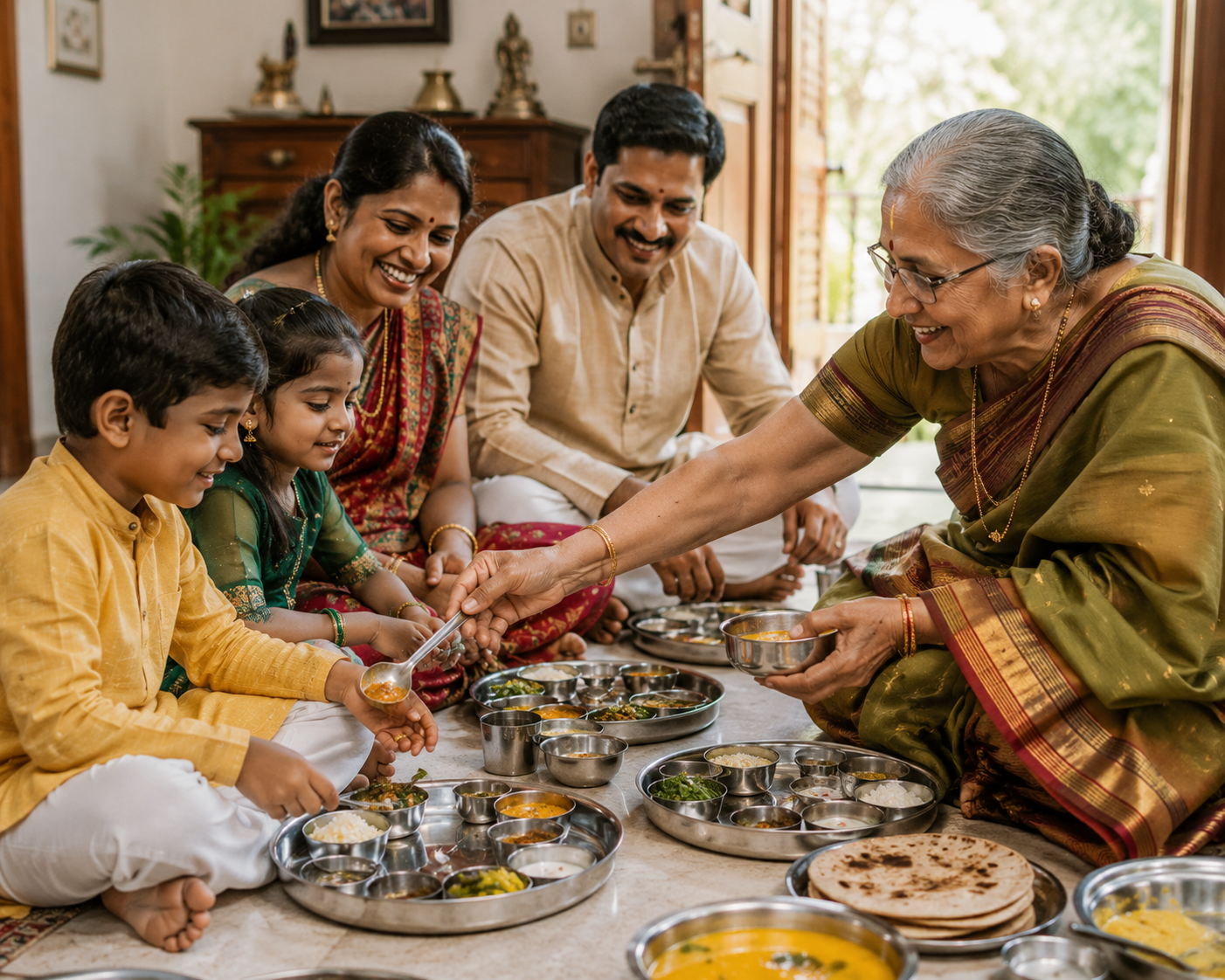
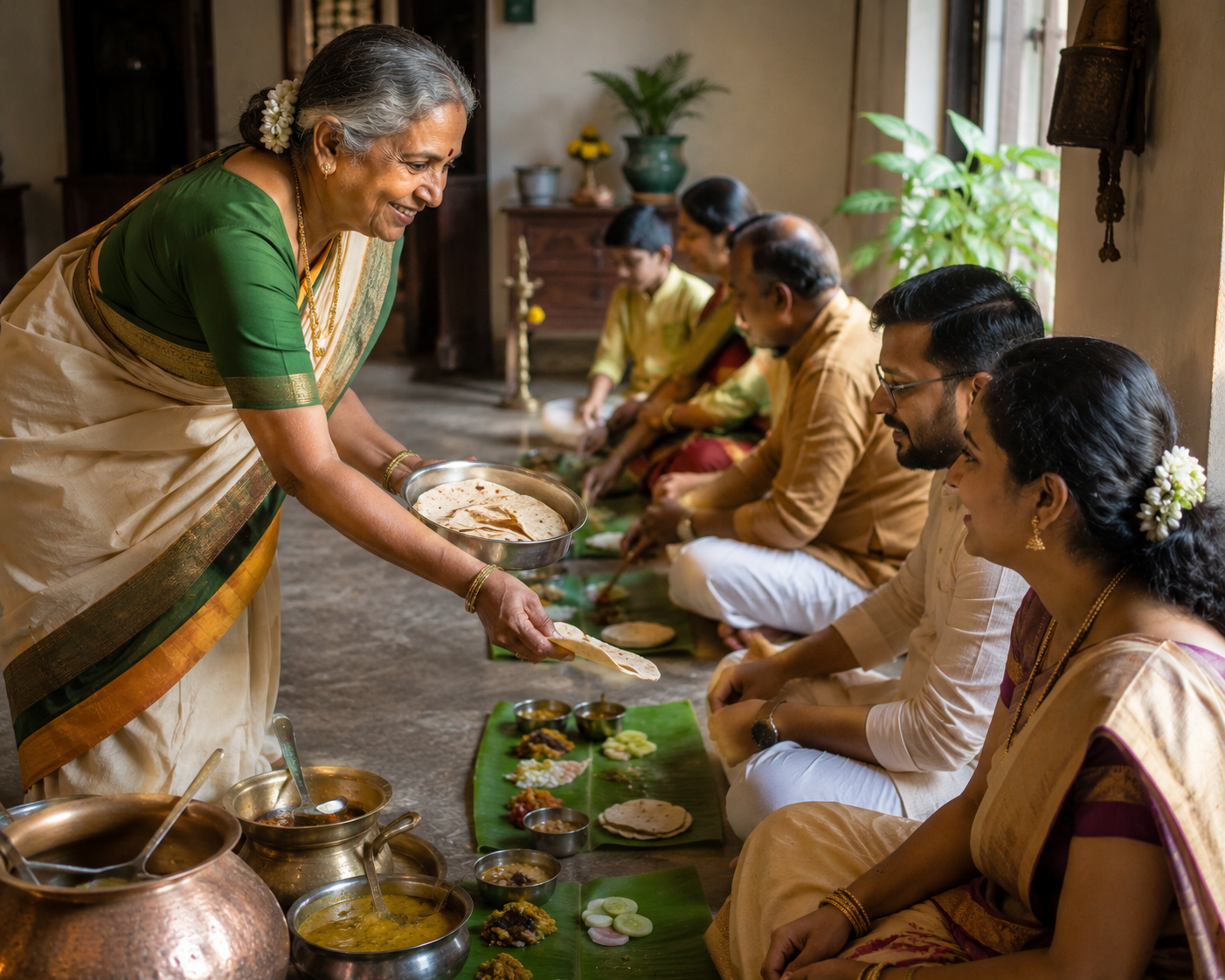
One of the most beautiful customs still found in many Maharashtrian households is that the host eats last.
The family’s attention remains on the guests.
Is everyone comfortable?
Does anyone need more bhaji?
Should another chapati be served?
Has everyone tasted the sweet?
Only after every guest is satisfied do the hosts sit down to eat.
This quiet act reflects something deeply rooted in Maharashtrian culture:
Serving is considered an honour, not a duty.
Why "One More Serving" Is Almost Mandatory
Anyone who has attended a Maharashtrian wedding or visited a relative knows that saying “No, thank you” rarely ends the conversation.
“Thoda ajun ghya.”
“Just one more puran poli.”
“A little more amti?”
To an outsider, it may seem persistent.
To Maharashtrians, it’s simply how affection is expressed.
Food becomes the language of care.
The second helping isn’t about quantity. It’s reassurance that the guest is truly welcome.
The Importance of Serving Fresh and Hot
In many Maharashtrian homes, food is rarely prepared hours in advance and left waiting.
Chapatis are served fresh.
Bhakris come straight off the tava.
Dal is tempered just before lunch.
Rice is fluffed moments before serving.
The belief is simple:
Hot food carries warmth beyond temperature.
It tells the guest,
“You were worth waiting for.”
This philosophy continues to influence traditional Maharashtrian wedding catering, where freshly prepared food remains one of the most appreciated aspects of a meal.
Every Place on the Plate Has a Purpose
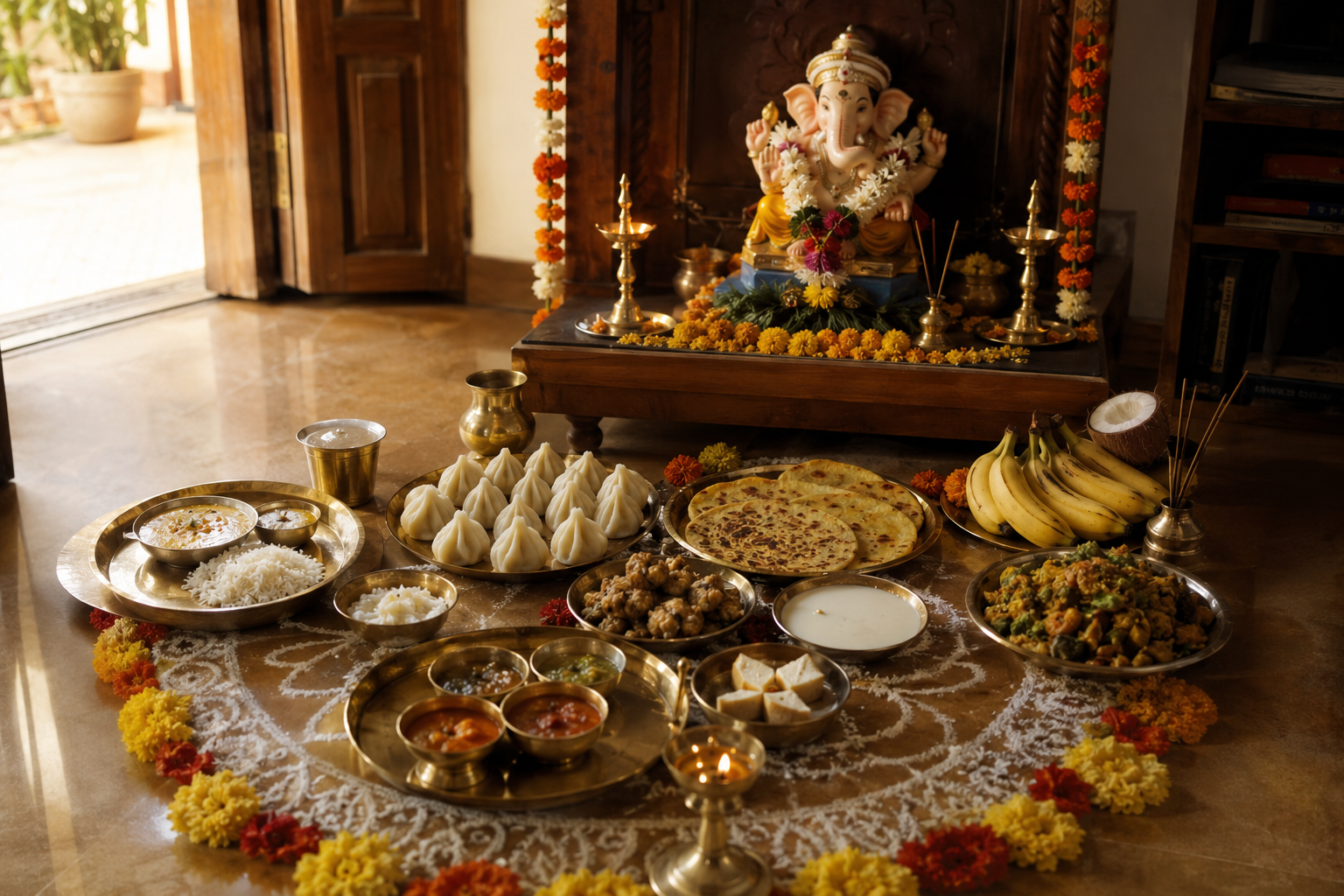
A Maharashtrian thali isn’t simply arranged for visual appeal.
It follows a thoughtful order developed over generations.
Salt sits at the top.
Pickles and chutneys stay along the edge.
Dry vegetables and curries each have their place.
Rice occupies the centre.
The sweet is served separately, allowing every flavour to shine.
This arrangement isn’t accidental.
It balances taste, digestion, and convenience while reflecting the discipline found in traditional Maharashtrian kitchens.
Carrying Traditions into Weddings and Celebrations
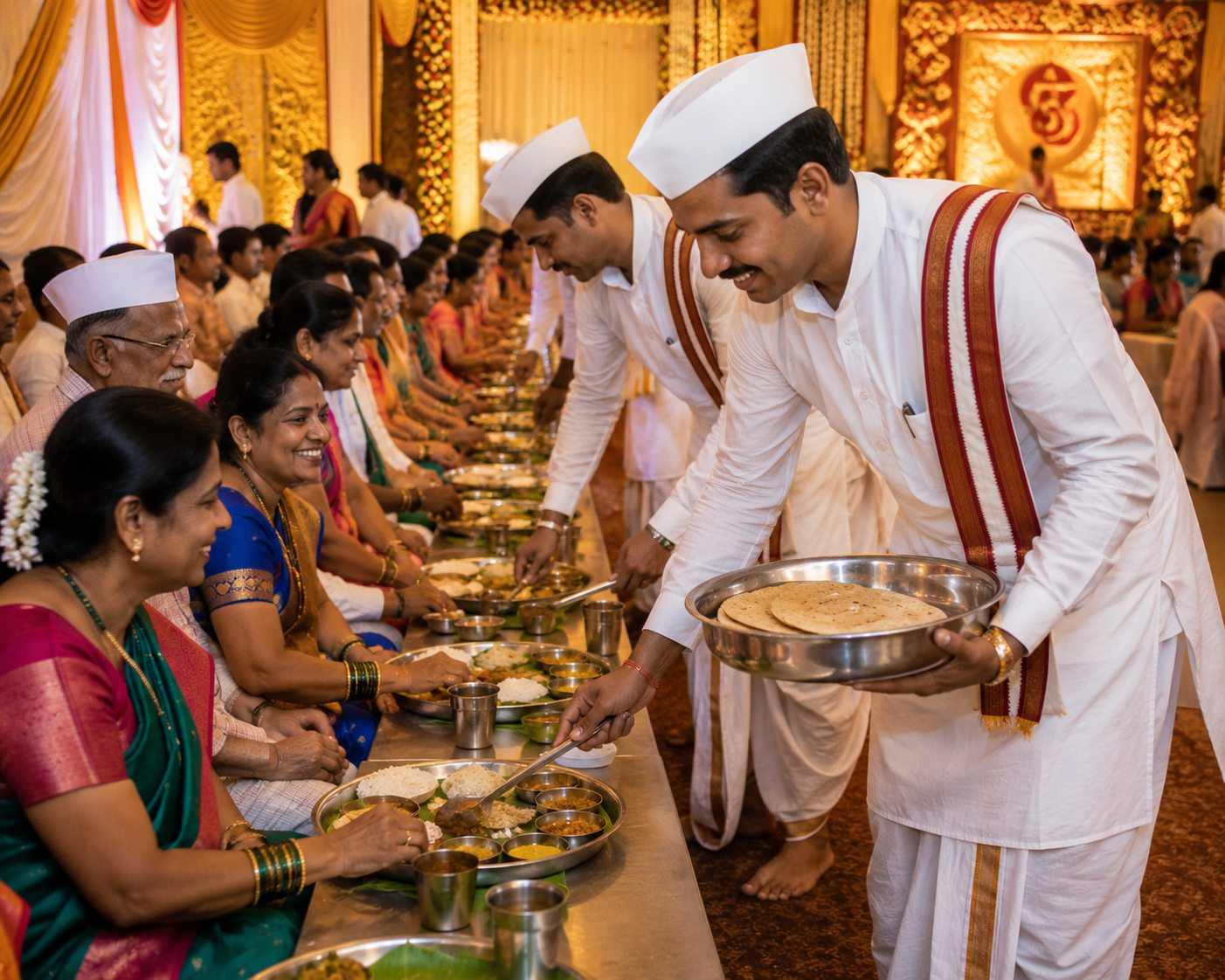
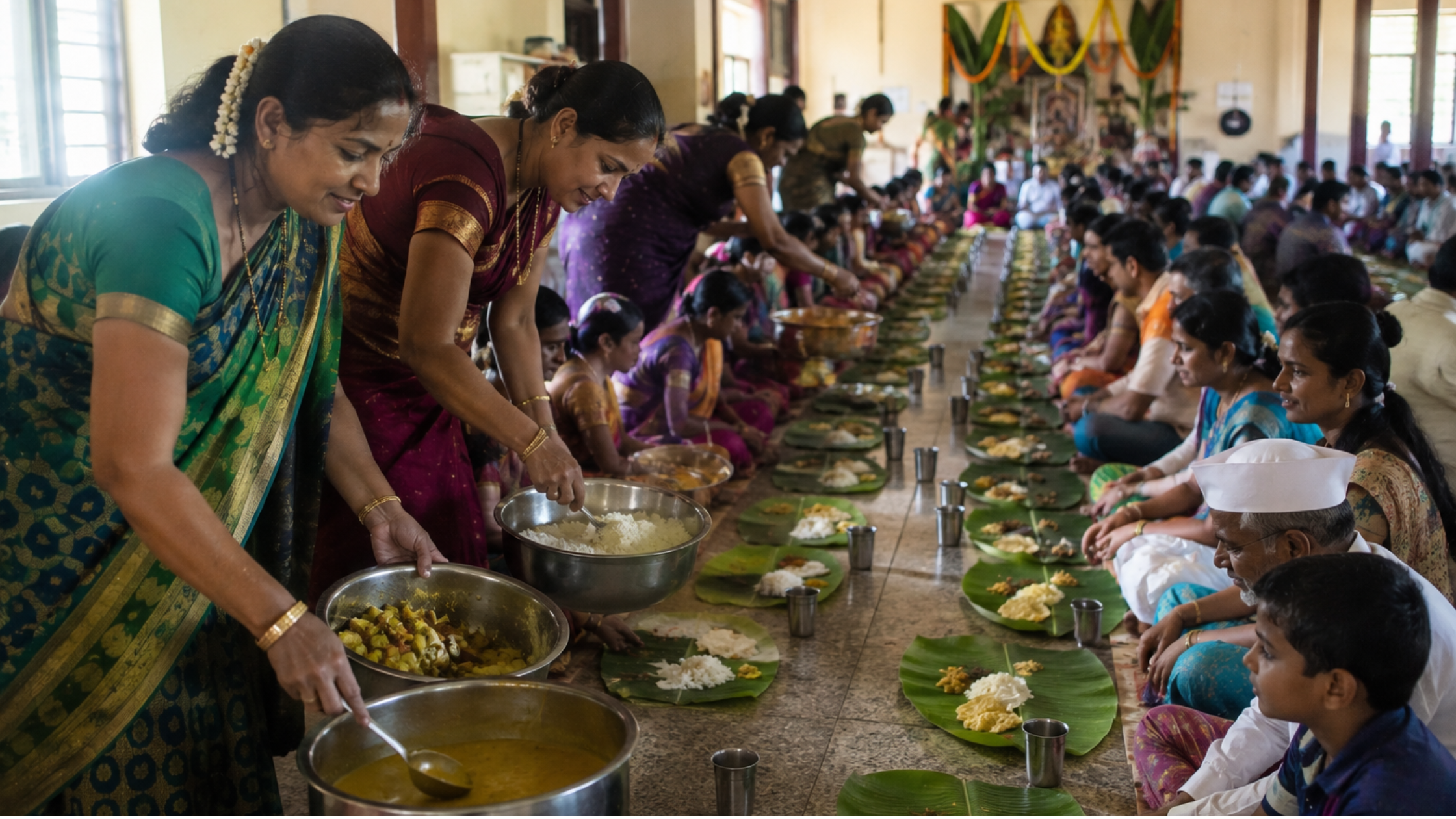
These customs don’t disappear when meals become larger.
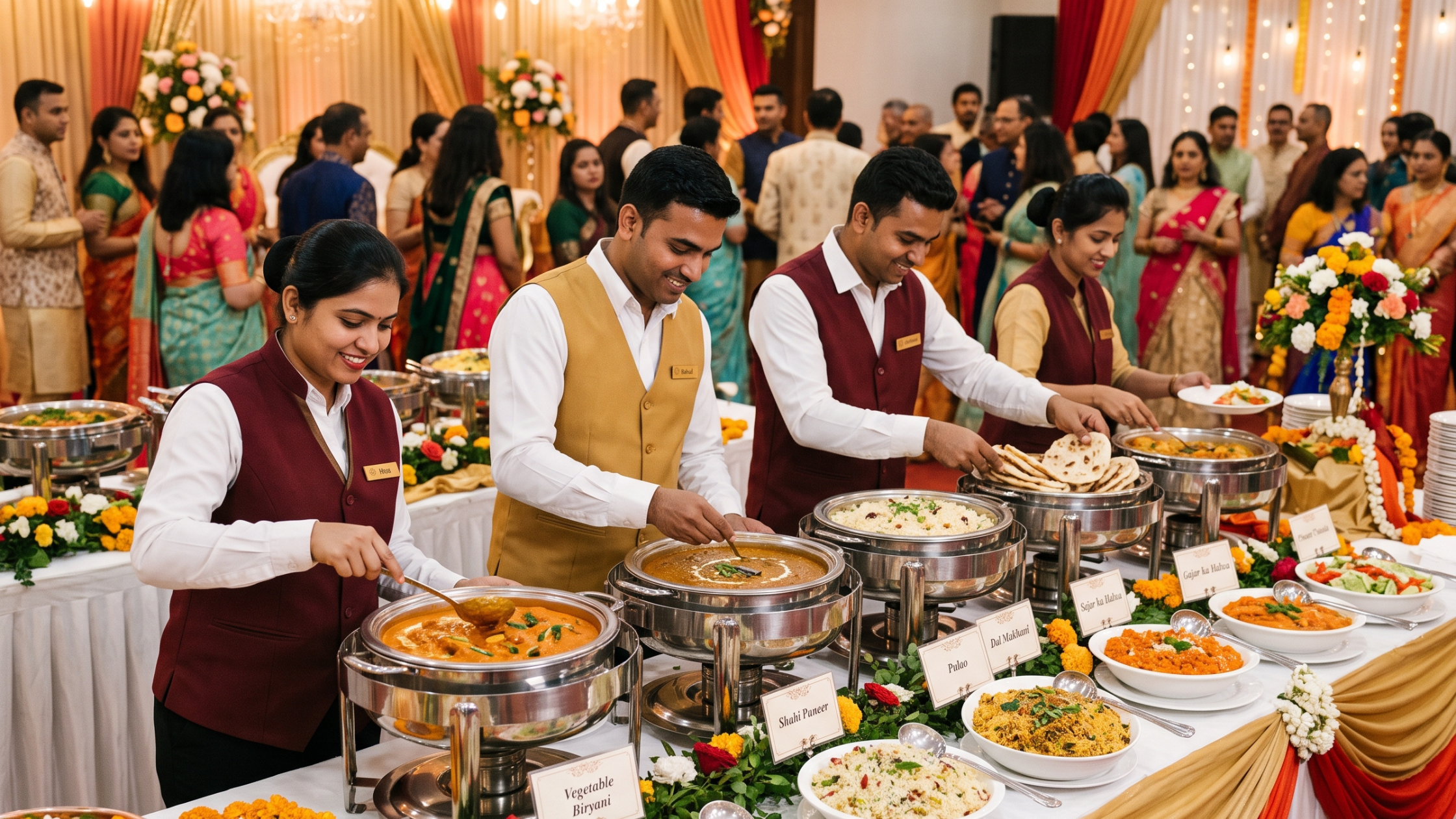
In weddings, naming ceremonies, anniversaries, and community gatherings, the same principles remain.
Guests are welcomed warmly.
Food is served generously.
Refills are offered with genuine enthusiasm.
The goal isn’t to impress with extravagance.
It’s to ensure every guest leaves with fond memories of both the meal and the people behind it.
This is why authentic Maharashtrian catering continues to resonate across generations. It preserves not just recipes, but values.
Why These Traditions Still Matter Today
Modern lifestyles have changed the way we gather.
Meals are often quicker.
Families are smaller.
Schedules are busier.
Yet these traditions continue because they answer something timeless.
Everyone wants to feel welcomed.
Everyone remembers being cared for.
Long after guests forget the exact menu, they remember the warmth with which they were served.
Hospitality leaves a deeper impression than decoration ever can.
The Thali Moments Approach
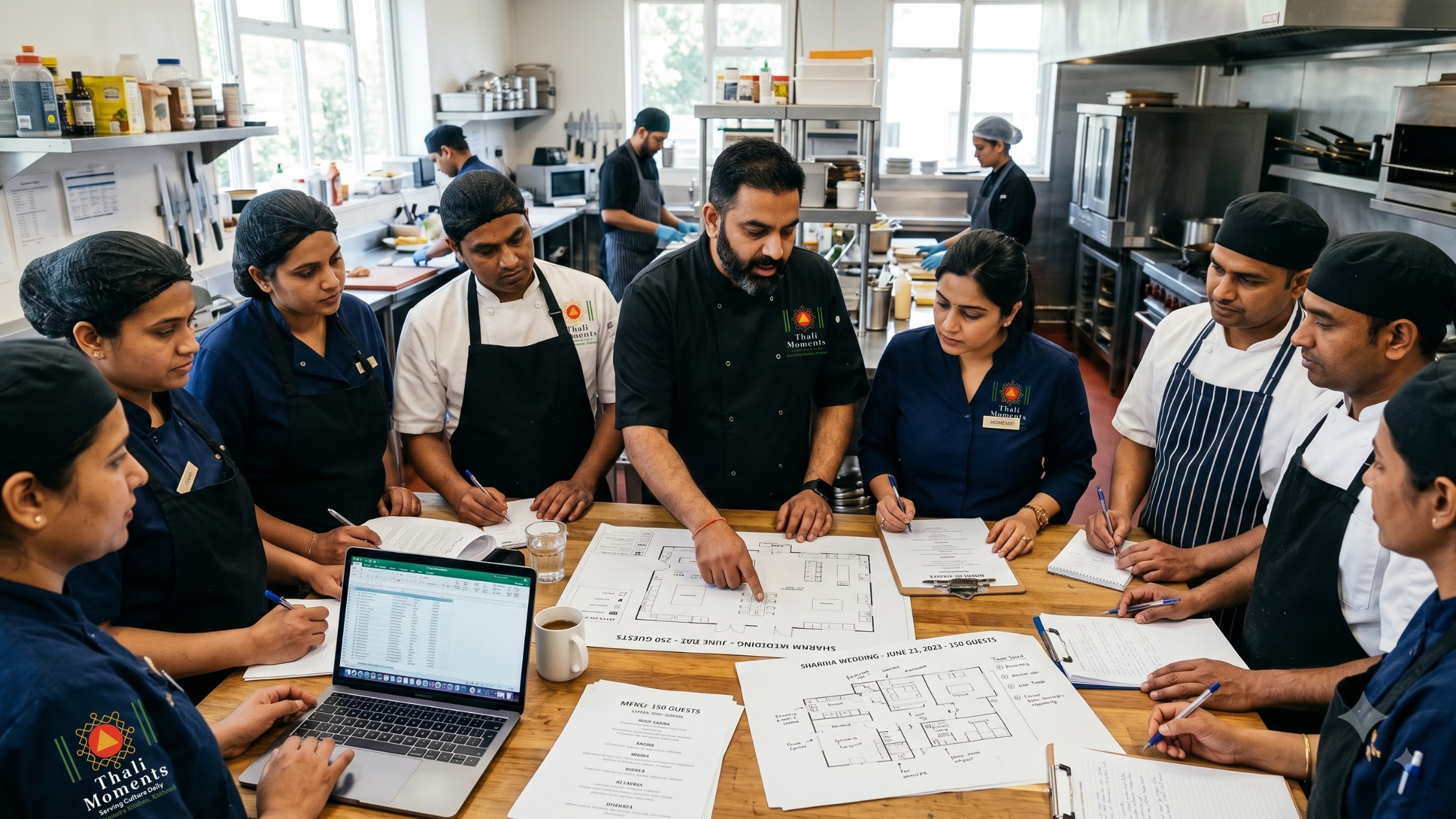
At Thali Moments, these traditions inspire every event we cater. Whether we’re serving a wedding, a family celebration, a corporate gathering, or customised meal trays, our approach begins with the same principle found in every Maharashtrian home: every guest deserves to feel genuinely welcomed.
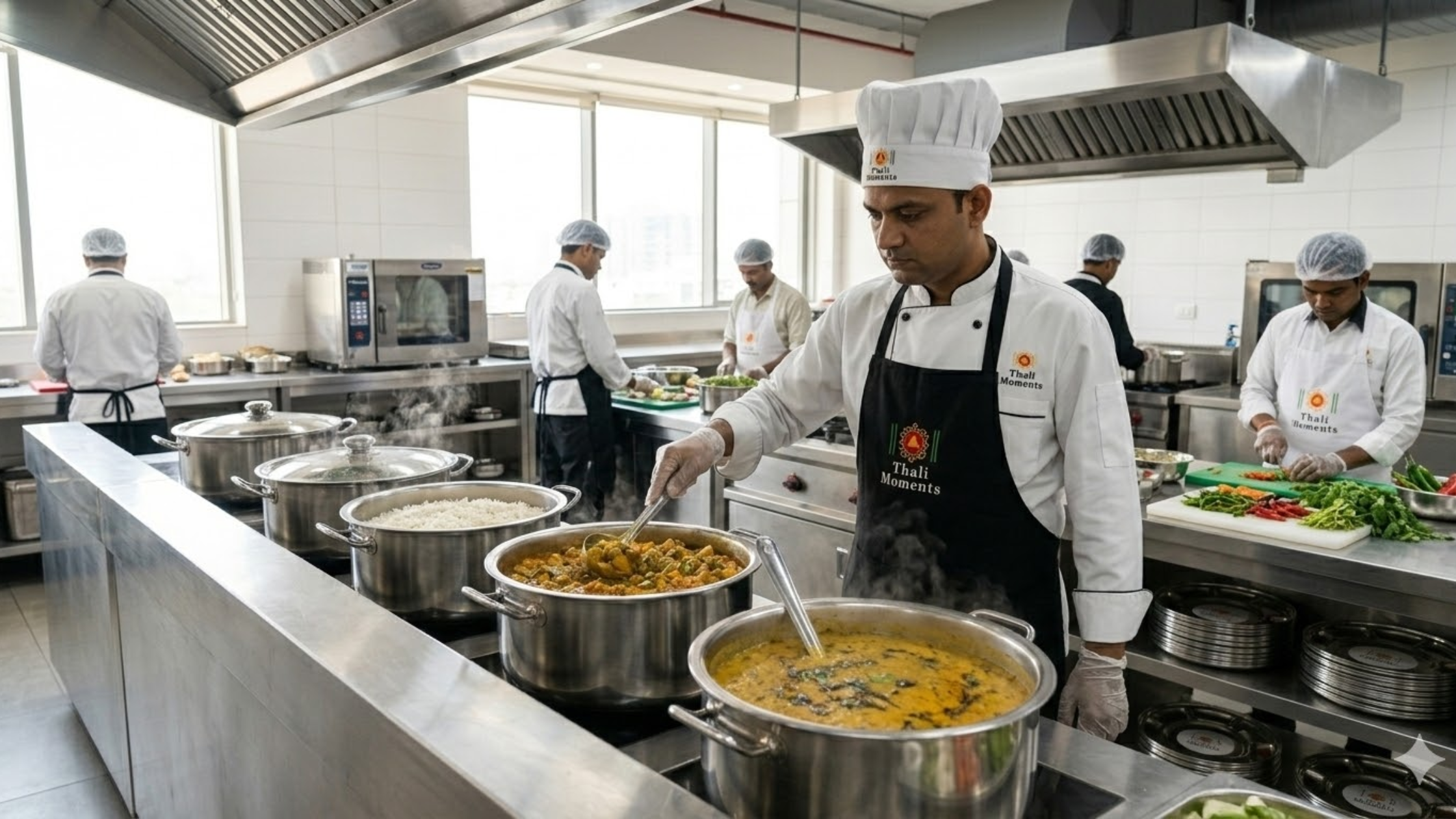
Our team prepares authentic Maharashtrian and Indian cuisine using fresh ingredients, traditional recipes, and cooking methods that never rely on soda or harmful additives. Every meal is prepared in hygienic kitchens by medically certified and trained staff, with strict cleanliness protocols followed from preparation to service. Combined with timely delivery and thoughtfully curated menus, we strive to offer more than great food—we create an experience that reflects the warmth and generosity of Maharashtrian hospitality.
Because at Thali Moments, serving food isn’t just our profession.
It’s our way of welcoming people.
Also Read
Share On