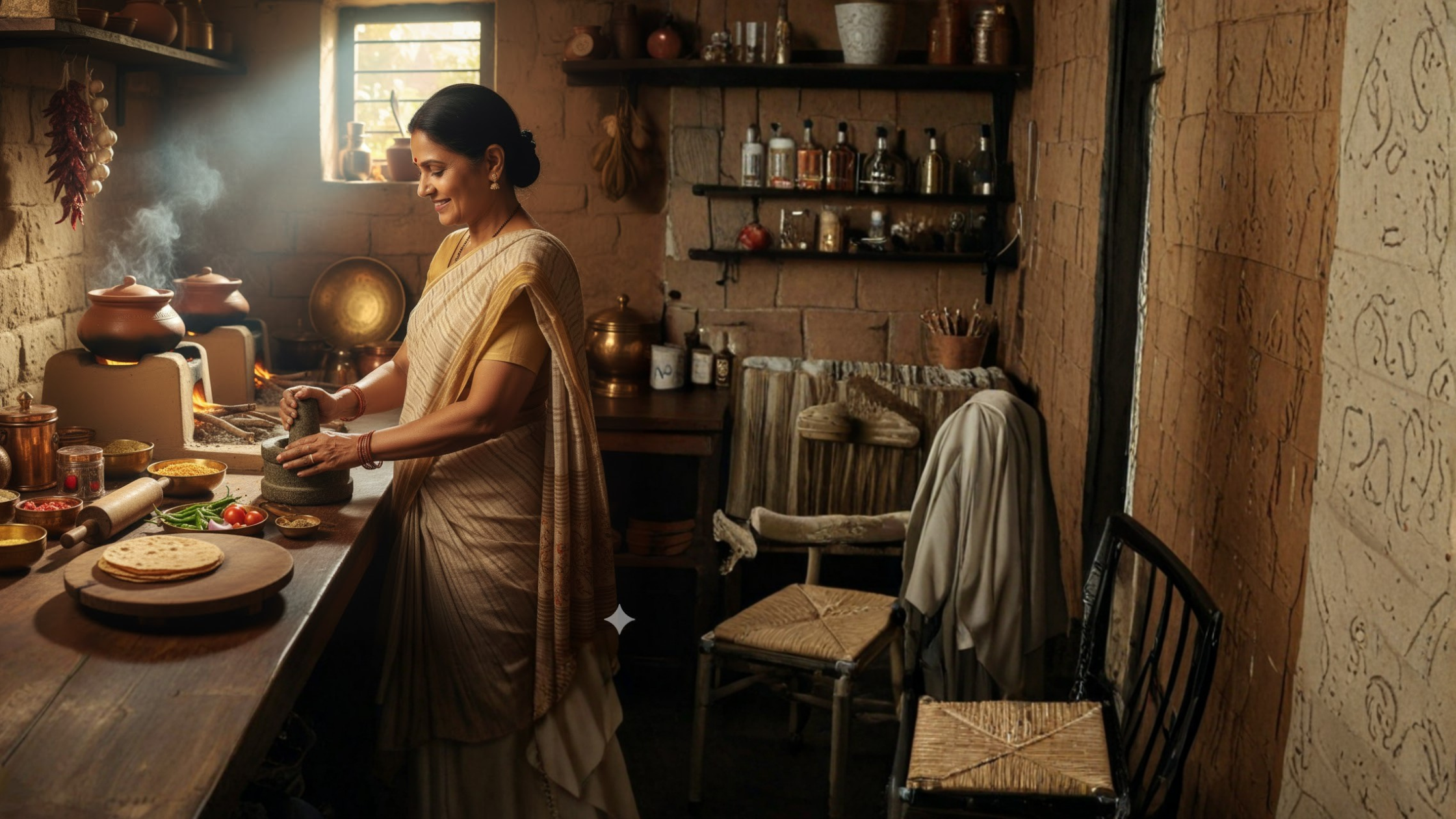
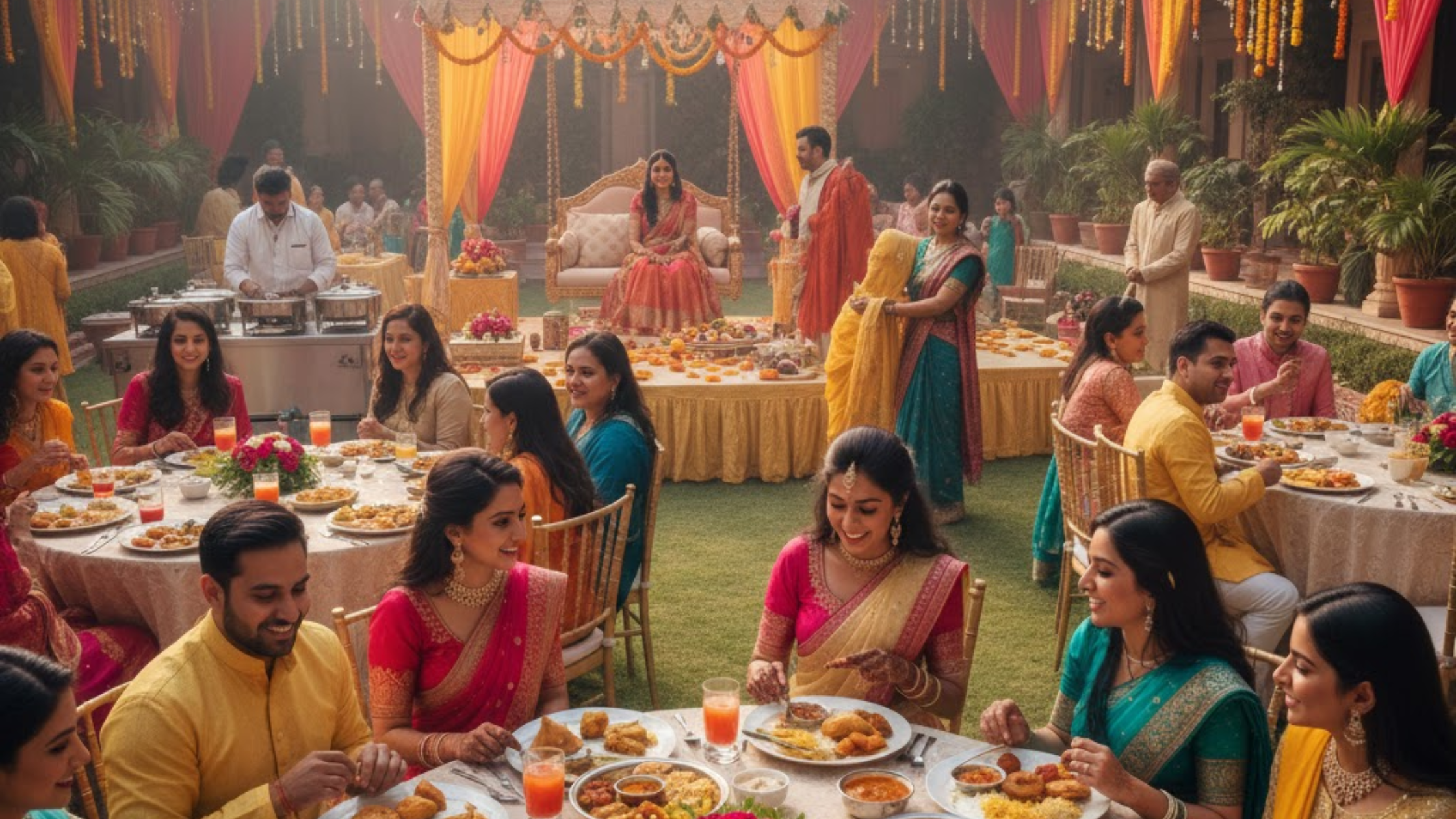
A Maharashtrian thali is more than a meal. It’s a ceremony.
Every item has meaning, every position has purpose, and every plate tells a story passed down through generations. When served correctly, the thali feels balanced, welcoming, and deeply rooted in tradition. Whether you’re hosting guests at home, planning an event, or searching for the best catering services near you in Pune, understanding the layout of a Maharashtrian thali makes all the difference.
Let’s break down the art of serving an authentic thali — exactly how it’s done in Maharashtrian homes and wedding feasts.
Why Placement Matters in a Maharashtrian Thali
The structure of a thali isn’t random. It’s shaped by:
- Digestive logic
- Ayurvedic balance
- Ease of eating
- Cultural rituals
Each item sits where it does for a reason — to complement flavors, balance temperatures, and create a rhythmic eating experience.
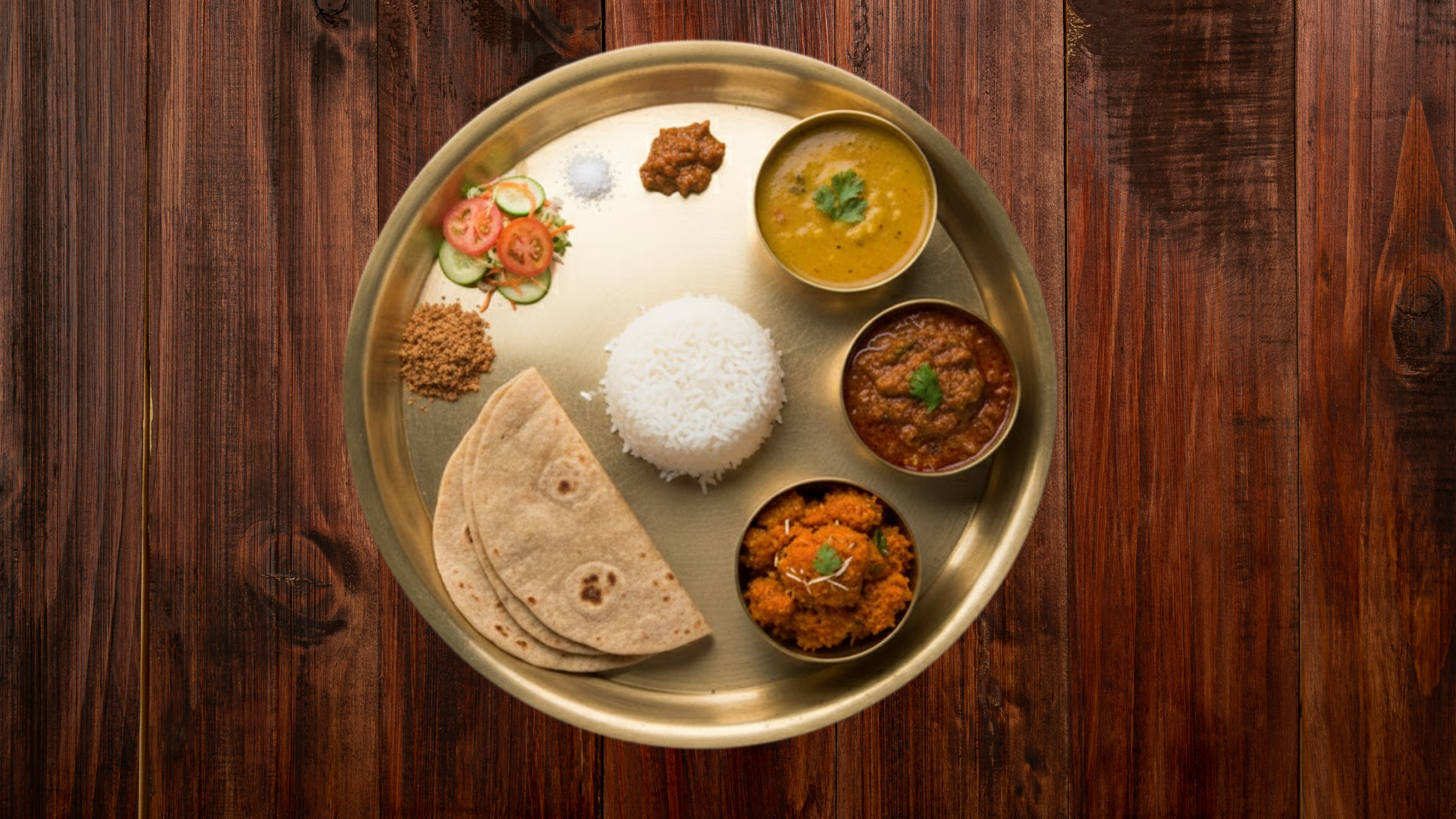
Top Section of the thali - The Fresh & Flavorful Starters
This part of the plate is made to wake up your palate with a combination of some subtle and some rich aromas. Most items here are also not ‘cooked’ so as to offer a natural taste to the taste buds.
Top Center – Salt + Lemon Wedge
Salt is placed at the very top as a symbol of purity and completeness.
A lemon wedge sits beside it to adjust taste as needed.
Top Left – Koshimbir (Salad)
A fresh mix of cucumber, tomato, or carrot.
Placed left because it’s eaten first to stimulate digestion.
Top Right – Pickle, Thecha & Chutneys
Strong flavors stay on the right side so they can be added in small portions.
These are enhancers — not mains.
Left Side: Dry Chutneys
The left middle section carries the dry chutneys or the occasional non gravy bhaji, such as:
- Batatyachi bhaji
- Cabbage sabzi
- Bharli vangi
Dry items go here because they’re easy to pinch with chapati and don’t spread across the plate.
Right Side: Gravies, Dal & Cooling Add-ons
Wet dishes sit on the right to prevent mixing into the rice and bread.
Common items include:
These are scooped easily toward the center where rice is placed.
Bottom Center: Rice — The Heart of the Thali
Rice sits closest to the eater because it pairs with multiple items — dal, gravies, ghee, and buttermilk.
This structure also keeps the rice contained and easy to mix.
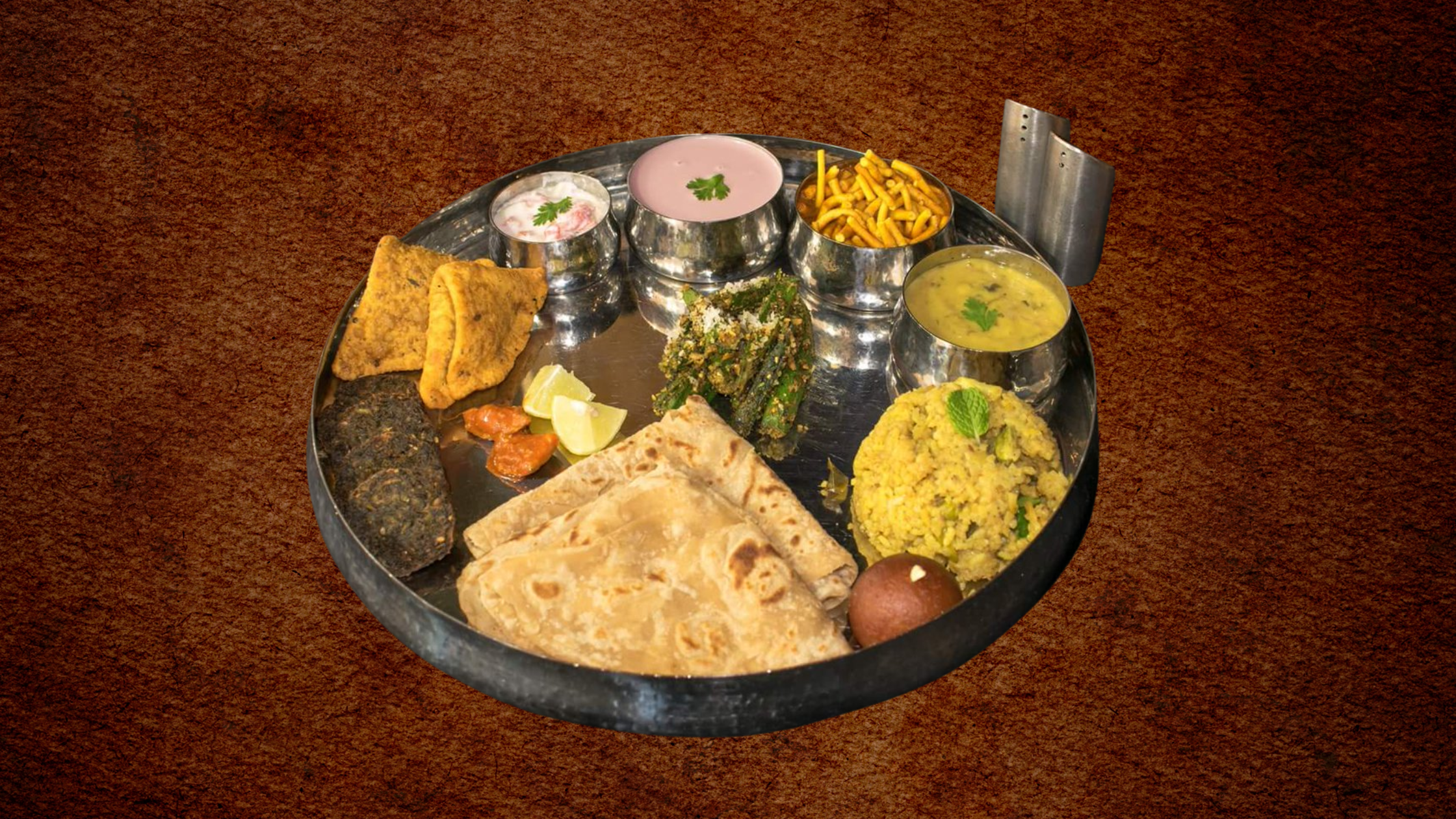
Bottom Right: The Sweet Dish
Maharashtrian thalis often end with a tear of sweetness — puran poli, shrikhand, amrakhand, or basundi.
Sweets stay on the right because:
- Traditionally eaten at the end
- Prevent mixing with sabzi or rice
- Symbolize auspiciousness (madhur prasad)
This is the last impression of the meal — warm, memorable, festive.
Bonus: The Symbolic Trio
A classic Maharashtrian thali always includes:
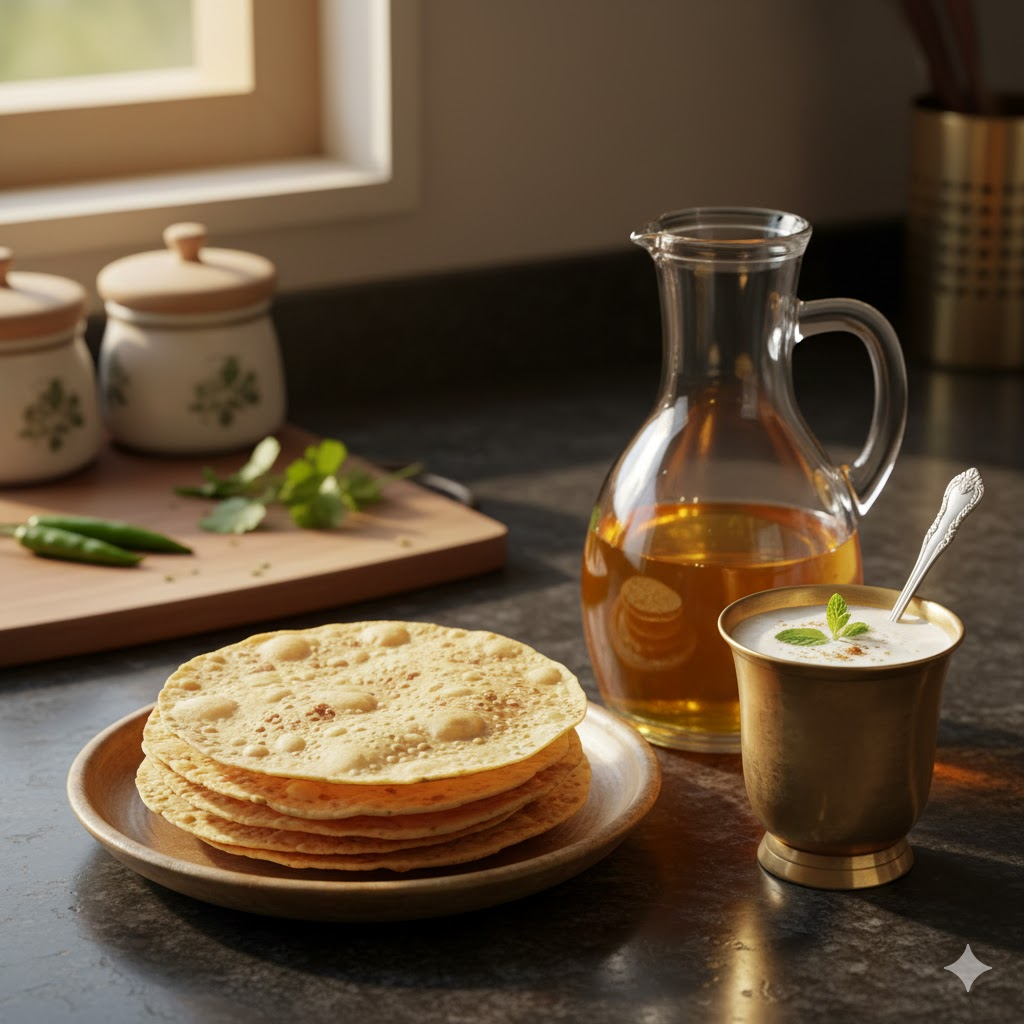
- Toop (Ghee) – for purity and richness
- Papad – for crunch
- Buttermilk (Taak) – to aid digestion
These aren’t placed in a fixed spot but usually float around the upper-mid section of the plate.
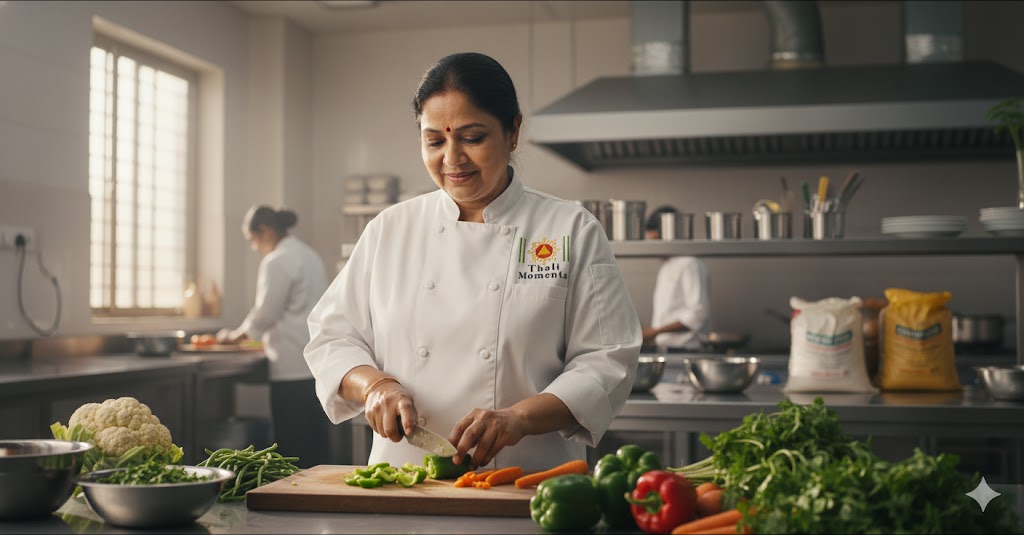
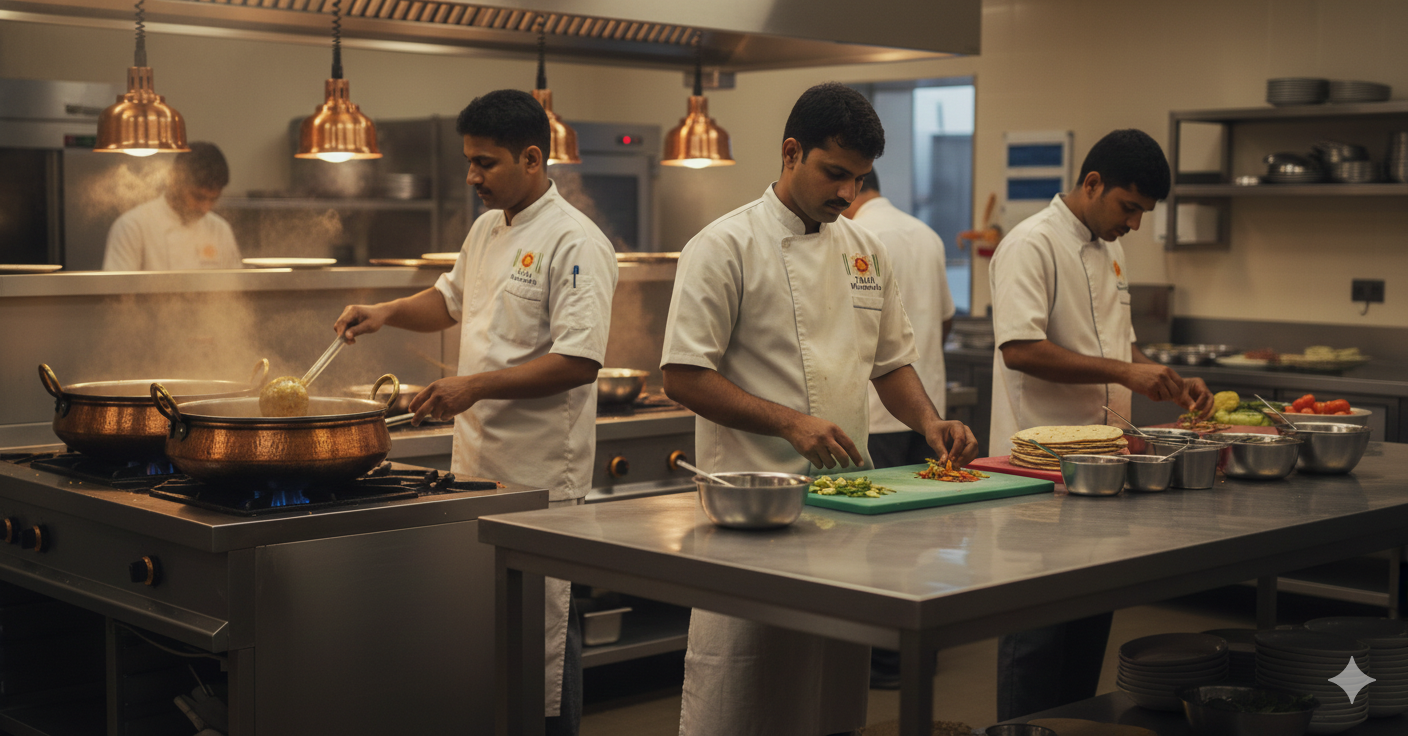
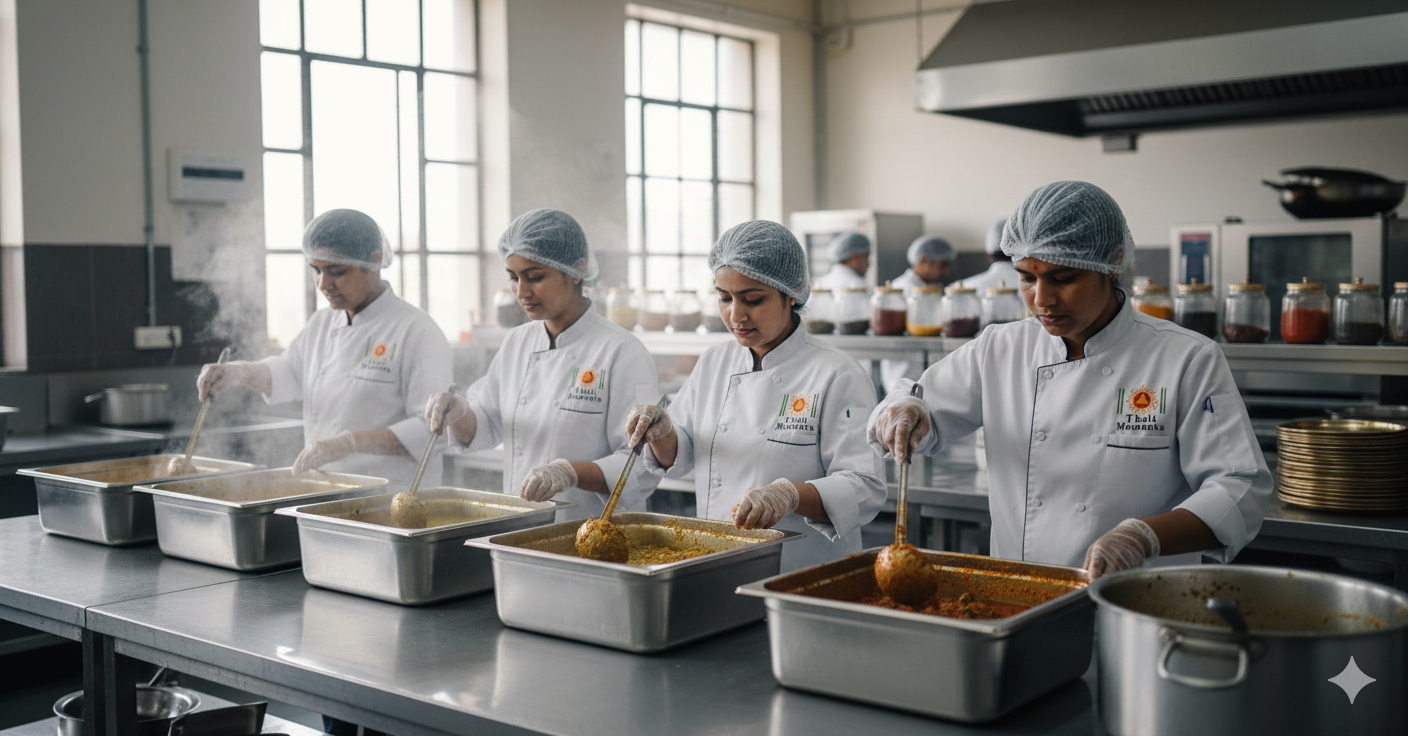
Thali Moments: Where we make every thali a ceremony
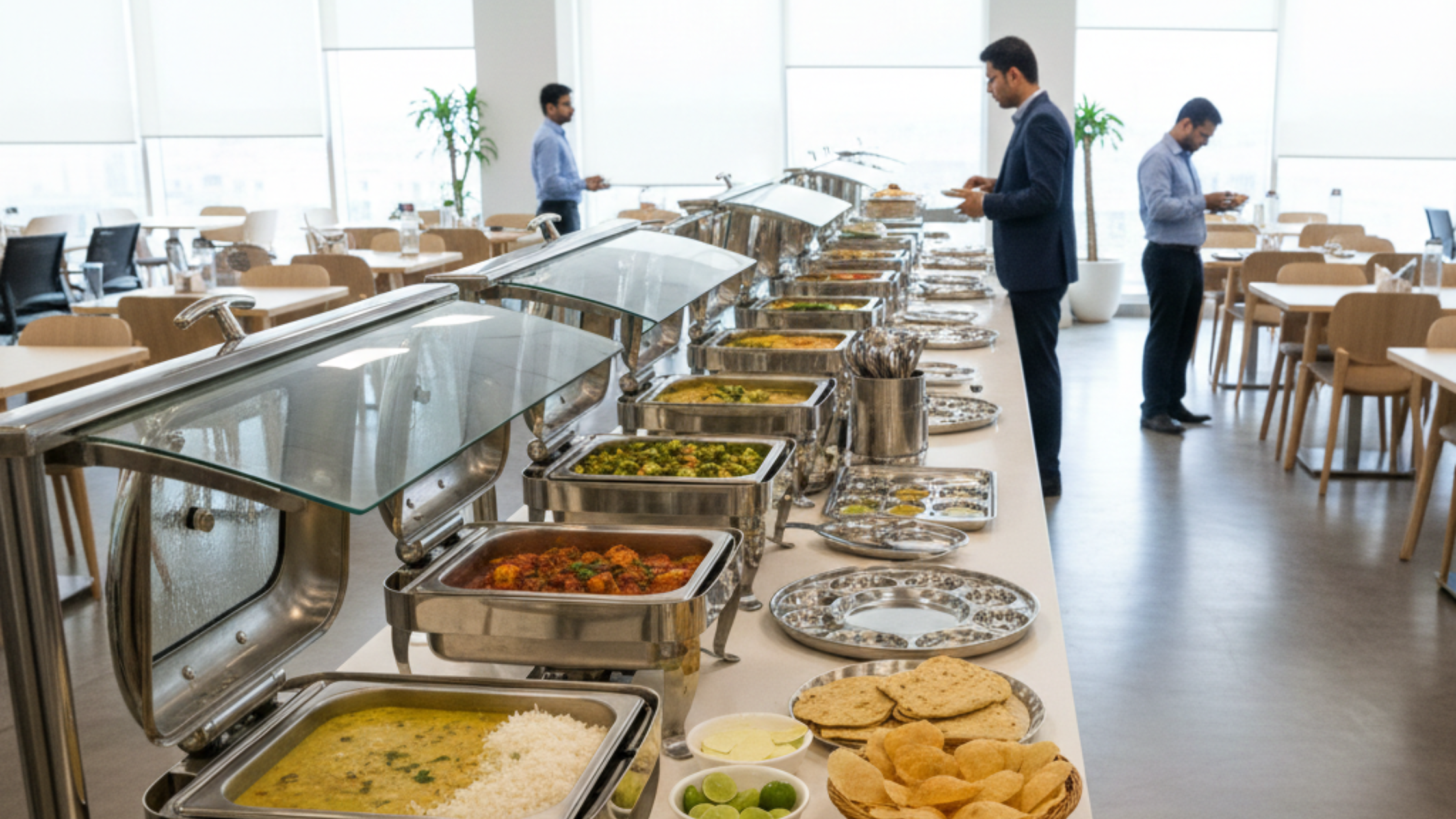
As a leading name in Maharashtrian catering in Pune, we follow this thali layout in every event — whether serving 50 guests or 500.
Our chefs prepare each dish fresh, the way families remember it:
- Varan with the right touch of ghee
- Puran poli as soft as festival mornings
- Bhakri puffed and light
- Thecha fiery and full of character
Authenticity isn’t just a selling point — it’s our identity. A thali isn’t just served — it’s arranged. A little care, a little tradition, and a lot of love turn a simple plate into an experience.Once you know where each item goes, you don’t just serve food — you serve heritage.
So when people search for the best catering services near me, we want Thali Moments to stand out not only for taste but also for respecting tradition.
Share On