
The Last Hour Before Service: Inside the Most Critical Moment of Catering
Inside a Wedding Kitchen: How We Prepare for 500 Guests and Still Keep It Authentic The aroma hits first. Roasted spices, ghee, and freshly chopped coriander. Then comes the sound of the rhythmic clang of ladles, laughter between cooks, and the sizzle of hot oil. It’s 6 a.m., and the Thali Moments kitchen is already alive. When you’re serving 500 guests at a Maharashtrian wedding, precision meets emotion. It’s not just about feeding a crowd; it’s about delivering warmth, memory, and authenticity; plate after plate. The Early Start: Where It All Begins A wedding day for us starts before sunrise. Our team gathers around steaming cups of chai, dividing roles and timelines. The goal is simple—serve ghar jaisa khana, no matter how big the event. The first step? Ingredient prep. Fresh vegetables arrive from Pune’s local mandis, spices are roasted in-house, and dal is soaked overnight. Every batch of masale bhaat or amti starts with ingredients chosen that very morning. Because freshness isn’t a luxury—it’s the foundation of flavor. Precision in Chaos: Cooking for 500 Cooking for a large wedding means managing timing to perfection. Each dish is planned down to the minute. The puran poli dough rests just long enough, varan-bhaat is steamed in rotation, and pithla simmers till it turns just creamy enough. The kitchen becomes a symphony—teams working in perfect coordination. One handles sweets, another gravies, another rice. Every recipe scales up, but never loses its soul. At Thali Moments, we don’t cut corners by using shortcuts or pre-mixes. We grind, roast, and temper every batch manually—because that’s what gives Maharashtrian food its heart. Balancing Tradition and Scale The challenge in wedding catering isn’t quantity—it’s consistency. When you’re serving hundreds, the risk of losing authenticity is real. But for us, that’s non-negotiable. To keep flavors intact, we rely on two things: method and memory. Our chefs use traditional patelas and handis for slow cooking. The process may take longer, but it delivers depth—exactly the way grandmothers cooked. Each menu is designed with a rhythm too: Varan-bhaat and toop for warmth and purity. Batatyachi bhaji for comfort. Koshimbir and solkadhi for freshness. Puran poli for sweetness and joy. These aren’t just dishes—they’re emotional markers in a Maharashtrian wedding meal. The Serving Line: Order in Motion By the time the guests begin arriving, the kitchen transforms into a well-orchestrated flow. Hot food moves out in perfectly timed rotations—so no plate goes cold, and no guest waits too long. Servers are briefed on sequence and presentation. Whether it’s a traditional thali setup or a buffet, every element matters—placement, garnish, and warmth. Our priority? That every guest—whether it’s the groom’s uncle or the bride’s best friend—feels the same care and attention. Why Authenticity Still Matters In an age of shortcuts, authenticity stands out. People remember the aroma of toasted hing, the crunch of a perfectly fried papad, or the sweetness of handmade puran poli. That’s what we protect at Thali Moments—because for us, food isn’t just service; it’s sentiment. A Maharashtrian wedding meal isn’t about extravagance—it’s about emotion, community, and connection. The Thali Moments Promise We’re not just one of the best catering services near you in Pune—we’re a team that treats every event like a family celebration. Whether it’s a wedding of 50 or 500, our approach stays the same: fresh ingredients, traditional methods, and the love that turns food into memory. From the first ladle of amti to the last modak, we carry forward Maharashtra’s culinary heritage—one wedding at a time. Share On Recent Posts
From Boardroom to Cafeteria: How Good Food Improves Workplace Mood
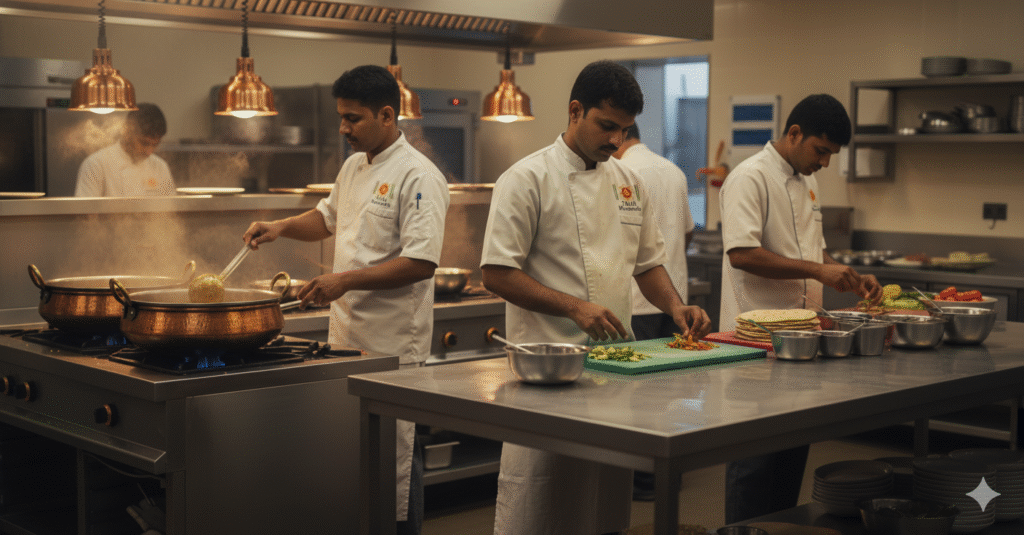
The Last Hour Before Service: Inside the Most Critical Moment of Catering The guests haven’t arrived yet. The venue looks calm. From the outside, everything appears ready. Inside the catering kitchen, this is the most critical hour of the entire event. The last hour before service is where catering is truly tested. Not through elaborate dishes or large menus, but through quiet discipline, coordination, and respect for food. When Cooking Ends and Control Begins By this stage, most dishes are already prepared. Rice is resting, dals are simmering gently, sabzis are holding their texture, sweets are set aside carefully. What follows is not active cooking, but careful control. Temperatures are checked. Lids are adjusted. Some vessels are moved off heat, others brought closer. Food is neither rushed nor allowed to sit unattended. This balance is what keeps flavours intact. At large events, timing is everything. A dish prepared too early loses life. A dish prepared too late creates pressure. The Final Taste Check No matter how experienced the kitchen team is, nothing moves to service without a final tasting. Salt, spice, consistency—everything is reassessed. These adjustments are subtle. They come from experience, not recipes. This is where professional catering differs from bulk cooking. Coordination with the Venue The last hour is also about alignment. The catering team synchronises with the venue, decorators, and service staff. Counters are checked. Thali layouts are confirmed. Service sequences are locked. Once guests arrive, there is no room for confusion. Every decision made here prevents disruption later. Movement Without Chaos As service time approaches, food begins to move—but never all at once. Items are released in stages to ensure nothing stands exposed longer than necessary. For off-site events, this phase is even more sensitive. Transport timing, unpacking order, and reheating protocols must work perfectly together. Freshness depends as much on movement as it does on heat. Calm Is Not Optional An experienced kitchen stays calm during this hour. Panic ruins food faster than poor ingredients. Everyone knows their role. Movements are deliberate. Communication is minimal but clear. This calm comes from preparation, trained teams, and systems built over time. When Service Begins When the first plate is served, the kitchen does not relax. It observes. Portions are adjusted. Refill timing is refined. Consistency from the first guest to the last is the goal. Guests may never see this hour. But they taste the result of it. The Thali Moments Way At Thali Moments, this final hour reflects everything we stand for. Our event catering and wedding catering services are built on structured kitchen processes, timely delivery, and food handled with care. We do not use soda or harmful additives to rush cooking. Our staff is medically certified and trained to follow strict hygiene and cleanliness protocols. Whether it’s a traditional Maharashtrian thali, meal trays, or a customised event menu, this hour ensures that every plate reaches the guest hot, fresh, and true to its flavour. Because in catering, authenticity is not claimed—it is protected, especially when it matters most. Share On Recent Posts
What a Maharashtrian Kitchen Teaches Us About Hospitality
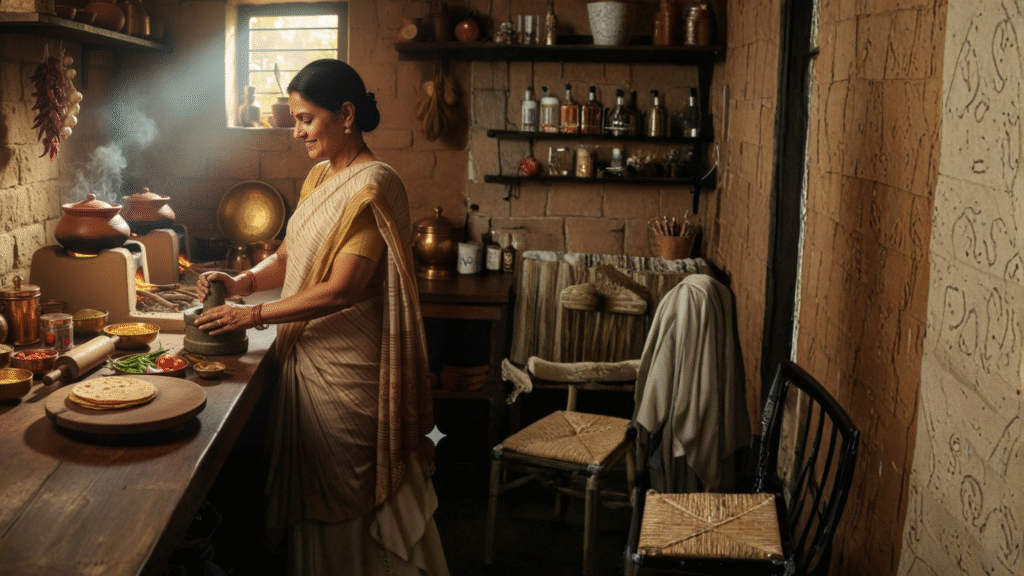
What a Maharashtrian Kitchen Teaches Us About Hospitality Step into a traditional Maharashtrian kitchen, and you’ll notice something immediately—it’s not built to impress. It’s built to serve. Hospitality here isn’t loud or performative. It’s quiet, consistent, and deeply sincere. The Guest Eats First In Maharashtrian homes, food is served without asking twice. Plates are filled before they’re empty. Seconds are assumed, not offered. This instinct carries into event catering. Good service isn’t reactive—it anticipates. Simplicity Is a Sign of Confidence A Maharashtrian kitchen doesn’t hide behind excess. The food speaks for itself.When recipes are honest, there’s no need for decoration or drama. This simplicity builds trust. Guests relax because the food feels familiar, even if it’s their first time eating it. Respect for Ingredients Nothing is wasted casually. Vegetable peels become chutneys. Leftover rice becomes Fodnicha bhaat.This respect creates mindfulness—about food, effort, and resources. At scale, this philosophy translates into responsible catering and minimal waste. Warmth Over Formality Hospitality here isn’t stiff. Servers smile. Conversations happen. Food is explained if asked, never forced. This warmth makes guests feel at home—even in large, formal events. Consistency Is Care Every day’s meal matters. There’s no concept of “this is just for today.”That mindset carries into weddings and events—every plate counts, every guest matters. The Thali as a Philosophy A Maharashtrian thali isn’t just food arranged on steel. It’s a worldview—balanced, generous, and inclusive. At Thali Moments, our kitchens follow the same principles.Serve sincerely. Cook honestly. Feed generously. Because true hospitality isn’t about showing off.It’s about making sure no one leaves hungry—or unheard. These values are deeply woven into how Thali Moments operates every day. Our kitchens follow the same quiet principles—serve generously, cook honestly, and treat every guest with respect. Whether we’re catering an intimate family function or a large wedding in Pune, the intention remains unchanged. Hospitality, for us, isn’t about scale or presentation. It’s about making people feel cared for, one plate at a time. Share On Recent Posts
Vegetarian Catering Done Right: How Maharashtrian Food Gets It Perfect
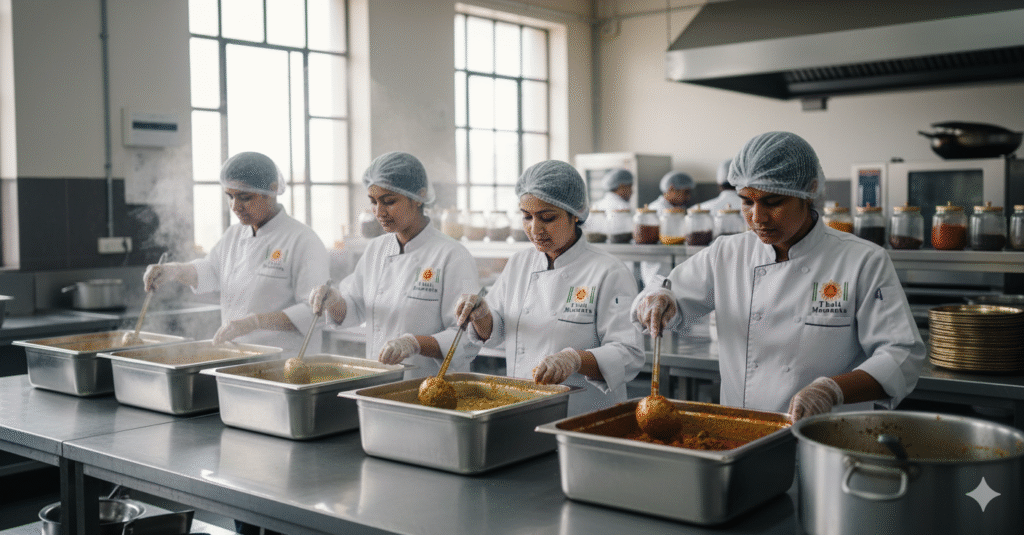
Vegetarian Catering Done Right: How Maharashtrian Food Gets It Perfect Vegetarian food often gets boxed into two extremes—either too plain or unnecessarily complicated. Maharashtrian cuisine sits comfortably in between. It proves, quietly and confidently, that vegetarian food can be deeply satisfying without excess. That’s why it works so well for weddings, corporate events, and large gatherings. Variety Without Overload A traditional Maharashtrian menu offers contrast without chaos. Dry sabzis, wet gravies, dals, rice, breads, sides, and a sweet—each plays a role. No dish fights for attention. Everything belongs. This balance keeps guests comfortable even after a full meal. Protein Without Pretending Maharashtrian vegetarian food doesn’t try to imitate meat. Protein comes naturally—from dals, usals, besan, peanuts, and curd-based dishes. The result is food that feels complete, not compensatory. For large events, this matters. Guests leave full, not heavy. Spices That Support, Not Dominate Unlike cuisines that rely on heavy cream or overpowering masalas, Maharashtrian food uses spice with restraint. Goda masala, coconut, cumin, hing, and jaggery are used to enhance—not mask—ingredients. This makes the food universally appealing, even to guests unfamiliar with the cuisine. Sattvik, Yet Celebratory Many Maharashtrian wedding meals follow sattvik principles—no onion, no garlic—yet feel festive and indulgent. This inclusivity allows everyone to eat comfortably, regardless of dietary preferences or rituals. It’s one of the reasons Maharashtrian food works so well for mixed gatherings. Scales Beautifully Vegetarian Maharashtrian food scales without losing integrity. A varan for 20 people tastes the same when cooked for 200—provided the method is respected. That consistency is gold in catering. Why Guests Remember It People may not remember fancy dish names, but they remember how food made them feel. Maharashtrian vegetarian food leaves guests satisfied, light, and content—and that’s a rare achievement. At Thali Moments, this philosophy guides every menu we design. Vegetarian food isn’t a limitation. Done right, it’s a strength. At Thali Moments, this understanding of vegetarian food shapes everything we cook. Our menus are designed to respect tradition while serving large gatherings with consistency and care. From simple varan-bhaat to elaborate wedding thalis, we focus on balance, freshness, and familiarity. It’s why our vegetarian catering in Pune doesn’t feel like a compromise—it feels complete. Because when food is rooted in culture, it naturally satisfies everyone at the table. Share On Recent Posts
How to Keep Food Hot, Fresh, and Flavorful at Large Events
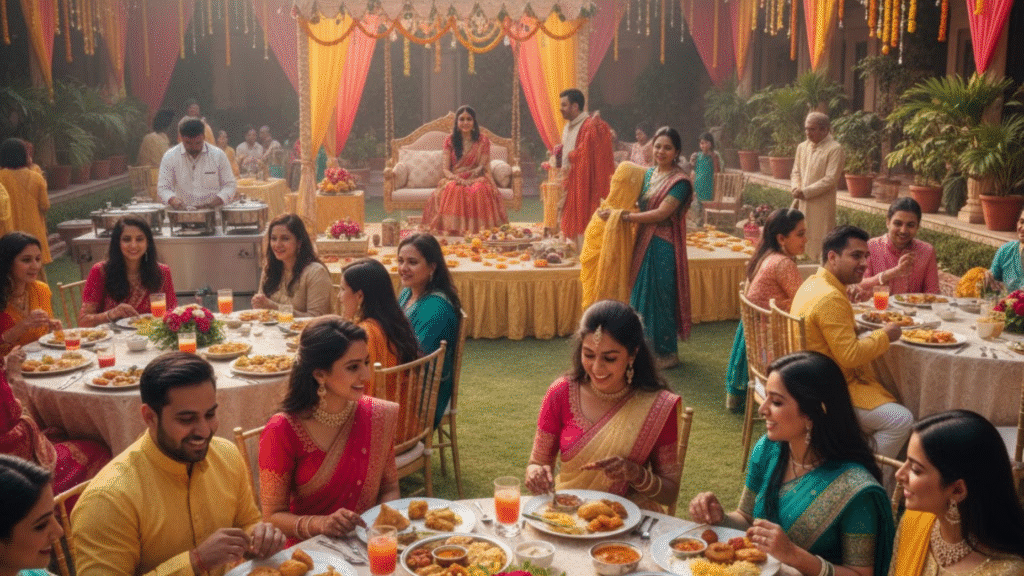
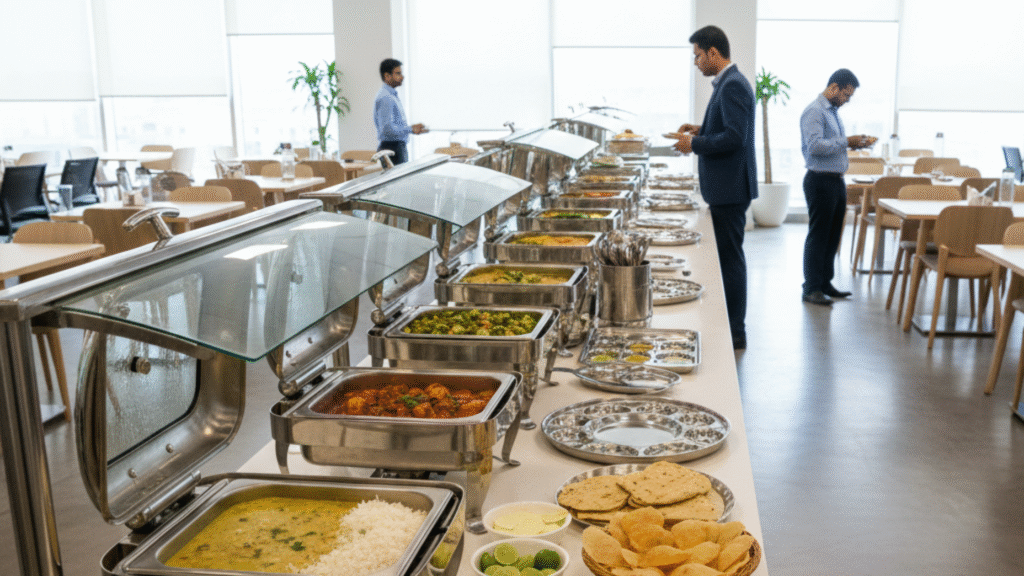
How to Keep Food Hot, Fresh, and Flavorful at Large Events Anyone can cook good food for ten people. The real test begins when the guest list crosses a hundred. At large events—weddings, corporate gatherings, community functions—the biggest challenge isn’t the menu. It’s ensuring that the last plate served tastes as good as the first. At Thali Moments, large-scale catering isn’t about shortcuts. It’s about systems, timing, and respect for food. Start with the Right Menu Design Not all dishes age the same. Some foods hold heat and texture better than others. A good caterer designs menus keeping this in mind.For example, varan, amti, and slow-cooked sabzis retain flavour beautifully, while over-fried items or cream-heavy gravies lose quality quickly. Menu planning is the first step in keeping food fresh—not the last. Cook in Batches, Not All at Once One of the most common mistakes at large events is cooking everything together. Food that sits too long loses aroma, texture, and soul.Experienced caterers stagger cooking. Rice, dals, and gravies are prepared in planned batches so that replenishments are always hot and fresh. This requires manpower, planning, and discipline—but the difference is instantly noticeable. Temperature Control Is Non-Negotiable Large kitchens rely on insulated vessels, heavy-bottomed handis, and controlled heat zones.Food isn’t just kept hot—it’s kept at the right temperature. Overheating ruins flavour. Underheating affects safety and texture. For Maharashtrian food especially, gentle heat preserves balance. Too much flame, and the subtleties disappear. Transport Matters More Than You Think For off-site events, transport is where most food quality is lost.At Thali Moments, food is packed in insulated containers, transported in planned sequences, and unpacked only when the service line is ready. The goal is simple: the food should reach the plate, not wait for it. Smart Service Flow A chaotic serving line kills food quality faster than bad cooking.Well-trained staff, clear sequence, and controlled portions ensure that food moves continuously—not in bursts. This keeps dishes fresh, plates warm, and guests satisfied. The Final Check: Taste, Always Before service begins, senior kitchen members taste every dish again. Adjustments are made quietly—salt, spice, consistency.Large-scale catering demands this last-mile attention. Without it, even the best preparation falls flat. The Truth About Good Event Food When guests say, “Food was hot and tasted fresh,” they’re really complimenting the process behind it. At scale, freshness is not accidental. It’s engineered—with care. Bonus: The Symbolic Trio A classic Maharashtrian thali always includes: Toop (Ghee) – for purity and richness Papad – for crunch Buttermilk (Taak) – to aid digestion These aren’t placed in a fixed spot but usually float around the upper-mid section of the plate. Thali Moments: Where we make every thali a ceremony As a leading name in Maharashtrian catering in Pune, we follow this thali layout in every event — whether serving 50 guests or 500. Our chefs prepare each dish fresh, the way families remember it: Varan with the right touch of ghee Puran poli as soft as festival mornings Bhakri puffed and light Thecha fiery and full of character Authenticity isn’t just a selling point — it’s our identity. A thali isn’t just served — it’s arranged. A little care, a little tradition, and a lot of love turn a simple plate into an experience.Once you know where each item goes, you don’t just serve food — you serve heritage. So when people search for the best catering services near me, we want Thali Moments to stand out not only for taste but also for respecting tradition. Share On Recent Posts
How To Serve An Authentic Maharashtrian Thali: What Goes Where On The Plate
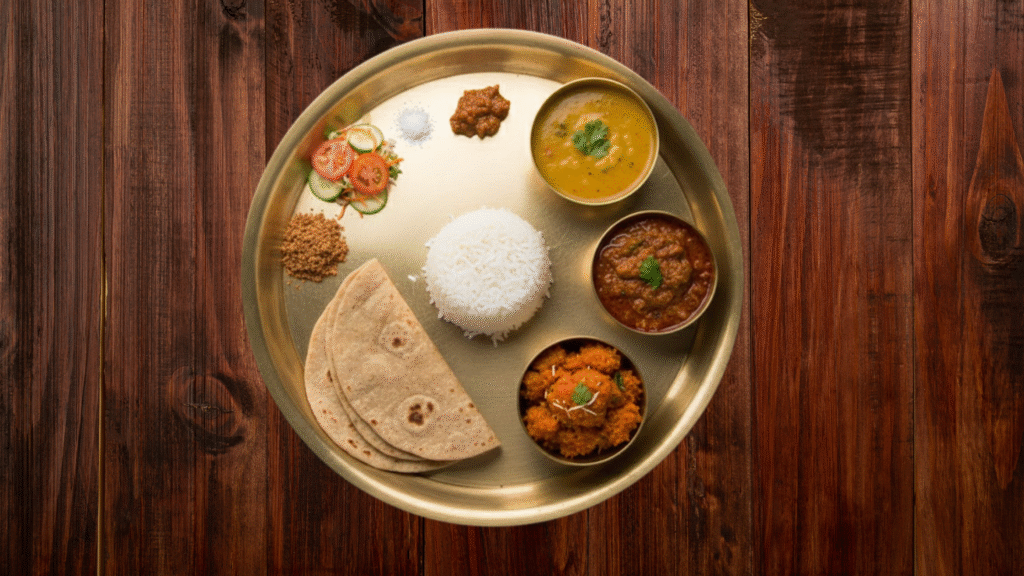
How To Serve An Authentic Maharashtrian Thali: What Goes Where On The Plate A Maharashtrian thali is more than a meal. It’s a ceremony. Every item has meaning, every position has purpose, and every plate tells a story passed down through generations. When served correctly, the thali feels balanced, welcoming, and deeply rooted in tradition. Whether you’re hosting guests at home, planning an event, or searching for the best catering services near you in Pune, understanding the layout of a Maharashtrian thali makes all the difference. Let’s break down the art of serving an authentic thali — exactly how it’s done in Maharashtrian homes and wedding feasts. Why Placement Matters in a Maharashtrian Thali The structure of a thali isn’t random. It’s shaped by: Digestive logic Ayurvedic balance Ease of eating Cultural rituals Each item sits where it does for a reason — to complement flavors, balance temperatures, and create a rhythmic eating experience. Top Section of the thali – The Fresh & Flavorful Starters This part of the plate is made to wake up your palate with a combination of some subtle and some rich aromas. Most items here are also not ‘cooked’ so as to offer a natural taste to the taste buds. Top Center – Salt + Lemon Wedge Salt is placed at the very top as a symbol of purity and completeness. A lemon wedge sits beside it to adjust taste as needed. Top Left – Koshimbir (Salad) A fresh mix of cucumber, tomato, or carrot. Placed left because it’s eaten first to stimulate digestion. Top Right – Pickle, Thecha & Chutneys Strong flavors stay on the right side so they can be added in small portions. These are enhancers — not mains. Left Side: Dry Chutneys The left middle section carries the dry chutneys or the occasional non gravy bhaji, such as: Batatyachi bhaji Cabbage sabzi Bharli vangi Dry items go here because they’re easy to pinch with chapati and don’t spread across the plate. Right Side: Gravies, Dal & Cooling Add-ons Wet dishes sit on the right to prevent mixing into the rice and bread. Common items include: Amti Varan Pithla Solkadhi These are scooped easily toward the center where rice is placed. Bottom Center: Rice — The Heart of the Thali Rice sits closest to the eater because it pairs with multiple items — dal, gravies, ghee, and buttermilk. This structure also keeps the rice contained and easy to mix. Bottom Right: The Sweet Dish Maharashtrian thalis often end with a tear of sweetness — puran poli, shrikhand, amrakhand, or basundi. Sweets stay on the right because: Traditionally eaten at the end Prevent mixing with sabzi or rice Symbolize auspiciousness (madhur prasad) This is the last impression of the meal — warm, memorable, festive. Bonus: The Symbolic Trio A classic Maharashtrian thali always includes: Toop (Ghee) – for purity and richness Papad – for crunch Buttermilk (Taak) – to aid digestion These aren’t placed in a fixed spot but usually float around the upper-mid section of the plate. Thali Moments: Where we make every thali a ceremony As a leading name in Maharashtrian catering in Pune, we follow this thali layout in every event — whether serving 50 guests or 500. Our chefs prepare each dish fresh, the way families remember it: Varan with the right touch of ghee Puran poli as soft as festival mornings Bhakri puffed and light Thecha fiery and full of character Authenticity isn’t just a selling point — it’s our identity. A thali isn’t just served — it’s arranged. A little care, a little tradition, and a lot of love turn a simple plate into an experience.Once you know where each item goes, you don’t just serve food — you serve heritage. So when people search for the best catering services near me, we want Thali Moments to stand out not only for taste but also for respecting tradition. Share On Recent Posts
Inside a Wedding Kitchen: How We Prepare for 500 Guests and Still Keep It Authentic
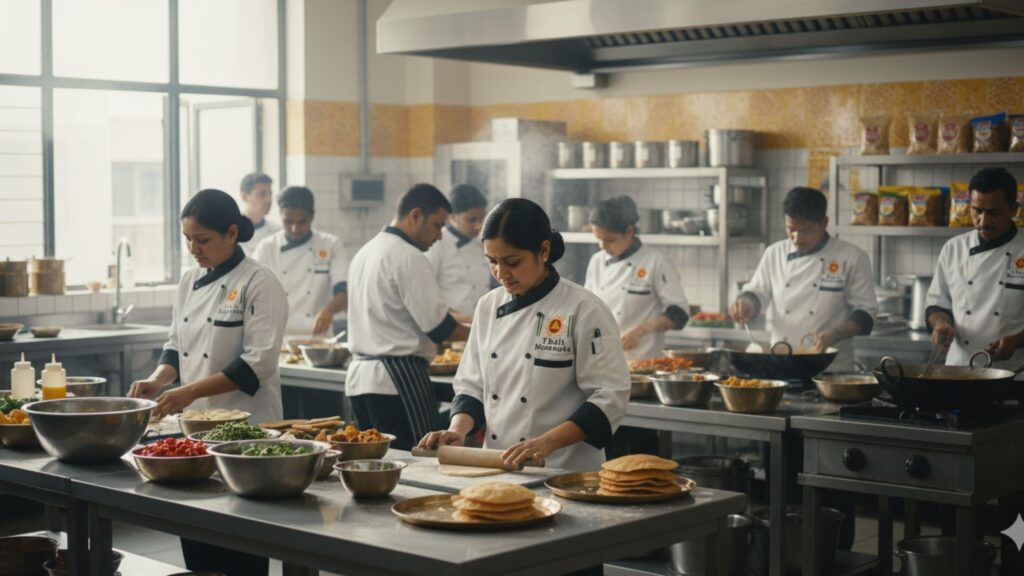
Inside a Wedding Kitchen: How We Prepare for 500 Guests and Still Keep It Authentic The aroma hits first. Roasted spices, ghee, and freshly chopped coriander. Then comes the sound of the rhythmic clang of ladles, laughter between cooks, and the sizzle of hot oil. It’s 6 a.m., and the Thali Moments kitchen is already alive. When you’re serving 500 guests at a Maharashtrian wedding, precision meets emotion. It’s not just about feeding a crowd; it’s about delivering warmth, memory, and authenticity; plate after plate. The Early Start: Where It All Begins A wedding day for us starts before sunrise. Our team gathers around steaming cups of chai, dividing roles and timelines. The goal is simple—serve ghar jaisa khana, no matter how big the event. The first step? Ingredient prep. Fresh vegetables arrive from Pune’s local mandis, spices are roasted in-house, and dal is soaked overnight. Every batch of masale bhaat or amti starts with ingredients chosen that very morning. Because freshness isn’t a luxury—it’s the foundation of flavor. Precision in Chaos: Cooking for 500 Cooking for a large wedding means managing timing to perfection. Each dish is planned down to the minute. The puran poli dough rests just long enough, varan-bhaat is steamed in rotation, and pithla simmers till it turns just creamy enough. The kitchen becomes a symphony—teams working in perfect coordination. One handles sweets, another gravies, another rice. Every recipe scales up, but never loses its soul. At Thali Moments, we don’t cut corners by using shortcuts or pre-mixes. We grind, roast, and temper every batch manually—because that’s what gives Maharashtrian food its heart. Balancing Tradition and Scale The challenge in wedding catering isn’t quantity—it’s consistency. When you’re serving hundreds, the risk of losing authenticity is real. But for us, that’s non-negotiable. To keep flavors intact, we rely on two things: method and memory. Our chefs use traditional patelas and handis for slow cooking. The process may take longer, but it delivers depth—exactly the way grandmothers cooked. Each menu is designed with a rhythm too: Varan-bhaat and toop for warmth and purity. Batatyachi bhaji for comfort. Koshimbir and solkadhi for freshness. Puran poli for sweetness and joy. These aren’t just dishes—they’re emotional markers in a Maharashtrian wedding meal. The Serving Line: Order in Motion By the time the guests begin arriving, the kitchen transforms into a well-orchestrated flow. Hot food moves out in perfectly timed rotations—so no plate goes cold, and no guest waits too long. Servers are briefed on sequence and presentation. Whether it’s a traditional thali setup or a buffet, every element matters—placement, garnish, and warmth. Our priority? That every guest—whether it’s the groom’s uncle or the bride’s best friend—feels the same care and attention. Why Authenticity Still Matters In an age of shortcuts, authenticity stands out. People remember the aroma of toasted hing, the crunch of a perfectly fried papad, or the sweetness of handmade puran poli. That’s what we protect at Thali Moments—because for us, food isn’t just service; it’s sentiment. A Maharashtrian wedding meal isn’t about extravagance—it’s about emotion, community, and connection. The Thali Moments Promise We’re not just one of the best catering services near you in Pune—we’re a team that treats every event like a family celebration. Whether it’s a wedding of 50 or 500, our approach stays the same: fresh ingredients, traditional methods, and the love that turns food into memory. From the first ladle of amti to the last modak, we carry forward Maharashtra’s culinary heritage—one wedding at a time. Share On Recent Posts
Wedding Catering in Pune: From Haldi to Reception, The Story Told Through Food
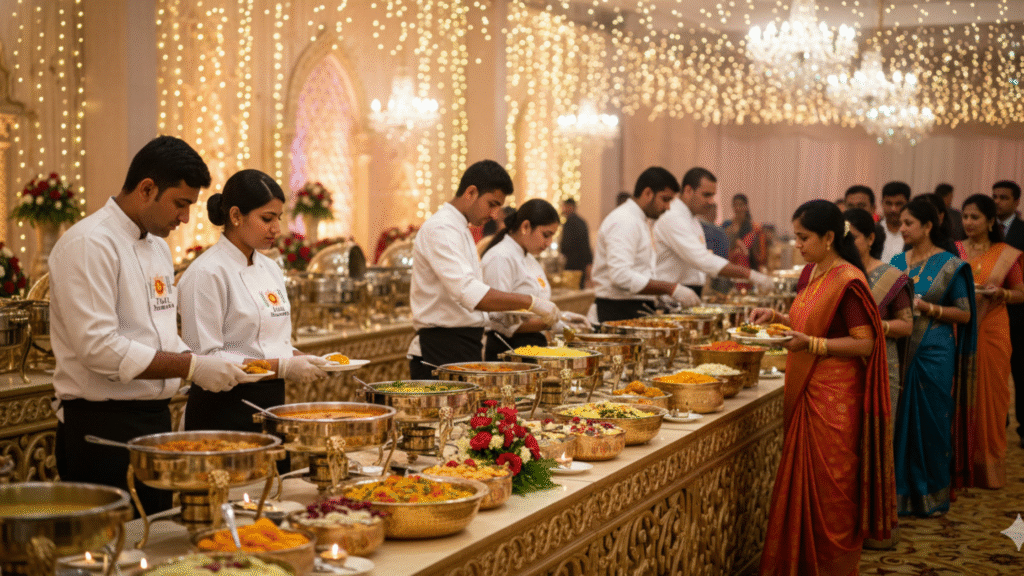
Wedding Catering in Pune: From Haldi to Reception, The Story Told Through Food A Maharashtrian wedding isn’t just a ceremony; it’s a celebration of flavors, emotions, and community. Every ritual, from the vibrant Haldi to the grand Reception, has its own mood and meaning, and the food served at each stage mirrors that perfectly. At Thali Moments, we’ve catered to countless weddings across Pune and Maharashtra, and one truth stands out: when food aligns with the ritual, the event feels complete. Why Food Matters in Every Wedding Ritual Food in a Maharashtrian wedding isn’t just part of the plan—it’s part of the emotion. It marks beginnings (Haldi), blessings (Wedding), celebration (Sangeet), and gratitude (Reception). When planned thoughtfully, each meal becomes a memory—of family sitting together, guests sharing laughter, and aromas that linger long after the event ends. That’s the essence of our work at Thali Moments, one of the best catering services near you in Pune. Our goal isn’t just to serve food—it’s to serve feeling. The Haldi Ceremony: Simplicity and Warmth The Haldi marks the beginning of wedding festivities. It’s an intimate gathering—family, laughter, and turmeric’s golden glow everywhere. Food Mood: Light, home-style, and comforting. Guests prefer simple dishes that refresh and energize without weighing them down. Suggested Menu: Poha, upma, or sabudana khichdi for breakfast. Batata bhaji, puri, and shrikhand for lunch. Cooling drinks like chaas or amrakhand. At Thali Moments, we keep the Haldi menu cheerful and uncomplicated—freshly cooked, beautifully plated, and just right for a morning full of joy. Sangeet or Mehendi: Fun, Fusion, and Flavor When the rituals pause and the dancing begins, the food shifts gears. The sangeet and mehendi functions bring vibrancy and variety, mixing Maharashtrian roots with a hint of modern flair. Food Mood: Playful, colorful, and easy to eat. Suggested Menu: Live counters for chaat, pav bhaji, and misal pav. Finger foods like mini kothimbir vadi, veg cutlets, or paneer tikka. Refreshing mocktails, solkadhi shots, and fruit platters. These menus let guests mingle freely while enjoying flavors that still feel local and nostalgic. The Wedding Ceremony: Sacred and Traditional The main wedding ritual is the soul of the celebration. The energy here is spiritual, sacred, and deeply cultural. The food, too, follows that tone—traditional, sattvik (pure), and balanced. Food Mood: Authentic Maharashtrian, wholesome, and vegetarian. Suggested Menu: Varan-bhaat with toop (ghee) — symbolizes prosperity and purity. Batatyachi bhaji, koshimbir, and amti dal for balance. Puran poli or modak for auspicious sweetness. Papad, pickle, and buttermilk to round off the meal. We focus on the essence of tradition here. Each item on the thali reflects joy, gratitude, and community—the heart of every Maharashtrian mangalashtak. The Reception: Grandeur on a Plate The reception marks the finale—a day of indulgence and elegance. It’s where tradition meets scale, and presentation matters as much as flavor. Food Mood: Royal, diverse, and abundant. Suggested Menu: Maharashtrian thali classics like masale bhaat, zunka bhakri, and bharli vangi. North Indian favorites like paneer butter masala, dal tadka, and naan. Sweet endings: basundi, gulab jamun, or amrakhand. Optional fusion live counters: pasta, mocktails, or dessert bar. At Thali Moments, our reception menus balance authenticity with grandeur—crafted for a Pune audience that loves tradition but welcomes innovation. Final Thought Every Maharashtrian wedding is a story told through rituals. The food, when chosen with care, becomes its language. So whether it’s a humble poha breakfast or a lavish thali for 500 guests, remember—what you serve is what they’ll remember. If you’re planning your wedding in Pune, let Thali Moments help you craft a menu that reflects every ritual and emotion beautifully. Share On Recent Posts
From Summer Thalis to Winter Feasts: The Art of Seasonal Catering in Maharashtra
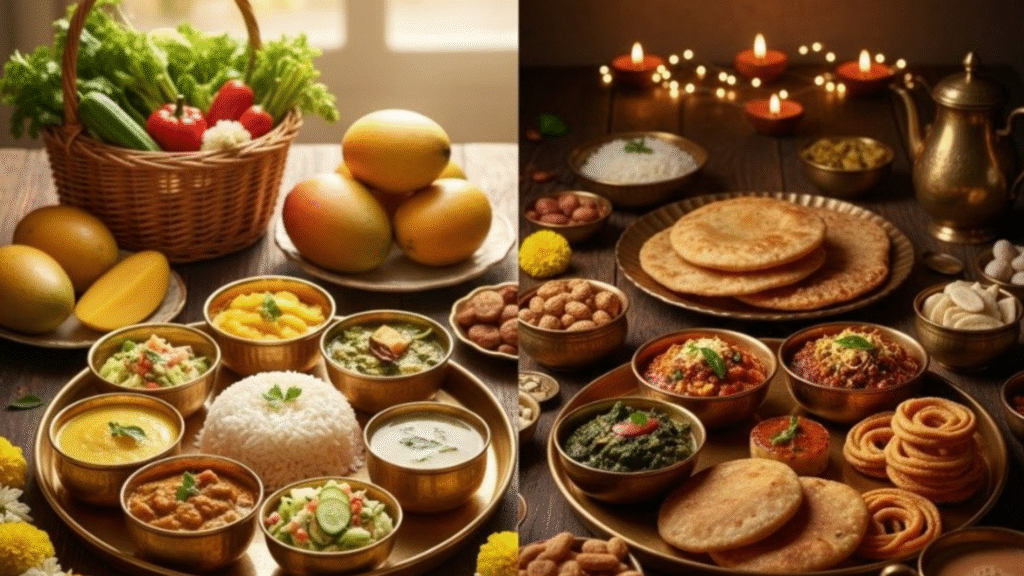
From Summer Thalis to Winter Feasts: The Art of Seasonal Catering in Maharashtra A well-planned menu can turn any event into an experience. But here’s a secret the best caterers in Pune already know, great food is about timing. The same dish that delights guests in December might feel heavy in May. That’s why seasonal catering matters. When menus change with the weather, food feels fresher, more flavorful, and in harmony with the moment. Whether it’s a wedding, corporate gathering, or festive event, choosing seasonal ingredients brings both taste and comfort to the table. Summer: Keep It Fresh, Light, and Cooling Summer in Pune can be harsh, and guests naturally crave light, refreshing meals. A smart summer catering menu focuses on cooling foods and hydrating flavors. Popular summer choices include: Aam panna, solkadhi, and buttermilk for natural refreshment. Varan-bhaat, koshimbir, and aamras for a traditional yet balanced thali. Fresh fruit platters and chilled desserts like mango shrikhand. These dishes not only cool the body but also keep guests energized, perfect for outdoor events and mid-day functions. Monsoon: Comfort Food for Cozy Gatherings Once the rains arrive, the appetite changes. Guests crave warmth, spice, and comfort. Monsoon menus are a chance for caterers to bring out nostalgic, home-style dishes. Some of the best catering services near you in Pune will recommend: Kanda bhaji, pakoras, and batata vada with hot chai or masala taak. Hearty curries like pithla-bhakri or usals made from sprouted pulses. Warm desserts like moong dal halwa or gulab jamun. The aroma of frying snacks and steaming curries creates the perfect backdrop for rainy-day celebrations. Winter: Rich, Festive, and Flavorful Winter is Pune’s favorite season for celebrations such as weddings, corporate events, and family gatherings fill the calendar. It’s also the season for indulgent food. Menus that shine in winter include: Puran poli, tilgul laddoos, and ghee-soaked sweets for festive warmth. Methi bhaji, harbhara usal, and lasun chutney for earthy flavor. Varan-bhaat, thecha, and bhakri for authentic Maharashtrian comfort. Cool weather calls for heartier spreads and deeper flavors, the kind that make guests linger over the meal a little longer. Why Seasonal Menus Just Work There’s a reason seasoned event caterers swear by seasonal planning: Better Taste – Fresh, local produce always beats stored or out-of-season ingredients. Healthier Meals – Seasonal foods naturally suit your body’s needs for the time of year. Cost Efficiency – Local sourcing keeps quality high and costs practical. Memorable Experiences – Guests remember when the food feels “just right.” No matter the occasion, food that matches the weather leaves a lasting impression and often, empty plates. Thali Moments: Rooted in Season, Crafted with Care At Thali Moments, we believe in letting the season guide the menu. Our catering in Pune celebrates Maharashtrian flavors at their freshest; from summer aamras and monsoon bhajis to winter puran polis. Whether you’re planning a wedding, festive event, or corporate gathering, our menus are designed around freshness, balance, and authenticity. Because great catering isn’t about repeating dishes; it’s about reading the season. In a nutshell Seasons change, and so should your menu. From cool drinks in summer to warm curries in winter, every event feels better when the food fits the weather. So, the next time you search for the best catering services near me or event caterers in Pune, remember, the perfect caterer isn’t just one who cooks well, but one who cooks with the season. Share On Recent Posts
Diwali on a Plate: How Food Lights Up Maharashtra’s Festival of Joy
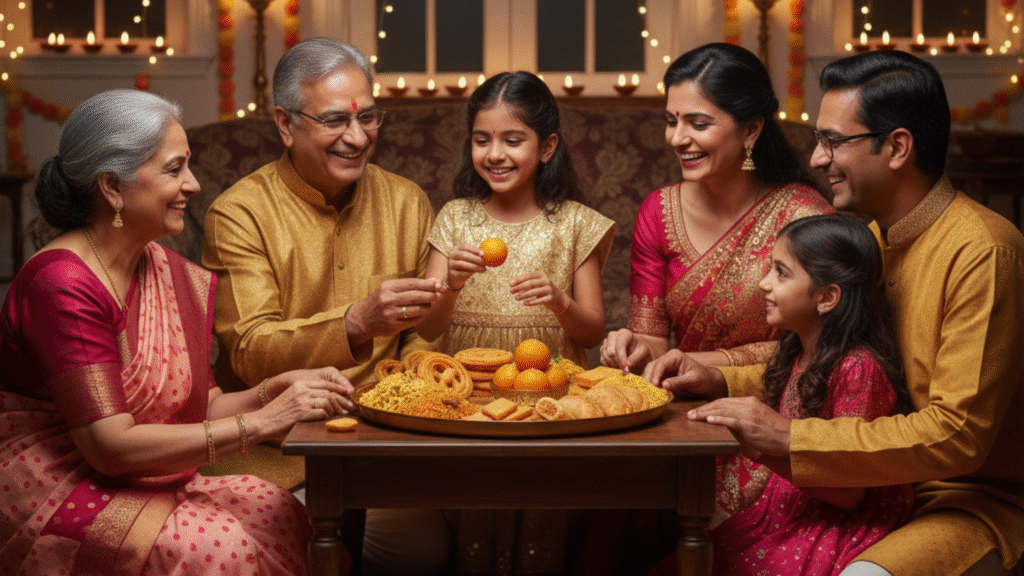
Diwali on a Plate: How Food Lights Up Maharashtra’s Festival of Joy Long before the streets glow with fairy lights, Diwali begins quietly in the kitchen. The crackle of frying oil, the sweet aroma of roasting gram flour, the rustle of aluminium boxes being cleaned for faral storage. Every Maharashtrian home hums with a rhythm that feels both festive and familiar. For many of us, Diwali isn’t just seen or heard; it’s tasted. The Season of Faral and Family Days before Diwali, the house slowly transforms. Mothers and grandmothers tie up their hair, spread old newspapers across the floor, and begin the sacred ritual of faral. The kitchen fills with the sound of the chakli press creaking, children stealing bits of raw shankarpali dough, and the smell of ghee wrapping every corner of the home. Each item made carries its own story and purpose: Chakli – The golden spirals symbolized continuity, strength, and patience. Crisp and spiced, they were a reward for steady hands and careful timing; something every mother seemed to have mastered effortlessly. Karanji – The delicate half-moon pastries, stuffed with roasted coconut and cardamom, were made with a kind of devotion. Watching them puff into golden crescents was a small miracle in itself. Shev – Fried in batches, it added a salty balance to the sweetness around. And the first few strands were always handed over to whoever wandered near the stove. Laddoos – Round, soft, and sweet, they carried warmth in every bite. Whether besan, rava, or copra, each version had one rule, made by hand, never hurried. Anarse and Shankarpali – Reserved for patient hearts. Anarse with its jaggery sheen and shankarpali with its gentle crunch were the essence of a Maharashtrian Diwali with a simple, homemade joy. Even before the first diya was lit, the faral tins sat neatly on the table, covered with embroidered napkins which denotes a promise of celebration ready to unfold. Mornings of Ritual and Aroma Narak Chaturdashi mornings had a ritual order: oil massage, abhyangasnan, new clothes, and the first meal of the season. The fragrance of poha, batata bhaji, and hot jalebis mingled with that of freshly lit incense. The elders would insist on tasting every dish, smiling knowingly as the younger ones rushed through the rituals just to get to the food. That breakfast wasn’t just about eating; it was about welcoming light, starting the new year with warmth and togetherness. The Diwali Thali: A Feast of Balance By the afternoon of Laxmi Pujan, the dining table transformed into a full thali, a true portrait of harmony. Varan-bhaat with ghee for grounding. Batatyachi bhaji and koshimbir for balance. Puran poli, sweet and soft, for prosperity and grace. Papad, pickle, and taak for joy and ease. The plate mirrored life itself containing sweetness and spice, warmth and simplicity, all existing side by side. A Taste That Travels Through Time Ask anyone who grew up in Maharashtra what Diwali tastes like, and you’ll rarely hear just one answer. It’s the first bite of puran poli after prayers, the crunch of chakli shared with cousins, or the lingering smell of roasted besan on a cool October night. Even today, when life has grown faster and kitchens quieter, those flavors call us back. Maybe you don’t make faral from scratch anymore; maybe you order it, or pick it up on your way home. But the first bite still carries that memory. The laughter, the waiting, the togetherness. The Diwali Spirit at Thali Moments At Thali Moments, this nostalgia is what we try to preserve every Diwali. In our kitchen, the process still feels personal; spices roasted in small batches, sweets shaped by hand, and thalis assembled with the same care our grandmothers showed. Because for us, cooking isn’t just about food. It’s about memory. About honoring the light that shines from shared meals and familiar tastes. Diwali is more than rows of diyas and fireworks; it’s the quiet warmth of people coming together, sharing a thali, and remembering where joy truly lives. This season, may your plate hold more than just flavour, may it hold the sweetness of old memories, the spice of laughter, and the comfort of knowing that some traditions never fade, they simply find new homes. Happy Diwali! Share On Recent Posts