In Maharashtra, fasting is rarely just about eating less.
For many families, upvas is a familiar part of religious and cultural life. Days such as Ekadashi, Mahashivratri, Navratri and other religious occasions bring their own food traditions, ingredients and cooking methods. The regular kitchen changes its rules for the day—but it certainly does not stop cooking.
In fact, anyone who has grown up around a Maharashtrian household knows that an upvas meal can be surprisingly elaborate.
From sabudana khichdi and crispy sabudana vada to bhagar, potatoes, peanuts and homemade sweets, fasting food in Maharashtra has developed its own distinct culinary identity.
What Does Upvas Mean?
The word upvas is traditionally associated with fasting and religious observance. However, what people eat during upvas varies between families, communities and religious traditions.
Some households follow stricter rules, while others include a wider range of permitted ingredients.
Commonly avoided foods may include regular grains, pulses, certain vegetables, onion, garlic and processed ingredients. Foods such as sabudana, potatoes, peanuts, fruits, dairy products and certain millets are commonly used instead.
The important thing is that there isn’t one universal “Maharashtrian upvas menu.” Food practices can differ significantly from one household to another.
And that’s part of what makes the tradition interesting.
Sabudana: The Undisputed Star of Upvas
Mention Maharashtrian fasting food and sabudana is likely to appear within seconds.
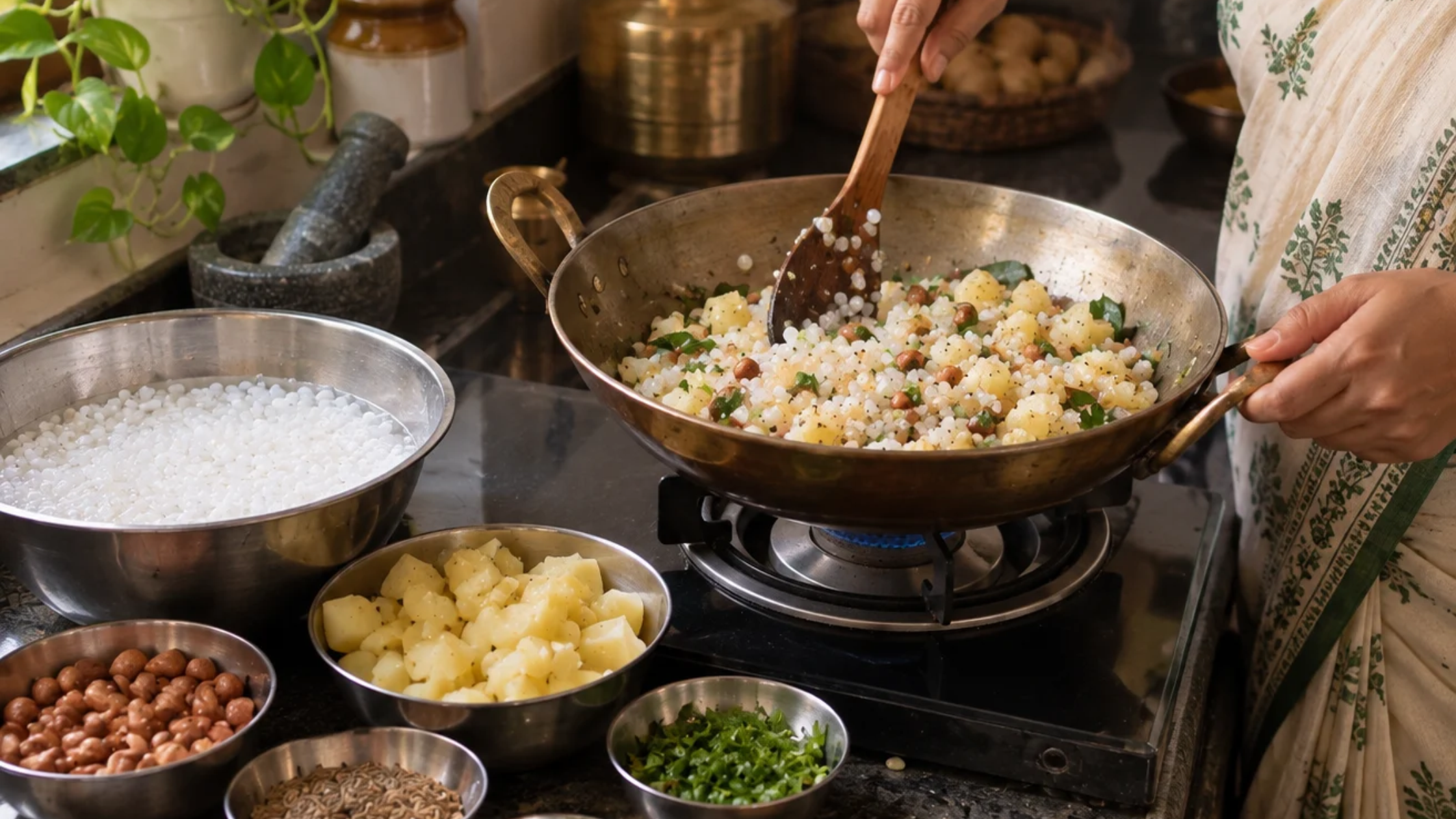
Sabudana khichdi is perhaps one of the best-known fasting dishes from Maharashtra. Soaked tapioca pearls are cooked with roasted peanuts, potatoes, green chillies and spices suitable for upvas.
The texture is everything.
Too much water and the khichdi becomes sticky. Too little soaking and the pearls remain hard. The best version has soft, separate pearls, a gentle crunch from peanuts and just enough seasoning.
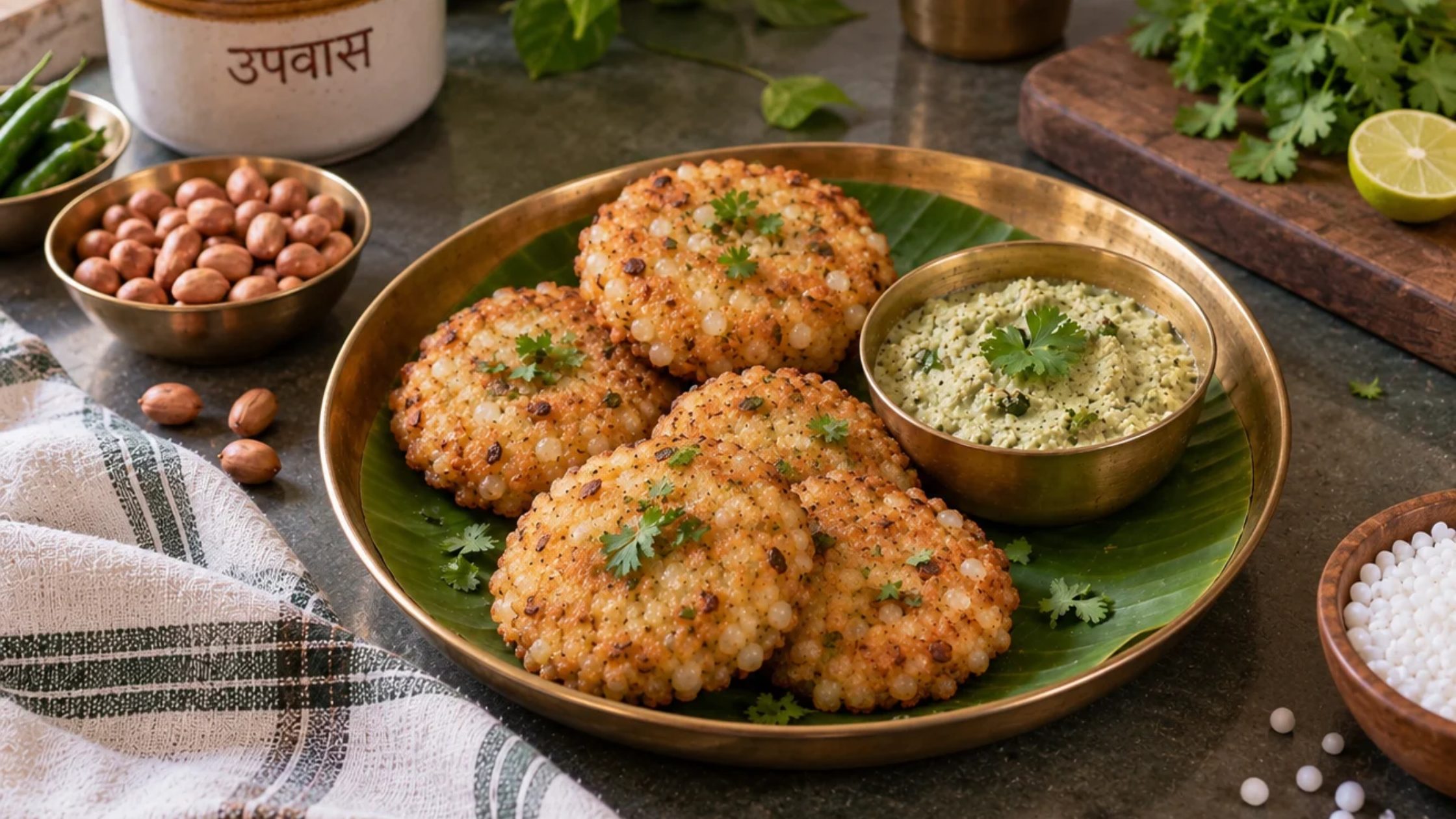
Then there is sabudana vada—crispy on the outside, soft inside and usually served with chutney or a cooling accompaniment.
It is technically fasting food.
It also happens to be the sort of food people mysteriously continue craving after the fast is over.
Bhagar: A Simple Staple
Another important ingredient in Maharashtrian upvas cooking is bhagar, also known as vari or samak rice in different parts of India.
Despite its rice-like appearance, bhagar is commonly used as a grain substitute during fasting.
It can be prepared as a simple bhagar bhat-style dish, often accompanied by potato preparations, peanut-based sides or yogurt.
Its appeal is its simplicity. A well-made bhagar does not need an elaborate list of ingredients. Good tempering, the right texture and a few familiar accompaniments can turn it into a satisfying meal.
Potatoes, Peanuts and Coconut Do the Heavy Lifting
Remove many of the everyday staples from the kitchen and suddenly a few ingredients become extremely important.
Potatoes and peanuts are particularly versatile in Maharashtrian upvas cooking.
Batata bhaji can be prepared with fasting-friendly seasoning and paired with bhagar or another permitted preparation. Roasted or crushed peanuts add texture, flavour and substance to dishes ranging from sabudana khichdi to chutneys.
Fresh coconut may also feature in certain preparations, adding richness without making the food complicated.
This is one of the clever things about traditional fasting cuisine: restrictions encouraged cooks to become inventive.
The Upvas Thali
A Maharashtrian upvas meal does not necessarily mean one single dish.
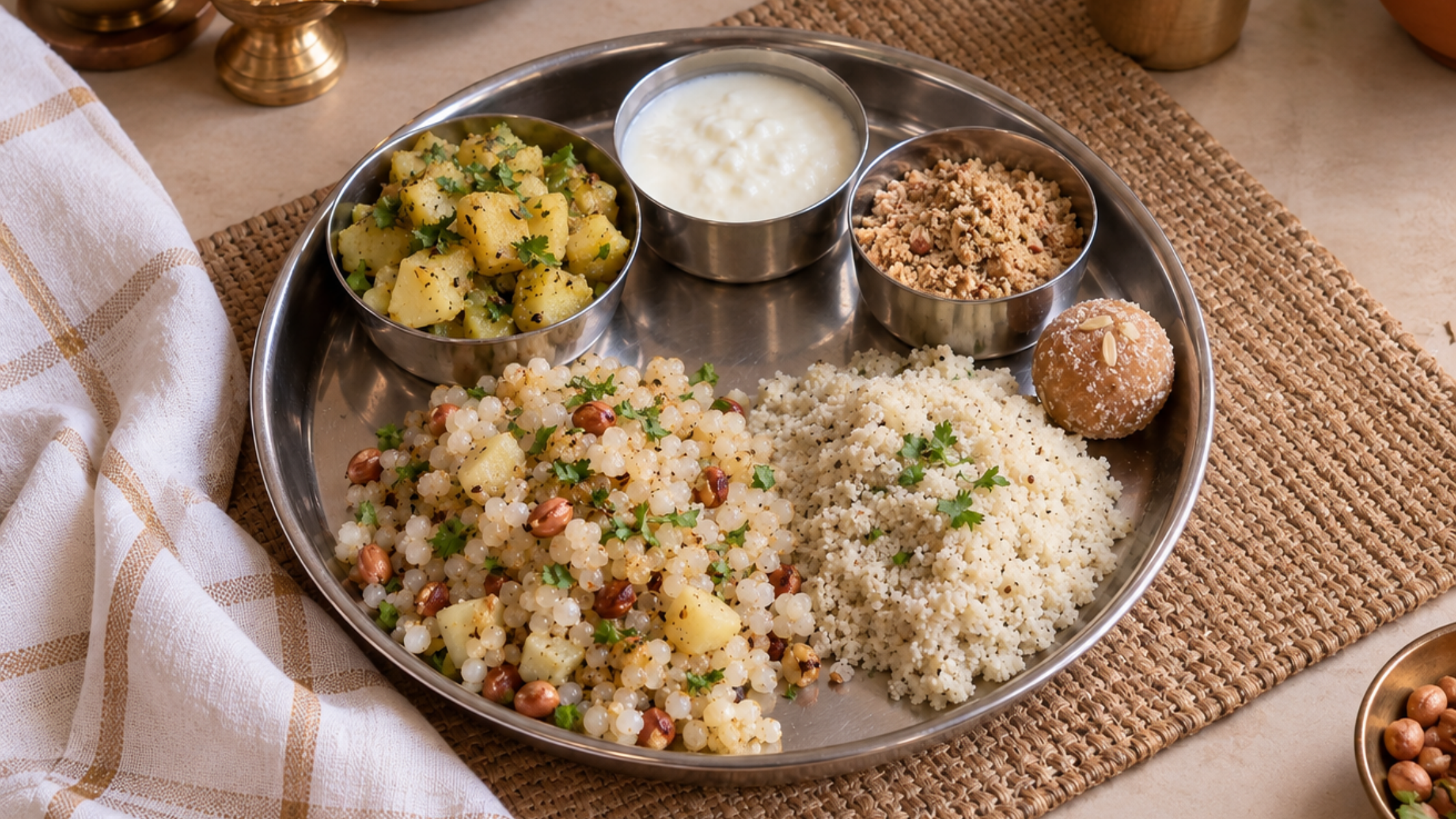
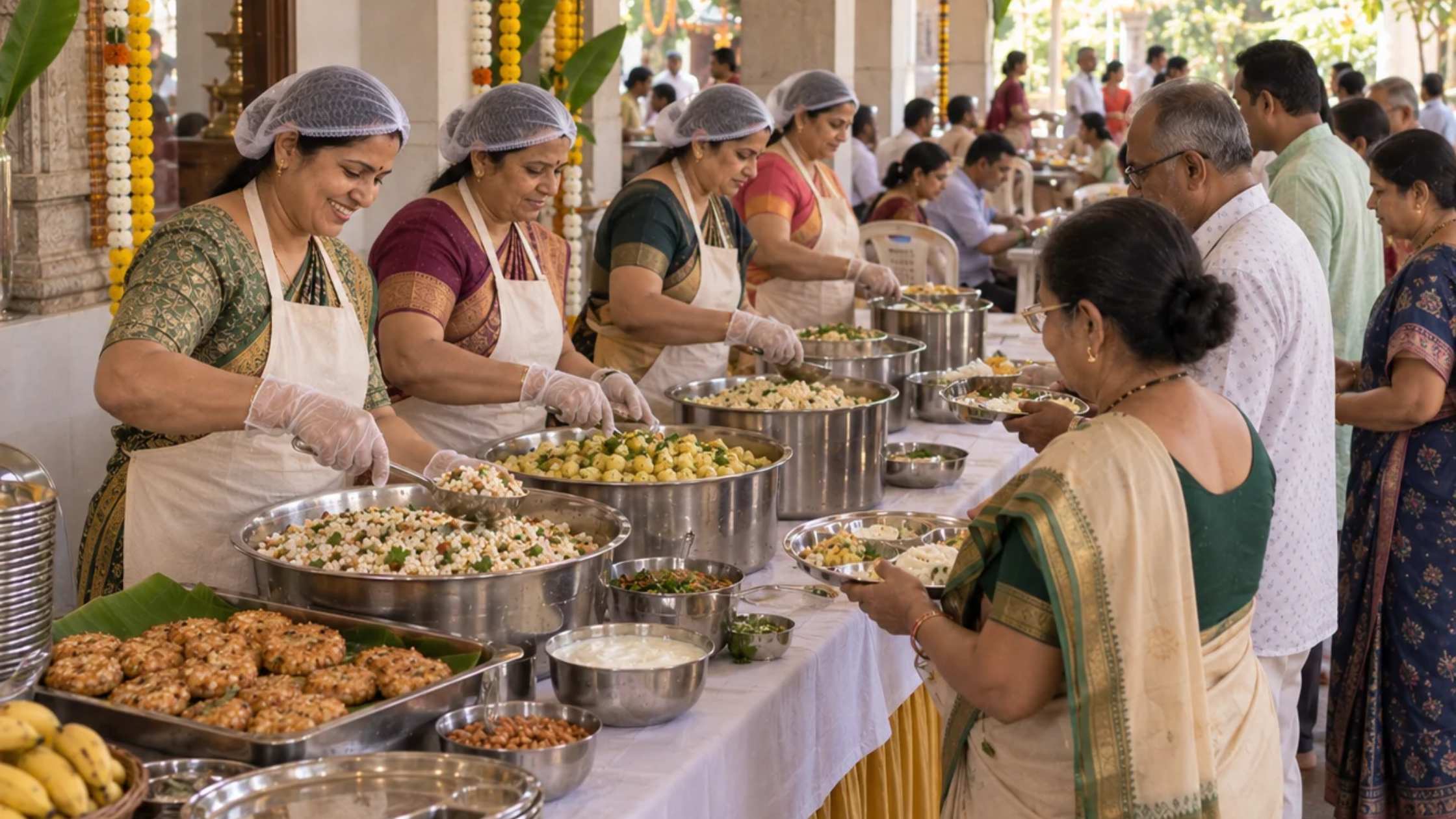
Depending on the occasion and household tradition, an upvas thali may include a grain substitute such as bhagar, a potato preparation, sabudana-based food, peanut chutney, yogurt, fruit or a sweet preparation.
Some families keep things extremely simple. Others turn the occasion into a proper festive meal.
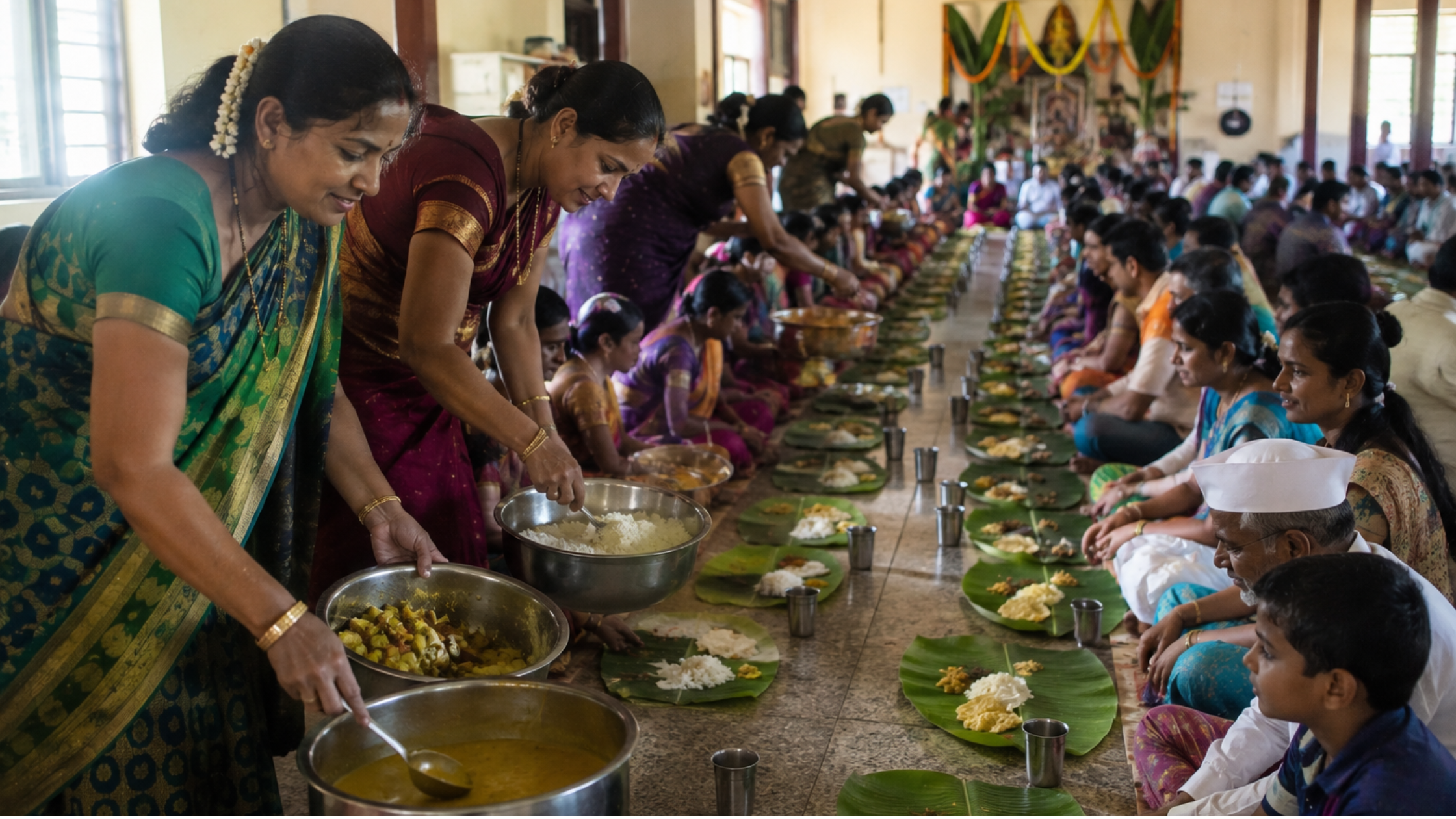
This becomes particularly visible during community religious events, where fasting food may need to be prepared for dozens or even hundreds of people.
Cooking for a large group adds another layer of complexity. Ingredients need to be measured carefully, textures need to remain consistent, and the kitchen must account for the specific dietary rules being followed.
Why Fasting Food Is More Than Just "Special Food"
One reason Maharashtrian upvas food has survived so well is that it carries memories.
For one person, sabudana khichdi might mean an Ekadashi morning at home. For another, it might bring back memories of a temple visit, a family gathering or a grandmother preparing food before everyone sat down together.
The recipes may look simple on paper. Their emotional value is considerably less simple.
And like many traditional food practices, they also demonstrate how Indian kitchens have historically adapted to limitations rather than treating them as obstacles.
Keeping the Tradition on the Plate
Today, upvas food is no longer limited to home kitchens.
Restaurants, caterers and community kitchens increasingly prepare fasting-friendly menus for religious gatherings, family functions and festive occasions.
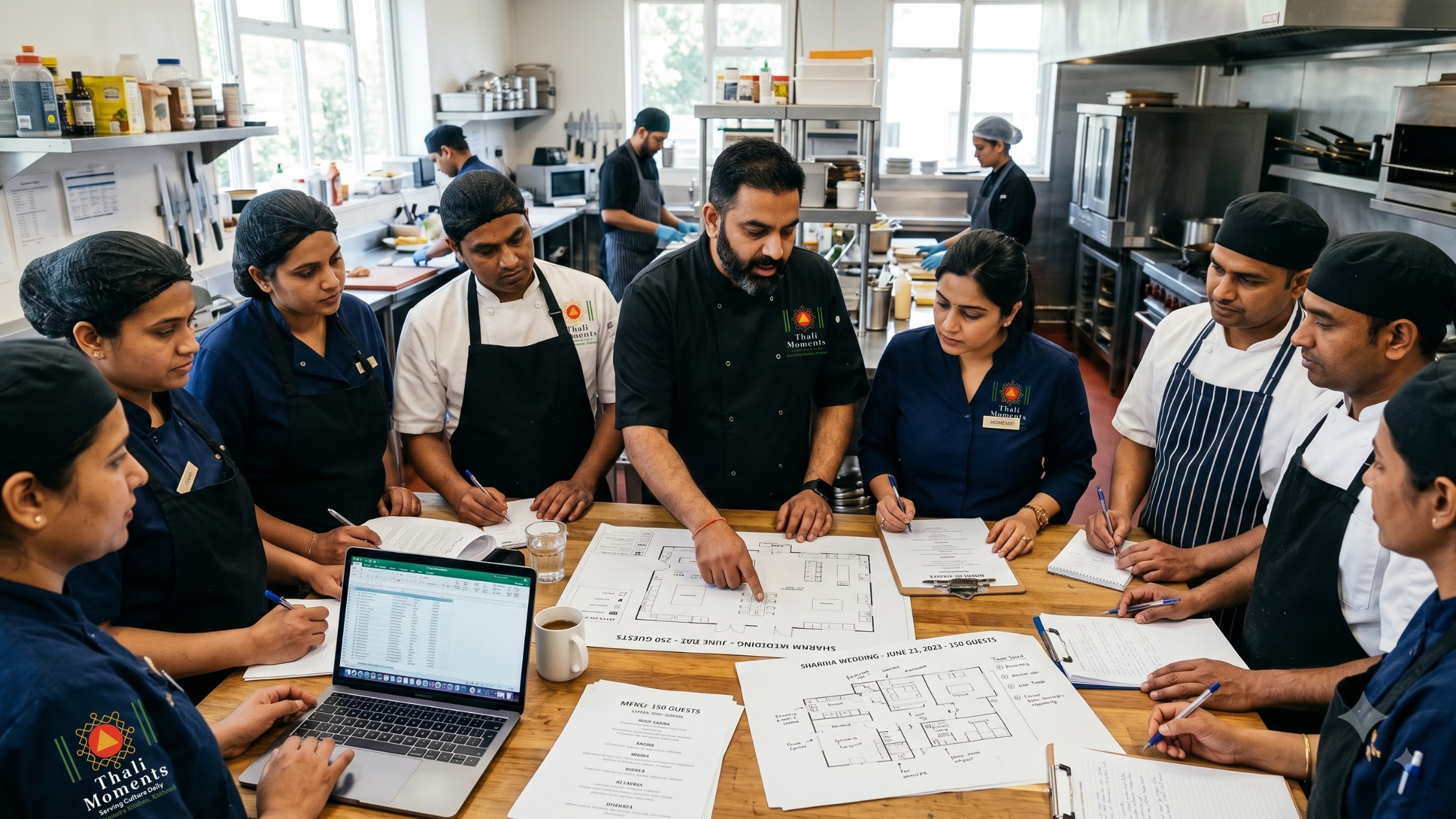
The challenge is to retain the character of traditional food while managing modern requirements such as hygiene, consistency, quantity and timely service.
That is where traditional knowledge and professional kitchen practices meet.
At Thali Moments, the same principle guides our approach to Maharashtrian food: respect the ingredients, respect the tradition and respect the people who are going to eat it.
Because fasting may change what goes into the kitchen—but it doesn’t have to take the joy out of eating.
The Thali Moments Way
At Thali Moments, we see festival catering as an opportunity to bring the warmth of the Maharashtrian home kitchen to larger gatherings. From Ganpati and Gauri celebrations to Diwali gatherings, community events, corporate celebrations and family functions, we create menus inspired by the flavours and traditions that make festive food special.
We prepare authentic Maharashtrian and Indian food using fresh ingredients and traditional recipes, with a focus on hygiene, consistency and timely service. Our trained and medically certified staff follow strict cleanliness practices, while our cooking avoids soda and harmful additives.
From a carefully prepared festive meal at home to food served for a large community gathering, the intention remains the same:
Food should bring people together.
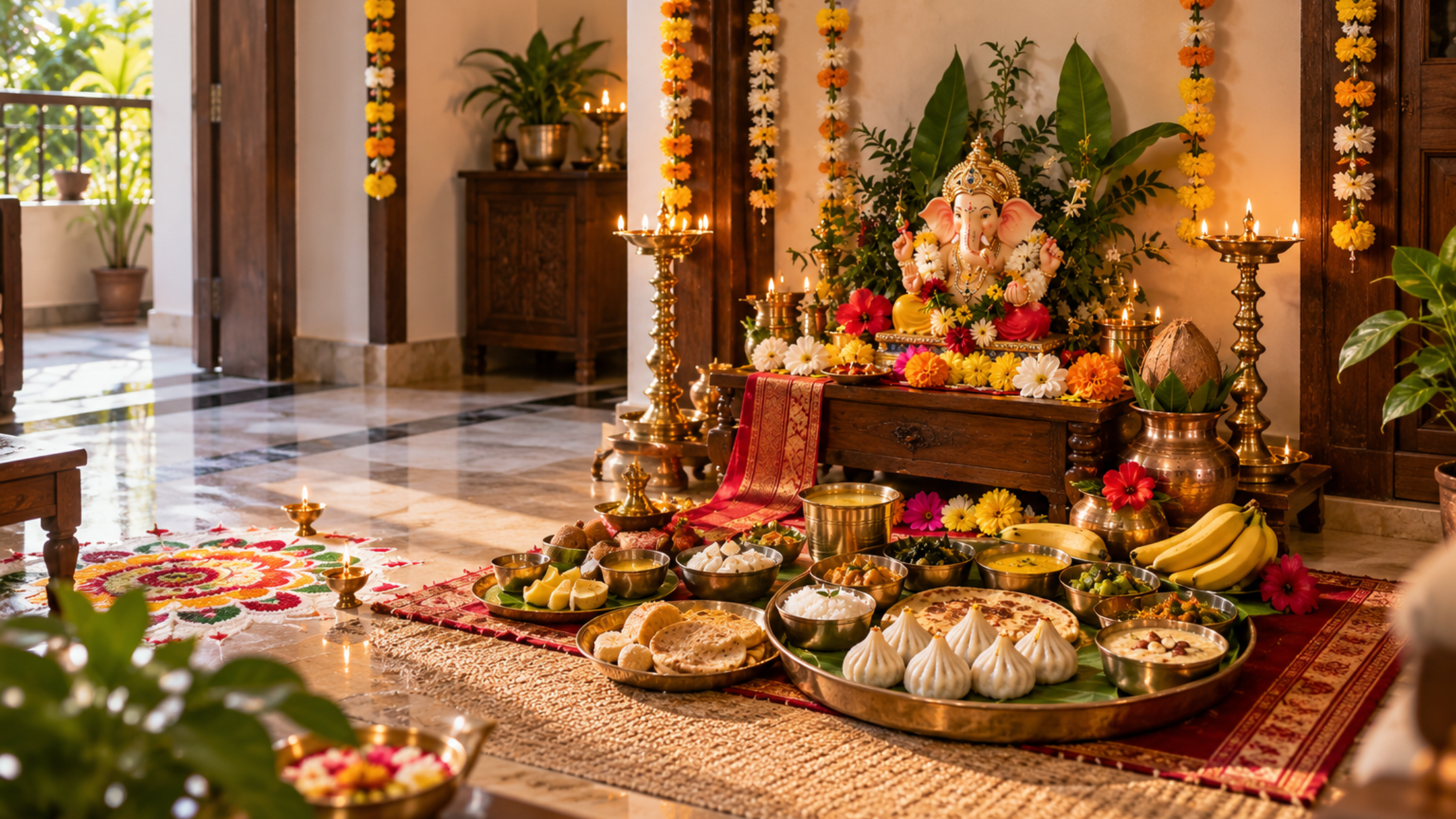
And perhaps that is the real journey from naivedya to prasad. What begins as an offering ultimately becomes something everyone can share.
Also Read
Share On