In Maharashtra, Ganesh Chaturthi doesn’t just arrive with a new idol, decorations and aarti. It arrives with the unmistakable aroma of food being prepared in the kitchen.
Someone is making modaks. Someone is preparing the day’s naivedya. A pot is simmering on the stove. Plates are being arranged. And somewhere, inevitably, someone is asking whether the modaks are ready yet.
Food is woven into almost every part of the celebration.
From the first offering placed before Lord Ganesha to the mahaprasad served to a crowd, Ganesh Chaturthi food in Maharashtra is a story of devotion, tradition and togetherness.
Modak: The Sweetheart of Ganpati
It is difficult to talk about Ganesh Chaturthi without talking about modak.
The traditional ukadiche modak is made with a soft rice-flour covering and a filling of fresh coconut and jaggery, often flavoured with cardamom. The modak is steamed rather than fried, giving it its distinctive soft texture.
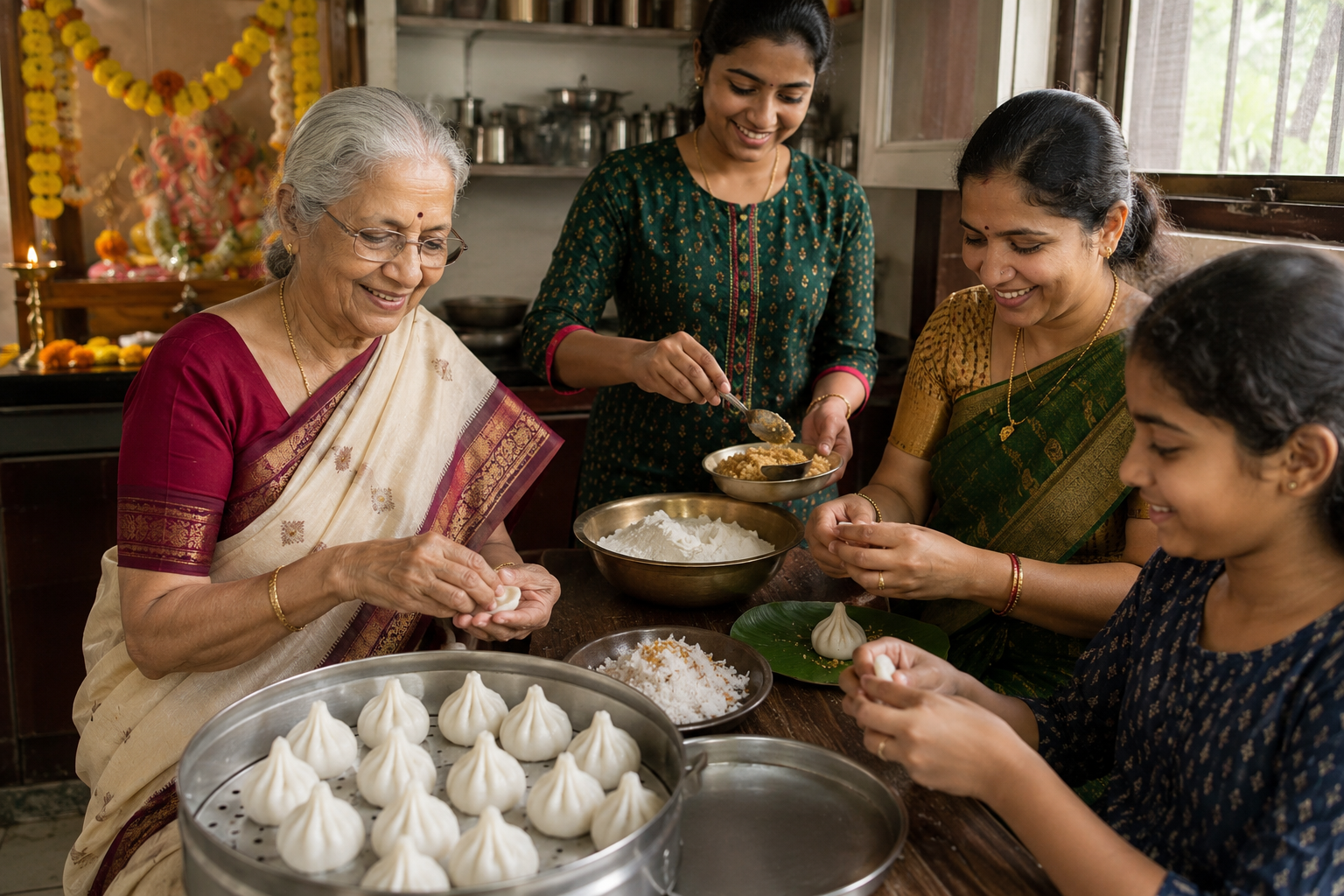
For many Maharashtrian families, making modaks is itself a festival ritual.
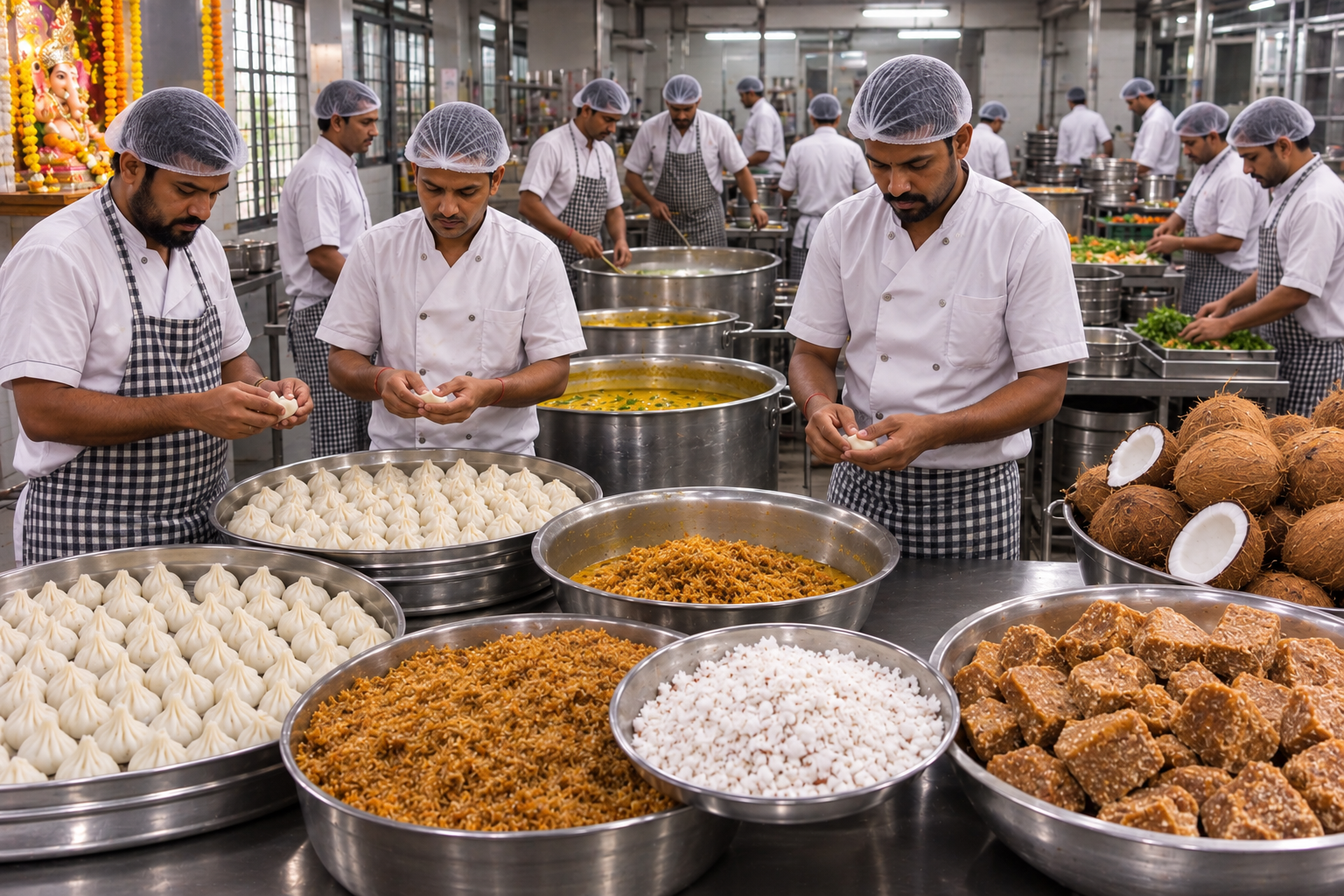
The process can bring everyone into the kitchen. One person prepares the filling, another works on the dough, someone shapes the modaks, and children usually find a way to participate, whether useful or otherwise.
There are now countless modern variations, but the traditional steamed modak remains deeply connected with Ganpati celebrations.
The Naivedya Is More Than One Dish
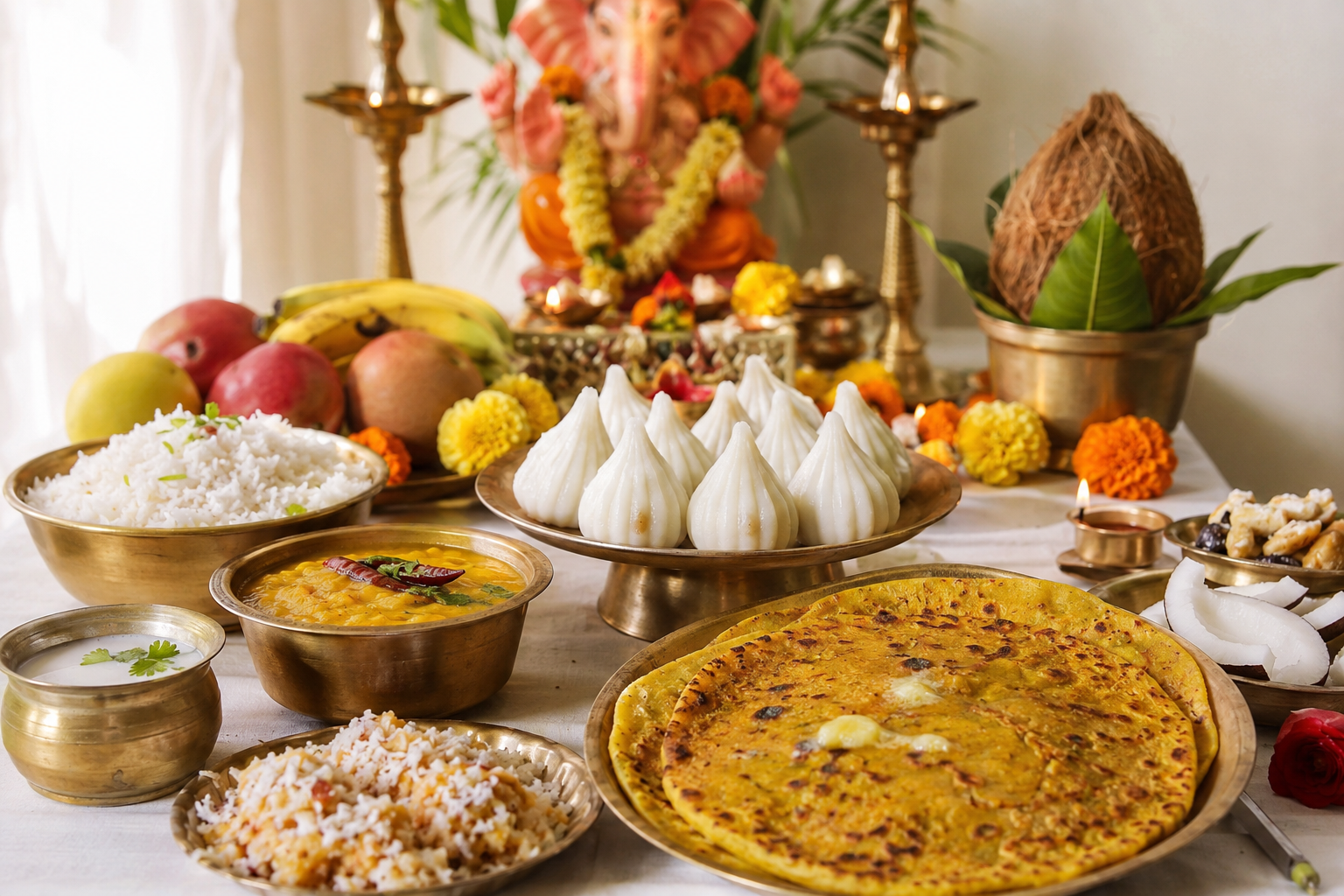
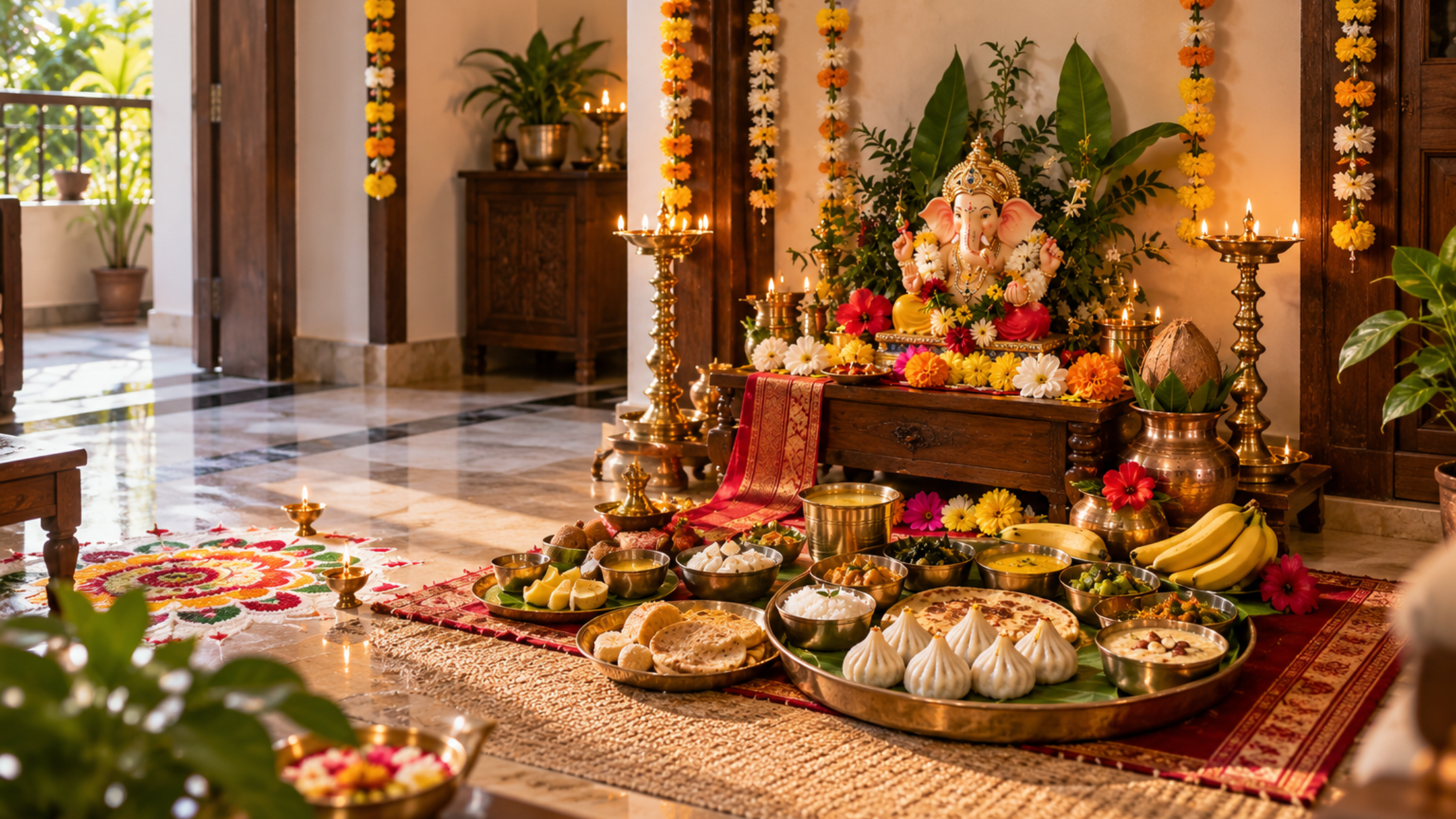
While modak gets most of the attention, Ganpati naivedya can be much more elaborate.
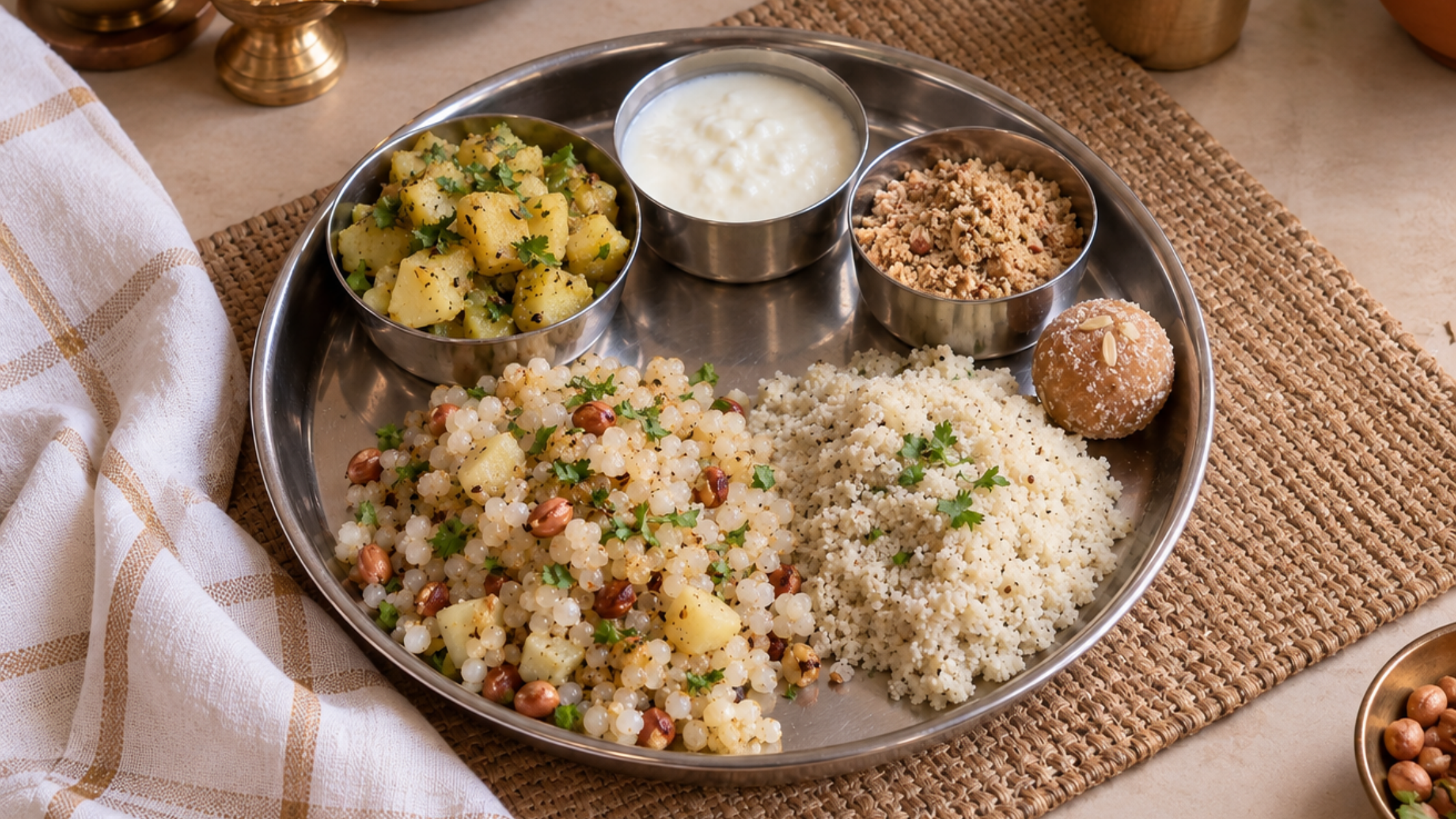
Depending on the family and region, the offering may include rice preparations, vegetables, dal, sweets, fruits and other traditional dishes.
There is no single menu that represents every Maharashtrian household.
Family traditions often determine what is prepared, and recipes may change from one home to another.That is part of the charm. One family’s must-have festive dish may be completely unfamiliar to another, yet both are equally rooted in tradition.
Food Changes With the Season
Ganesh Chaturthi arrives during the monsoon, and seasonal ingredients naturally find their way into Maharashtrian kitchens.
Fresh vegetables, coconut, jaggery, lentils, peanuts, grains and locally available produce become part of festive cooking. Traditional cuisine wasn’t built around ingredients being available all year. Recipes evolved around what was accessible, affordable and suitable for a particular season.
Festival food carries that wisdom forward.
From Home Ganpati to Sarvajanik Ganpati
The scale changes dramatically when we move from a family celebration to a sarvajanik Ganpati.
A home kitchen may prepare food for ten or twenty people. A community celebration may need to feed hundreds.That changes everything.
Ingredients have to be planned in larger quantities. Preparation needs to begin well in advance. Cooking has to be coordinated carefully, and food needs to reach serving counters at the right temperature and time. Yet the objective remains surprisingly simple:
Make good food and make sure everyone gets to enjoy it.
The Tradition of Mahaprasad
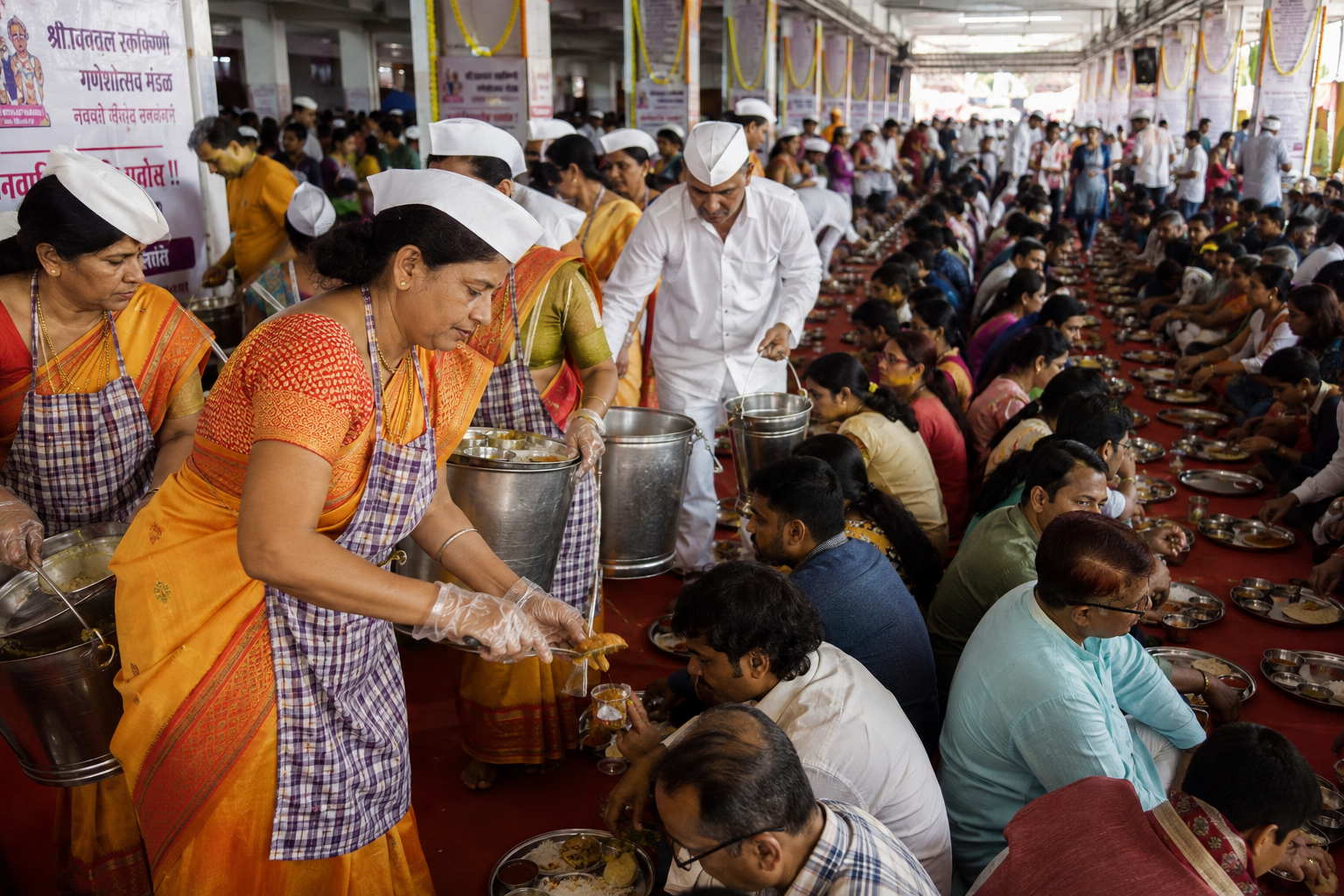
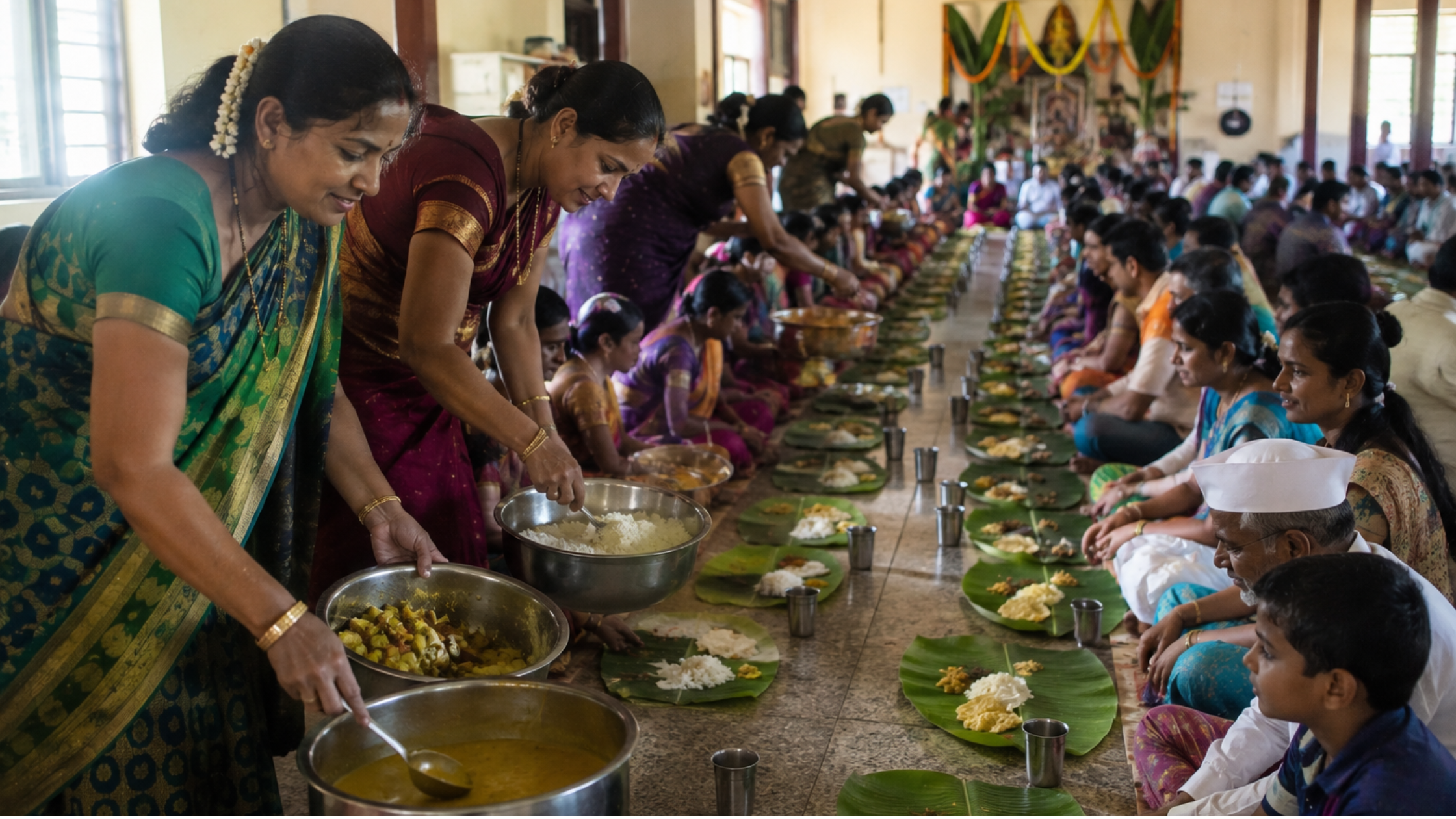
One of the most meaningful parts of larger Ganpati celebrations is mahaprasad. Food that began as an offering becomes something shared with the wider community.
People who may not know each other sit together for a meal. Volunteers serve food. Guests make space for one another. For a few minutes, the boundaries between host and guest become almost irrelevant.
Everyone is simply part of the celebration. This is where Maharashtrian food culture shows one of its strongest characteristics: food is meant to be shared.
The Flavours We Remember
Perhaps the most enduring part of Ganesh Chaturthi food isn’t any single dish. It’s the memory attached to it.The sound of modaks being shaped in the kitchen.The smell of ghee and roasted spices.
A grandmother insisting that the filling needs “just a little more jaggery.” Eating the first modak after the morning aarti. Standing in a long queue for mahaprasad at a community Ganpati.These moments turn recipes into memories.And that is why festival food continues to matter even as celebrations evolve.
Keeping Ganpati Food Traditions Alive
Modern celebrations may have larger venues, bigger gatherings and more elaborate menus. But the essence of Ganesh Chaturthi food remains familiar.
Cook with care.Offer with devotion.Share generously.
Whether the food is prepared in a family kitchen or a professional catering kitchen, those principles continue to define the experience.
The recipes may evolve. The presentation may change.But the joy of sitting down together over a festive Maharashtrian meal remains remarkably constant.
The Thali Moments Way
At Thali Moments, we bring the flavours of traditional Maharashtrian cooking to Ganpati celebrations, family gatherings, community events and festive occasions across Pune.
From authentic festive menus and traditional sweets to large-scale Ganpati catering in Pune, our focus is on combining regional flavours with reliable professional execution. We use fresh ingredients and traditional recipes, while our trained and medically certified staff follow strict hygiene and cleanliness practices. Our cooking also avoids soda and harmful additives.
Whether you’re planning an intimate Ganpati celebration or serving a large community gathering, we believe festival food should retain the warmth of the home kitchen while being prepared with the planning and consistency that large events require.
Because Ganpati food isn’t simply about feeding people.
It’s about giving people something to remember.
Also Read
Share On