There is something about a festival kitchen that makes an ordinary day feel different.
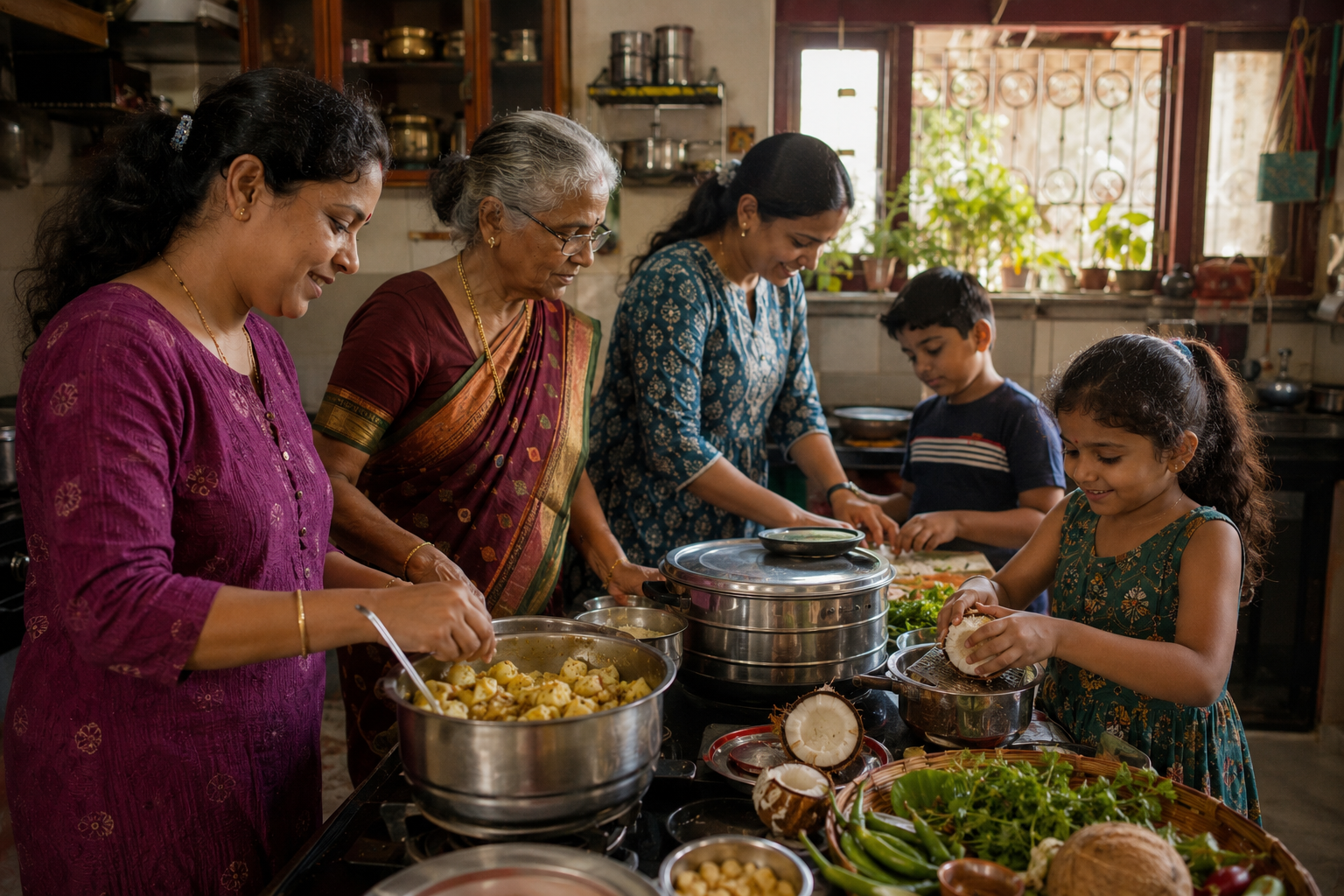
The kitchen becomes busier. More vessels appear on the stove. Ingredients are bought in larger quantities. Family members who normally stay out of the kitchen suddenly have a job to do.
Someone is chopping vegetables.Someone is preparing sweets.Someone is tasting the amti for the third time.And someone, usually a child, is waiting for the food to be ready.This is how many Maharashtrian festivals begin: with food being prepared together.
But what starts in a home kitchen can grow into something much larger. A family meal can become a housing society gathering, a neighbourhood celebration or a community feast serving hundreds of people. The scale changes.The meaning doesn’t.
Food Has Always Been Part of the Celebration
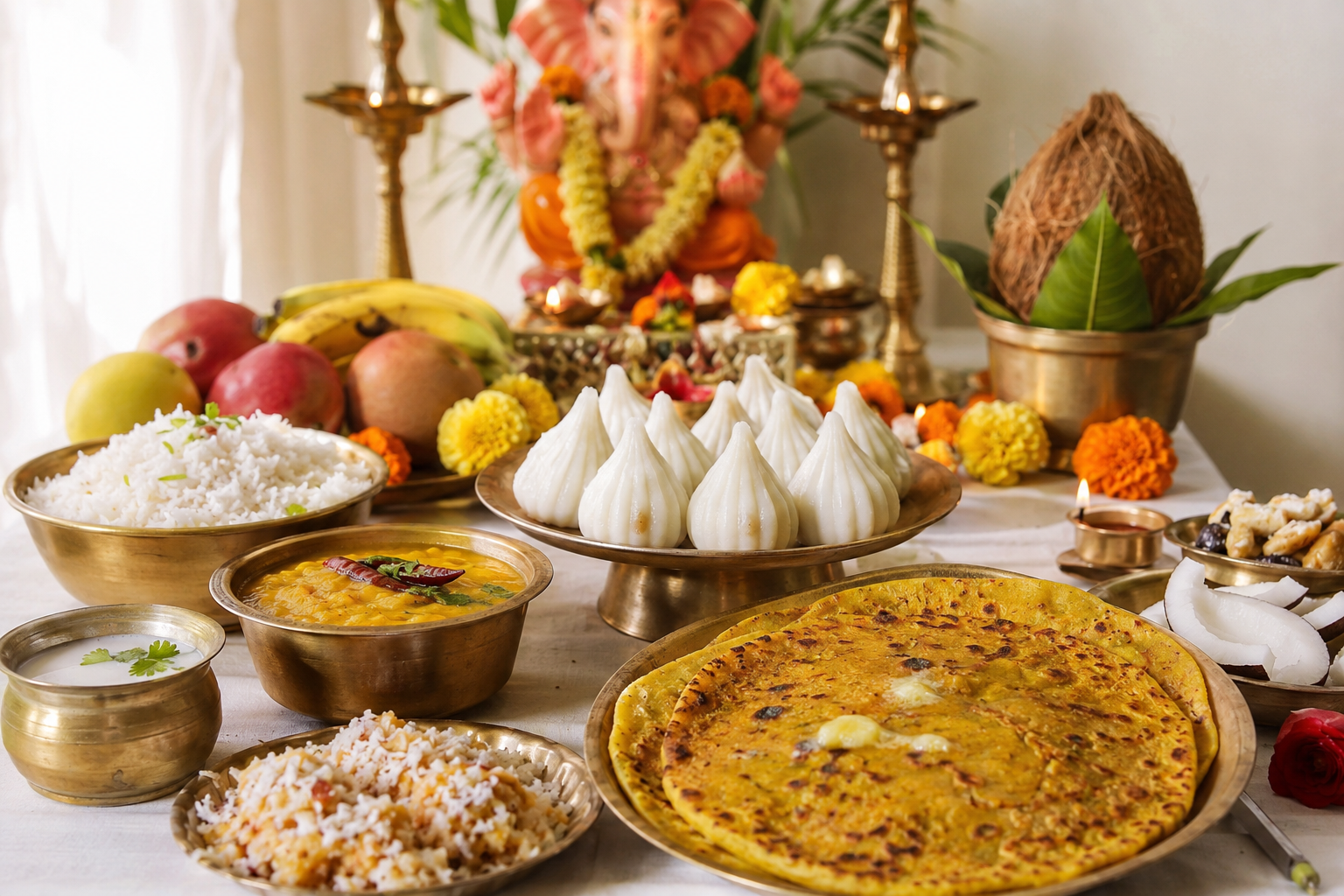
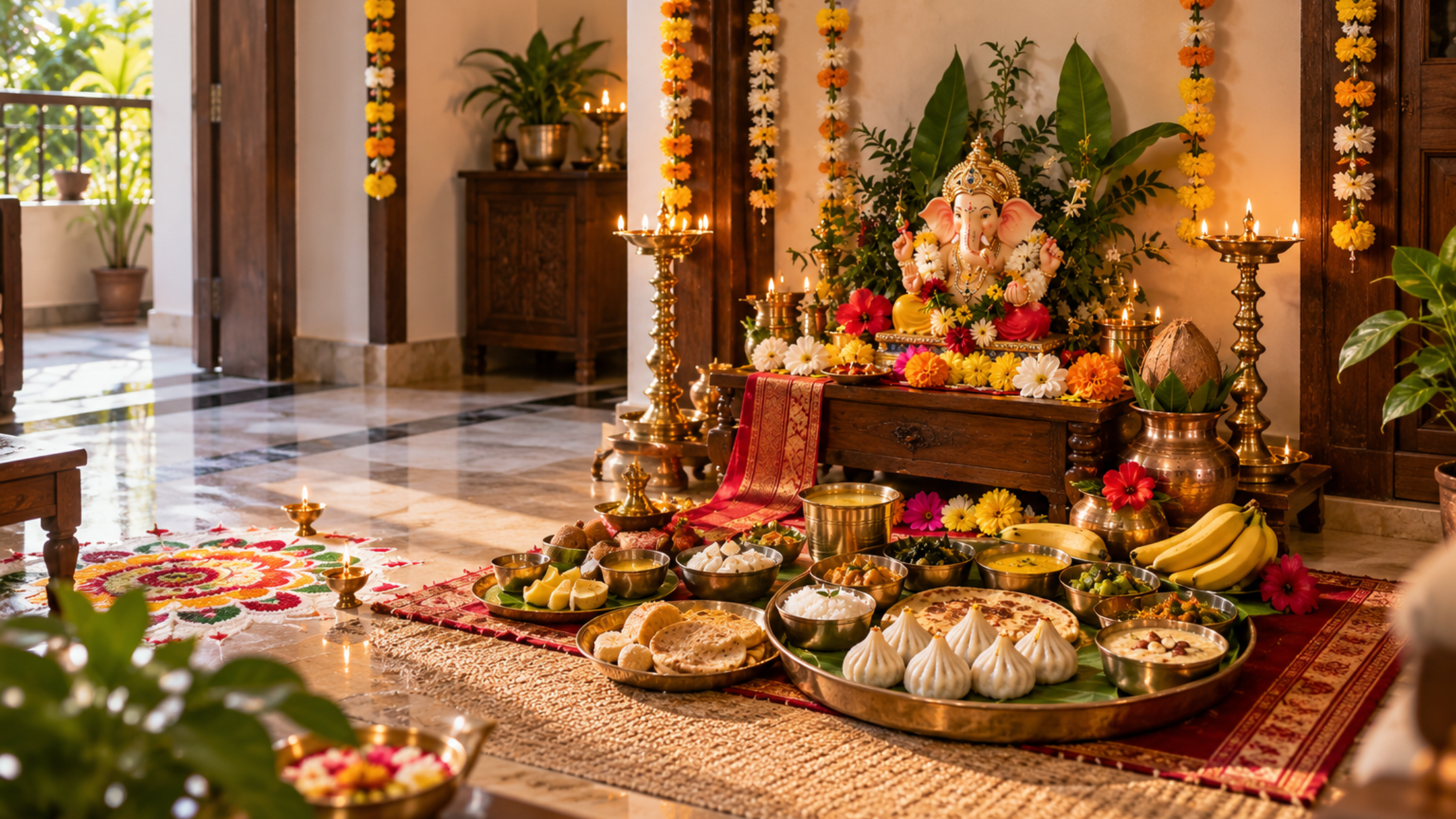
In Maharashtra, festivals and food have always gone hand in hand. Ganpati brings modak and festive naivedya. Gauri celebrations bring elaborate meals. Diwali brings faral. Other festivals bring their own seasonal dishes and traditions.
These aren’t simply menus associated with particular dates.They are food memories passed between generations.
A recipe may remind someone of their grandmother. A particular sweet may mean that the festival has officially begun. A familiar aroma from the kitchen can bring back childhood celebrations almost instantly.
Food gives a festival a flavour you can actually remember.
The Home Kitchen Is Where It Starts
Traditional festival cooking often begins long before guests arrive.
Ingredients are purchased, cleaned and prepared. Some dishes are made in advance. Others are cooked closer to mealtime.And because festival food is rarely just one dish, the kitchen becomes a small exercise in coordination.One person prepares the vegetables. Another works on sweets. Someone handles the rice while another manages the breads.
It’s not necessarily organised in the way a professional kitchen is. But somehow, everyone knows what needs to happen.
That is part of the beauty of a traditional Indian household.
Cooking becomes a shared activity rather than an individual task
Then the Guest List Grows
The transition from family celebration to community celebration changes the equation. Cooking for 15 people is one thing.Cooking for 300 is something else entirely.
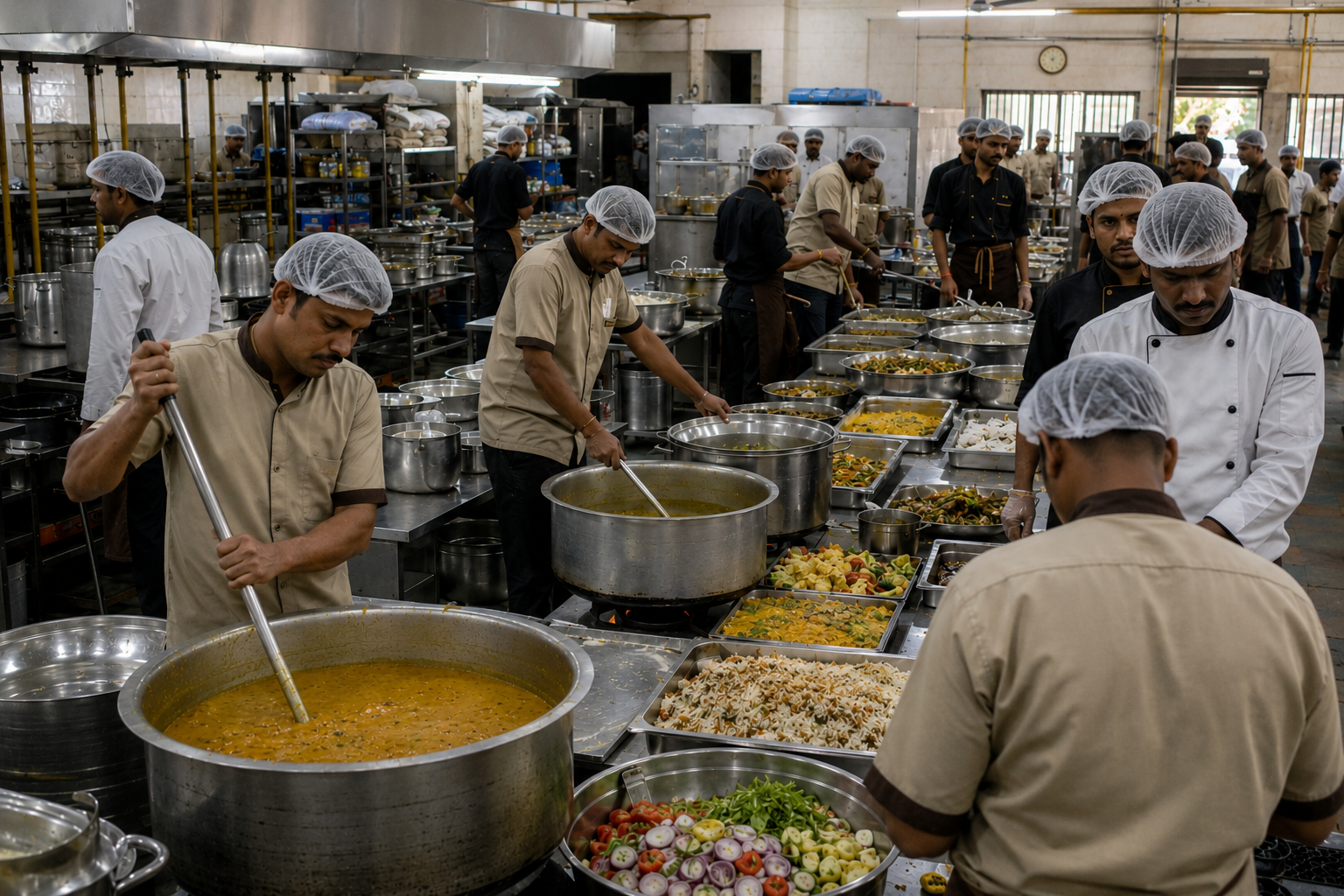
Suddenly, quantities need to be calculated carefully. Ingredients have to be sourced in bulk. Preparation needs to begin earlier. Cooking must happen in batches. Serving needs to be coordinated.Food also has to remain fresh and maintain its quality throughout service.
This is where professional community catering in Pune becomes particularly important.The challenge isn’t simply making more food.
It’s making more food without losing the flavour, consistency and character of the original dishes.
The Community Feast Is About More Than Food
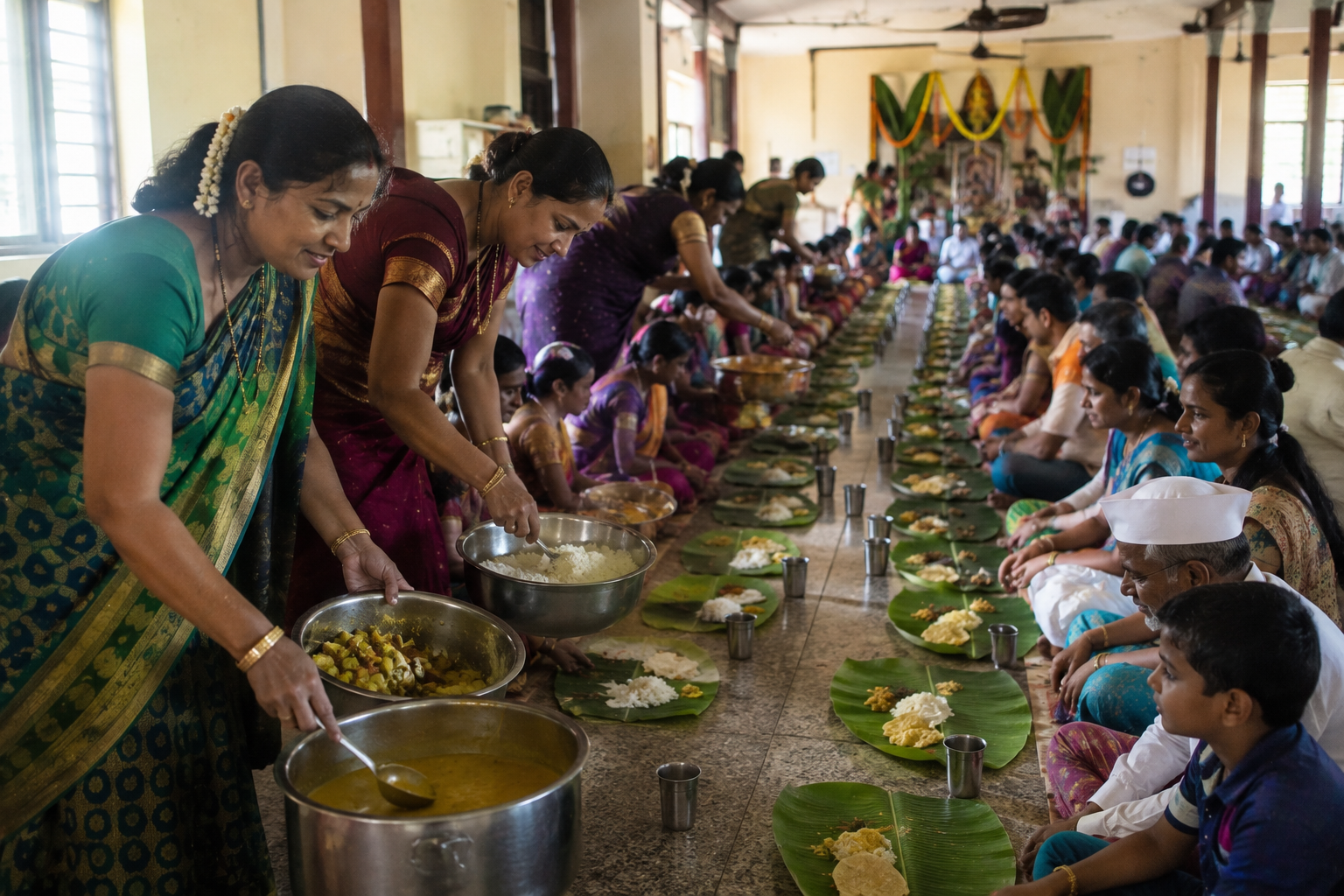
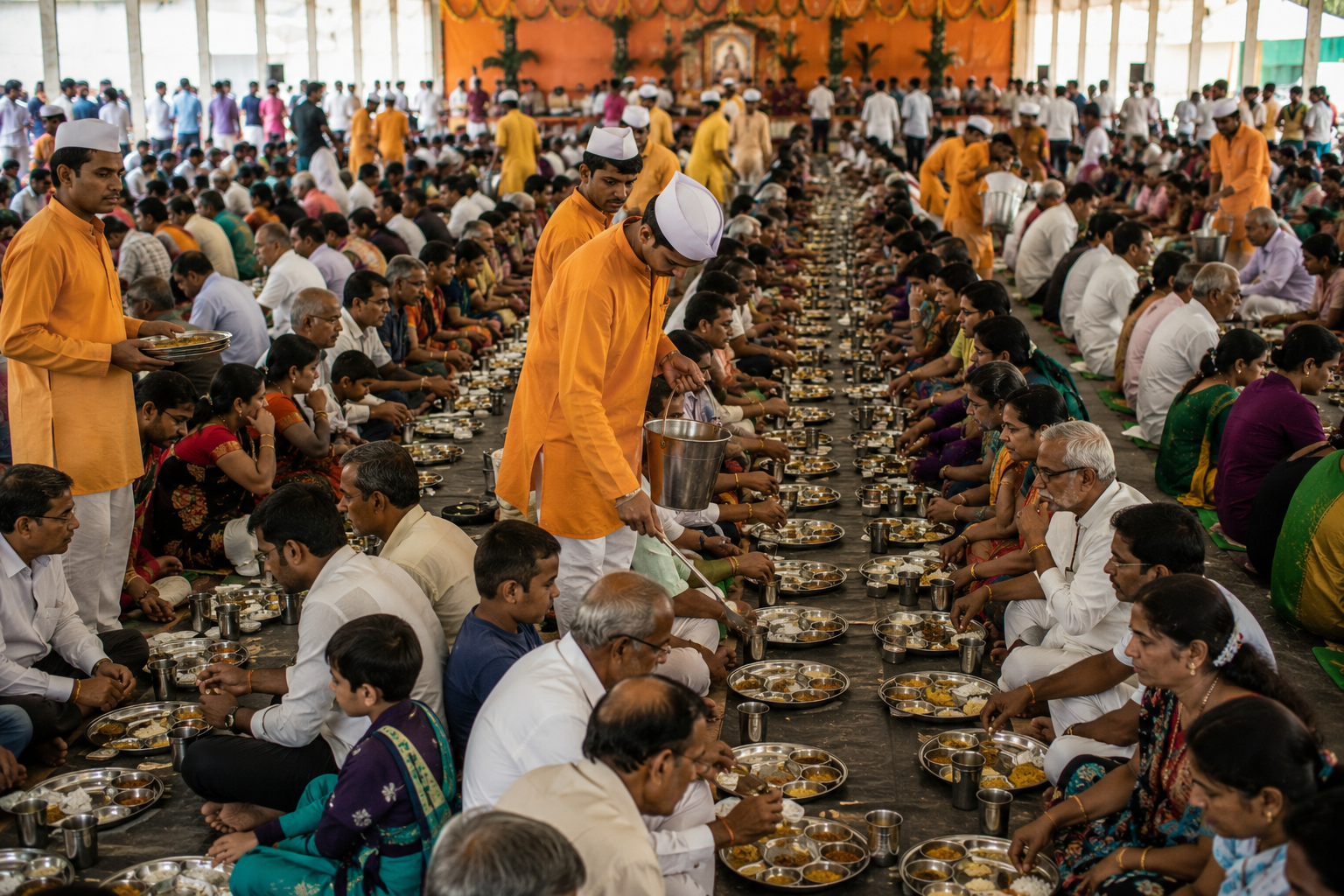
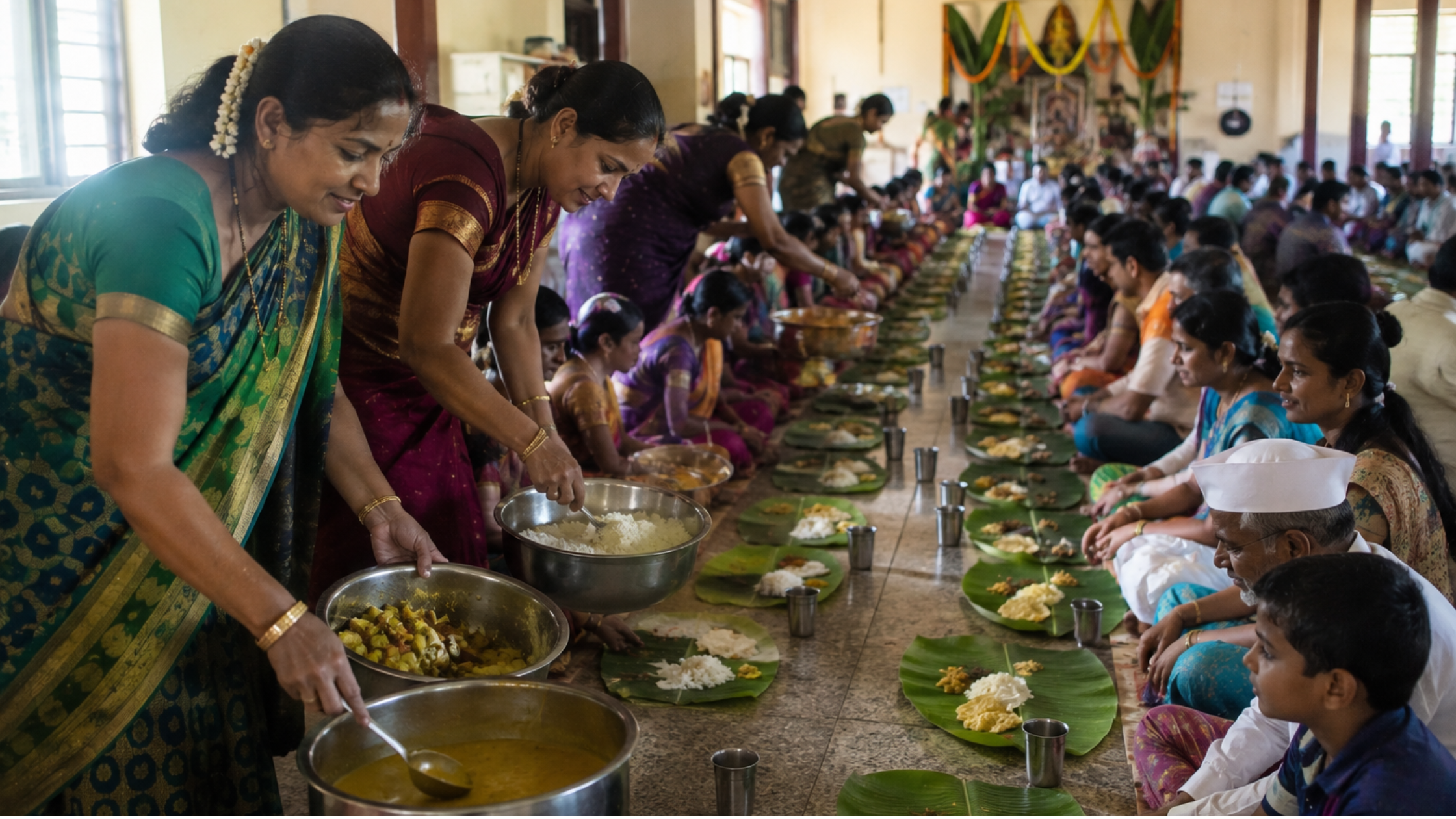
Walk into a traditional community meal and you’ll notice something interesting.People who may never have met before are sitting beside each other.
Volunteers are serving food.Someone is making sure an elderly guest is comfortable.Children are watching what everyone else is eating.Plates are being refilled.
For a short while, the usual boundaries disappear.A feast creates a shared experience. Everyone receives the same food. Everyone sits together. Everyone participates in the same celebration.That is the quiet social power of food.
Why Maharashtrian Food Works So Well for Community Celebrations
Maharashtrian cuisine has a natural advantage when it comes to large gatherings.Many traditional dishes can be prepared in larger quantities while retaining their character when the cooking process is planned properly.
Rice, dal, amti, usal, vegetable preparations, puris, sweets and several traditional accompaniments can come together to create a satisfying and varied meal.But large-scale cooking requires more than simply using larger vessels.
Ingredient proportions, cooking time, spice balance, batch sizes and serving temperatures all need to be managed carefully.The recipe may remain the same.The process becomes much more sophisticated.
The People Behind the Feast
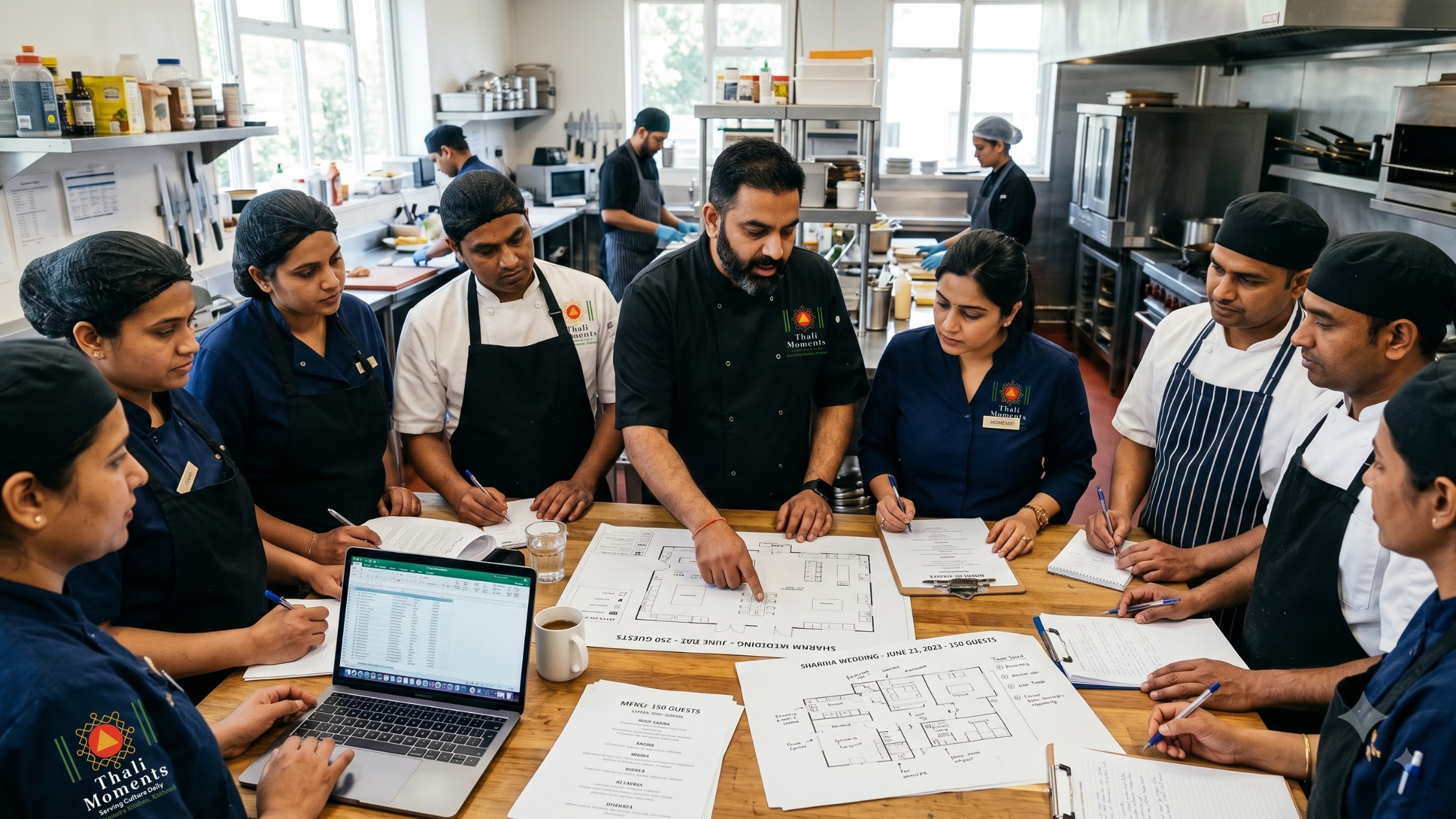
At a large festival gathering, guests see the final meal. Behind it is a team of people working long before the first guest arrives. Chefs prepare the food.
Kitchen staff organise ingredients. Servers coordinate the buffet or dining area. Someone monitors replenishment.
Someone checks whether everything is ready for the next service. And when hundreds of people are being served, timing becomes critical. Good catering often feels effortless to the guest precisely because so much effort happens out of sight.
From Aaji's Kitchen to Today's Celebrations
Festival traditions are changing.
Families are smaller. People have busier schedules. Large community celebrations are increasingly common. Professional catering has become a practical way of preserving elaborate food traditions without placing the entire burden on one household.
But this doesn’t mean the tradition disappears. The recipes can still remain. The flavours can still remain. And most importantly, the reason for preparing the food can remain. To bring people together. That may be the most important part of all.
The Thali Moments Way
At Thali Moments, we believe festival catering should retain the warmth of food prepared at home while having the organisation required to serve a much larger gathering.
From Ganpati and Gauri celebrations to Diwali events, community gatherings, family functions and corporate festive celebrations, we create traditional Maharashtrian and Indian menus for different occasions and guest sizes.
Our food is prepared using fresh ingredients and traditional recipes, with trained and medically certified staff following strict hygiene and cleanliness practices. We also avoid soda and harmful additives, keeping the focus on authentic flavour and quality.
Whether it’s a family meal around a small dining table or a community feast serving hundreds, the purpose remains the same: Bring people together around good food.
Because a festival isn’t remembered only by what we celebrated. It’s remembered by who sat beside us, what we ate together, and how it made us feel.
Also Read
Share On