There is something different about food prepared for a festival.
The same kitchen that makes everyday bhaji and poli suddenly feels a little more special. Ingredients are chosen with greater care. Recipes that may not appear on the table every day make an appearance. Someone is awake earlier than usual, preparing sweets, grinding spices or stirring a festive dish.
And then comes that familiar moment.The food is placed before the deity. For a few moments, nobody touches it.
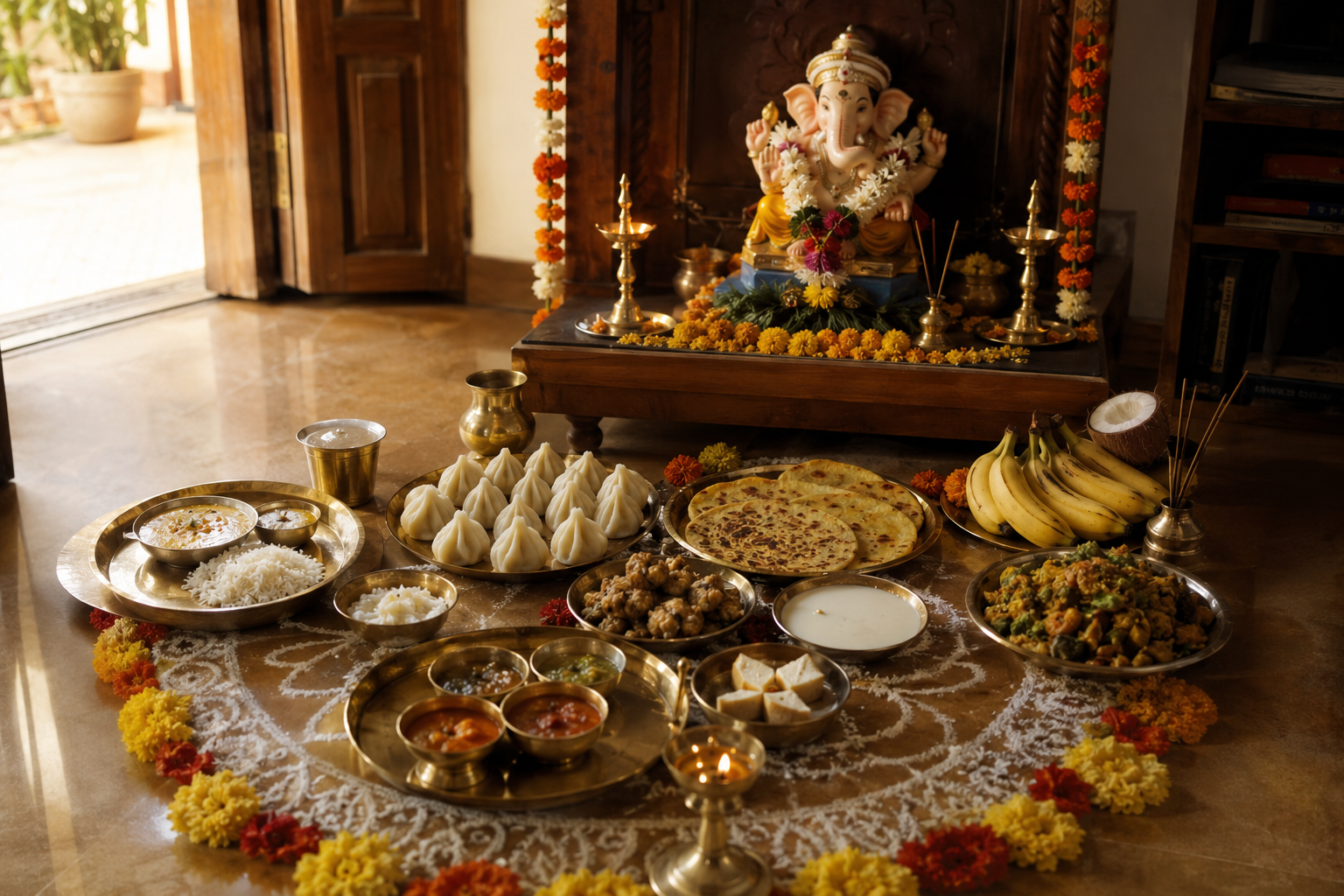
What was prepared as naivedya is offered with devotion. Once the offering is complete, it becomes prasad, shared with family, friends and sometimes an entire community.
The food hasn’t changed. But its meaning has. That simple transition tells us a lot about Maharashtra’s relationship with food, festivals and togetherness.
What Is Naivedya?
In Hindu traditions, naivedya refers to food offered to a deity as part of worship.
The preparation itself is considered important. Food is prepared with care and cleanliness, and depending on the festival and family tradition, the offering may include sweets, rice preparations, vegetables, fruits or other specially prepared dishes.
There isn’t one universal Maharashtrian naivedya. It changes with the festival, region, season and family customs. And that variety is what makes Maharashtrian festival food so fascinating.
When Food Follows the Festival
Maharashtra’s festivals have always been closely connected with food.
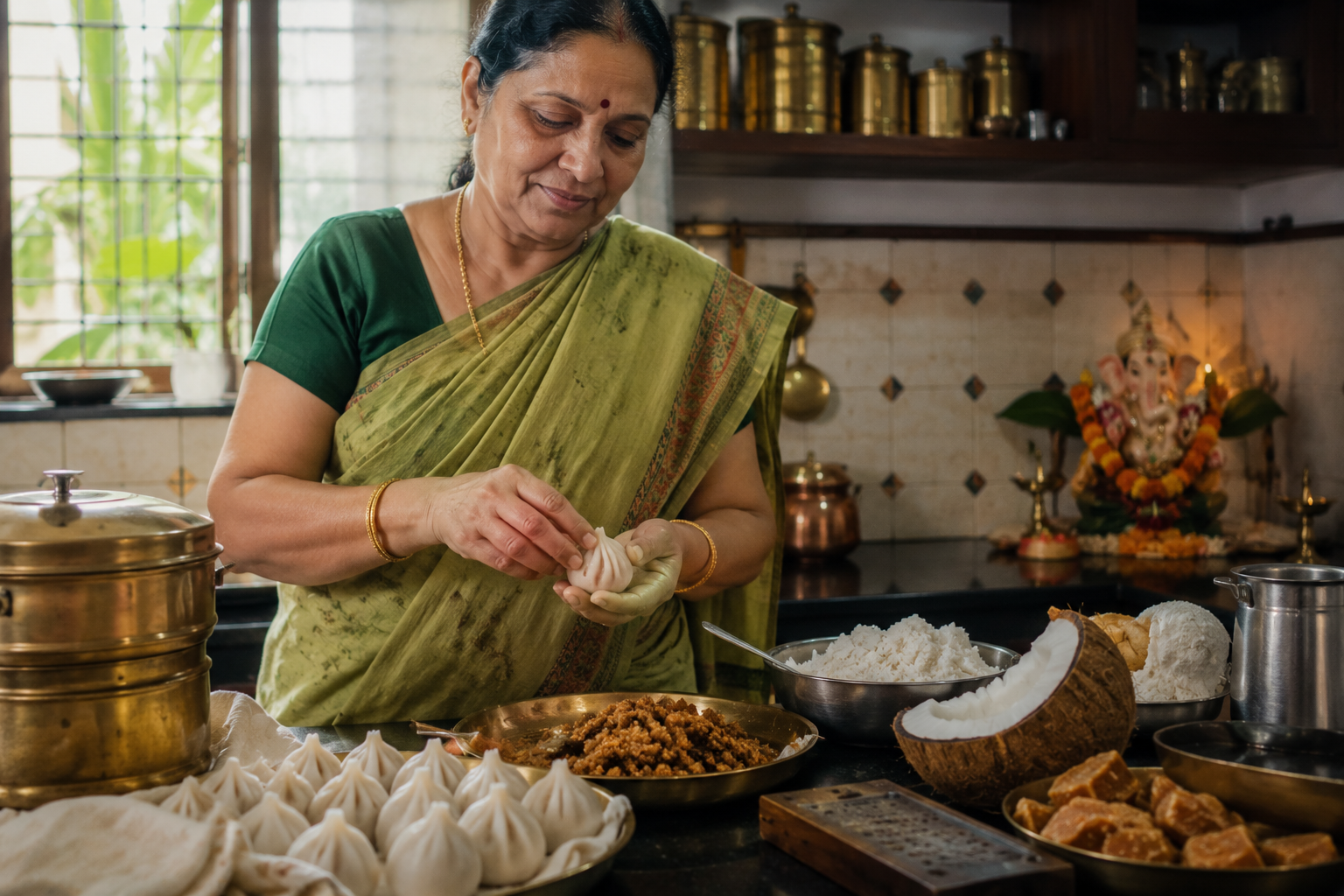
During Ganesh Chaturthi, modak is perhaps the most recognisable example. Ukadiche modak, with its steamed rice-flour covering and coconut-jaggery filling, has become almost inseparable from Ganpati celebrations.
But festive food extends well beyond modak.
During Gauri celebrations, families may prepare an elaborate meal as part of welcoming and worshipping Gauri. Other festivals bring their own combinations of sweets, savouries, grains, vegetables and seasonal preparations.
The dishes may differ, but the idea remains consistent: food becomes part of the celebration rather than simply something served alongside it.
Seasonal Food Has Always Been Part of the Tradition
Traditional Maharashtrian festival food is also closely connected to the seasons.
Fresh coconut, jaggery, peanuts, seasonal vegetables, lentils, grains and fruits have historically found their way into festive preparations.
This wasn’t simply about flavour. Before modern food distribution made almost every ingredient available year-round, seasonal cooking was a natural part of everyday life.
Festivals gave these ingredients another role.
They became part of recipes associated with particular times of the year, creating food traditions that people began to anticipate.
From Offering to Sharing
Perhaps the most beautiful part of the tradition comes after the offering.
The food is shared.
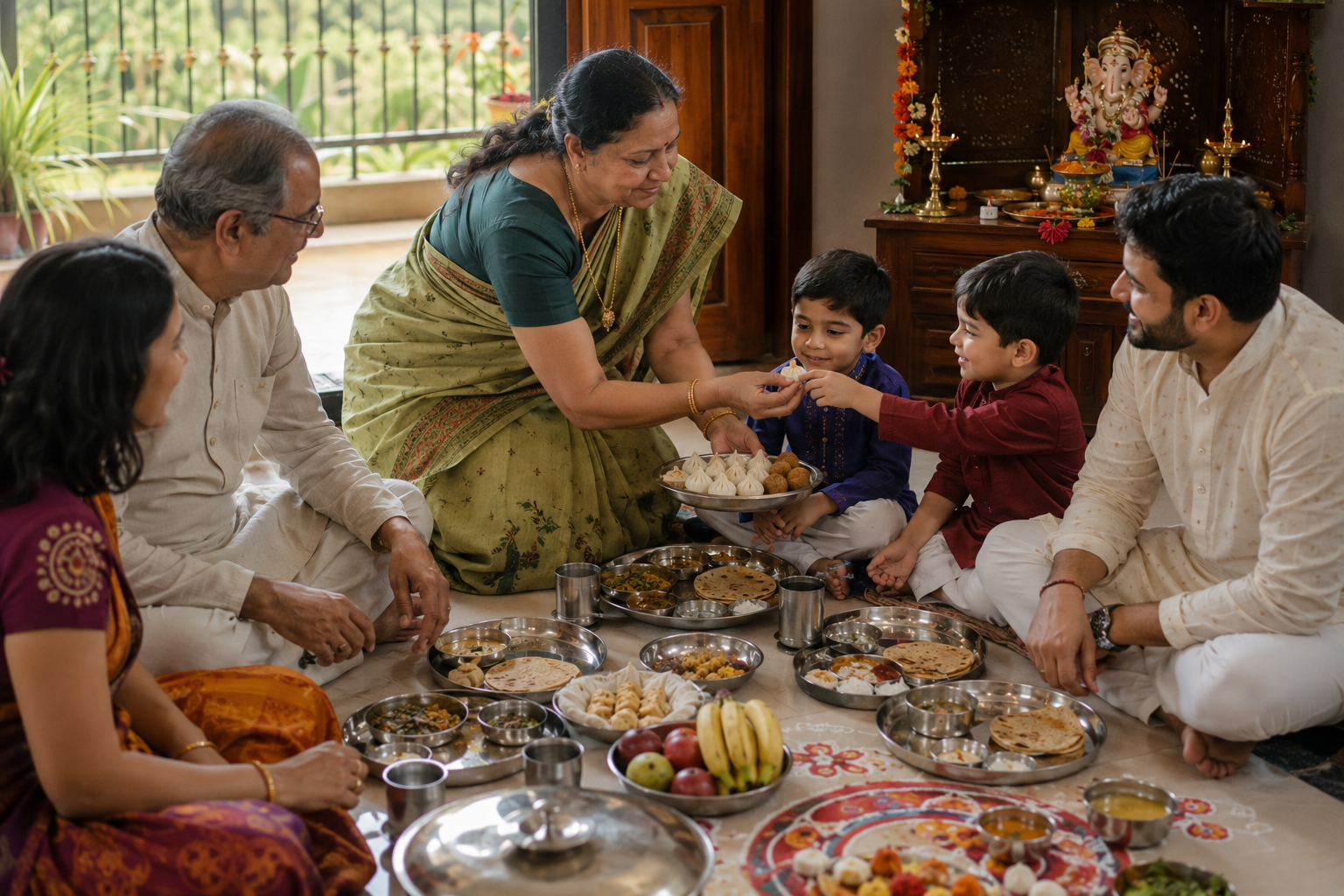
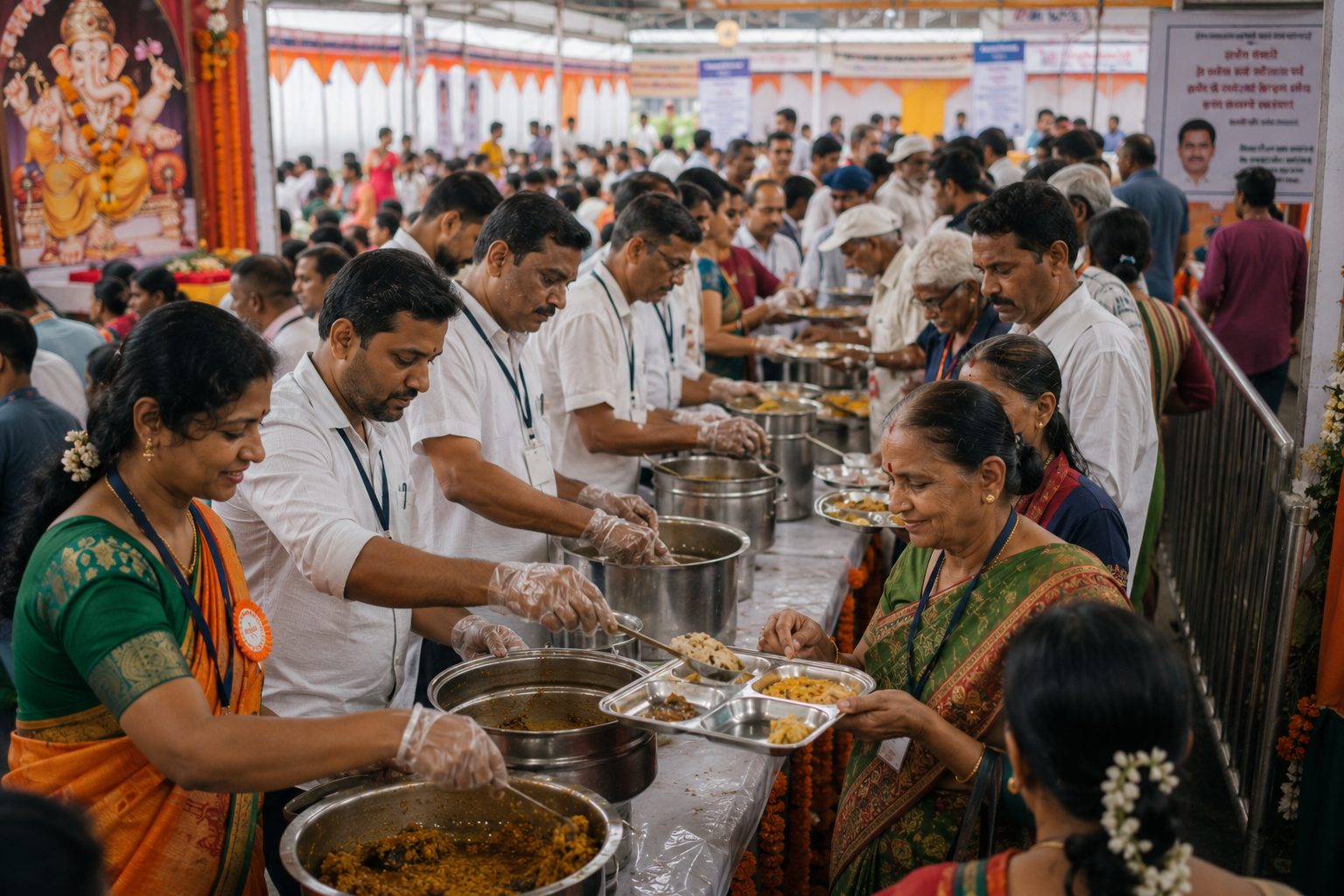
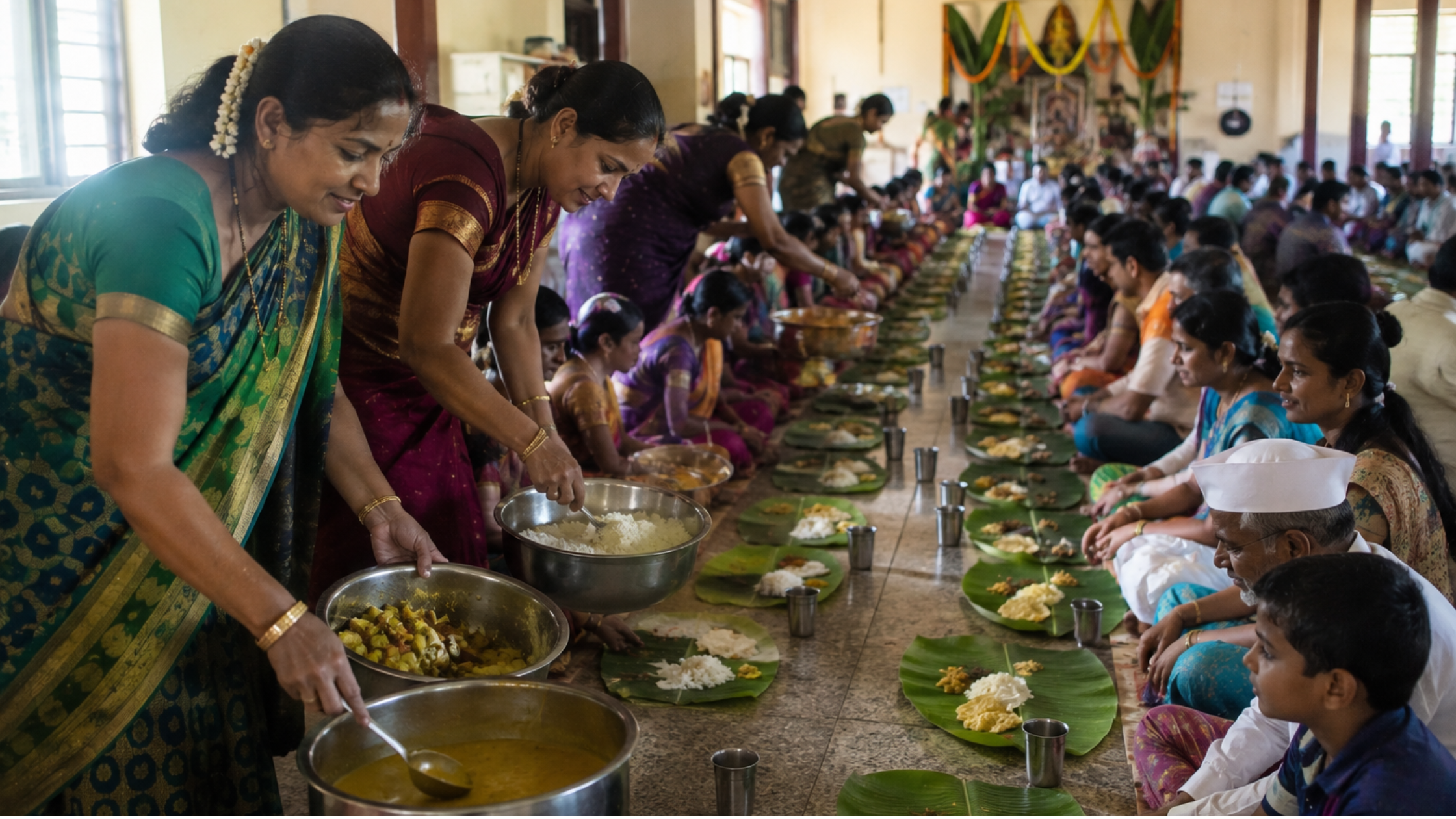
A portion may be given to family members. Neighbours may receive some. Children wait for their share. During larger celebrations, prasad can reach hundreds of people.
This is where the journey from naivedya to prasad becomes more than a ritual.
Naivedya is offered. Prasad is received.
Sharing it turns an individual act of devotion into a collective experience. And this idea of sharing is deeply woven into Maharashtrian hospitality.
Why Festival Food Carries So Much Nostalgia
There is another reason festive food feels different: memory.
A dish prepared only once or twice a year naturally becomes associated with anticipation.
The first modak of Ganpati season. The first batch of Diwali faral.
A particular sweet prepared exactly the way Aaji used to make it.
The ingredients may be familiar, but the occasion changes the experience.
Festive food becomes connected to decorations, prayers, family visits, music and childhood memories.That is why a single bite can sometimes take you straight back to your grandmother’s kitchen.
Every Family Has Its Own Tradition
Ask different Maharashtrian families what they prepare for the same festival, and you’ll rarely get exactly the same answer.
One family may insist on a particular sweet. Another may prepare a specific vegetable. Someone else may have a recipe that exists only in their household.
Many of these recipes aren’t preserved in cookbooks.They survive through memory.
Someone remembers how much jaggery was used. Someone knows exactly how soft the dough should feel. Someone calls an older family member every year to ask, “How did you make this again?”
That is how food heritage survives. Not just through written recipes, but through people cooking together.
When the Home Kitchen Becomes a Community Kitchen
As celebrations grow, so does the scale of preparation.
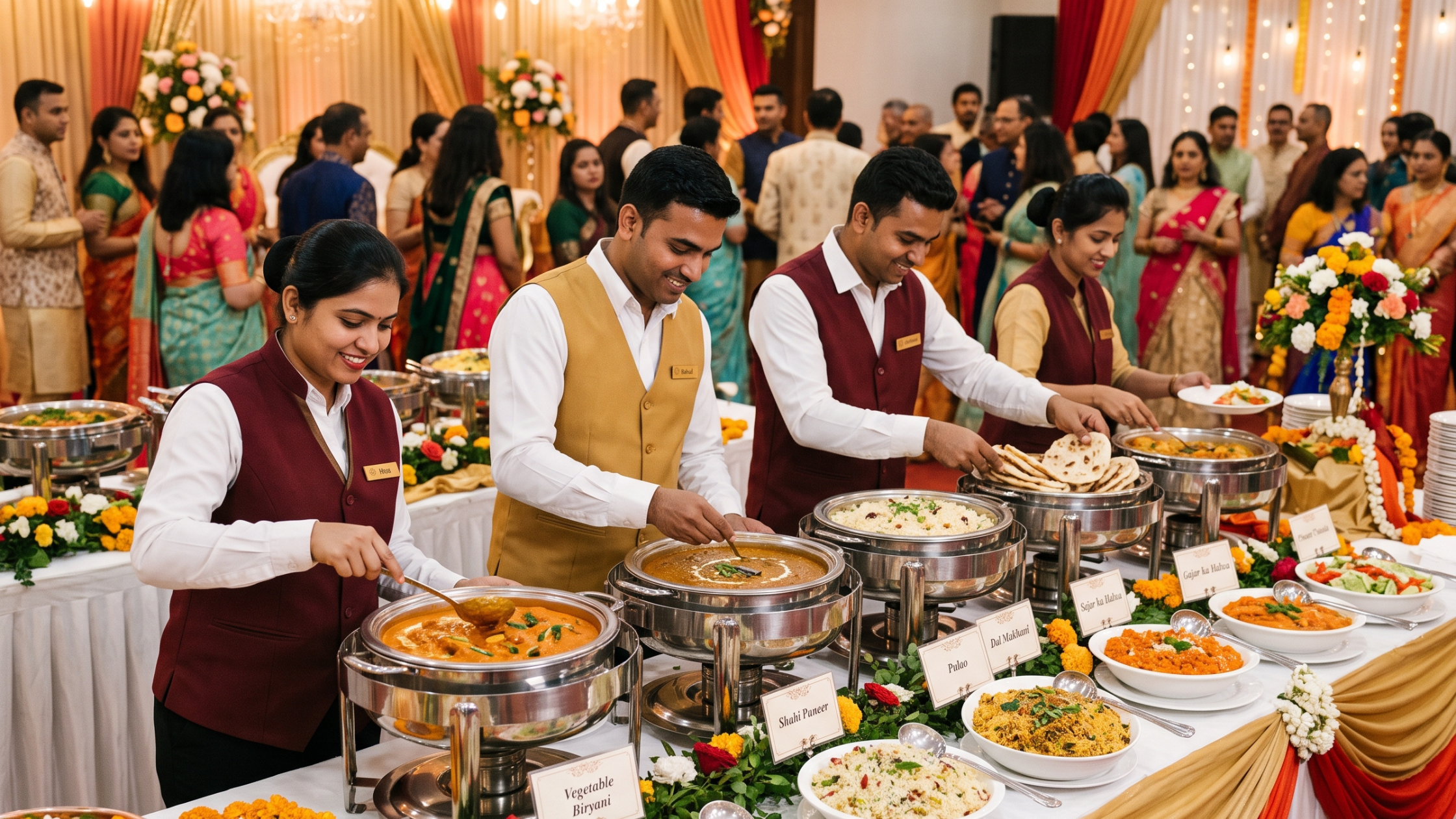
A family meal can become a housing society celebration. A neighbourhood Ganpati can serve hundreds. A community festival may require food to be prepared and served for an even larger gathering.
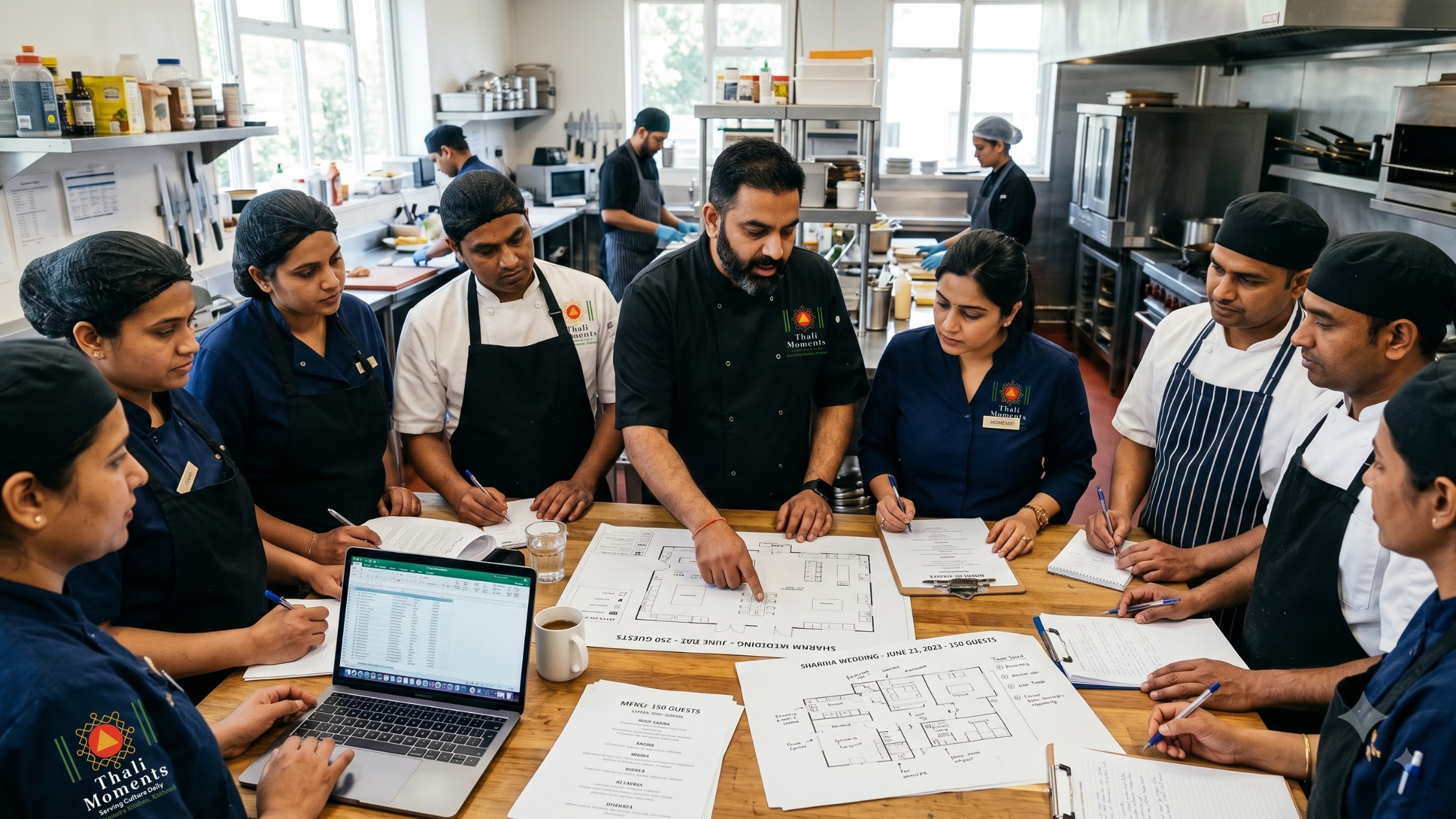
The challenge is to increase quantity without losing the character of the food. That requires planning, experienced cooks, ingredient management, careful timing and organised service.
The principles, however, remain familiar. Fresh ingredients.Traditional flavours. Thoughtful preparation. And food made with the people eating it in mind.
Keeping the Tradition Alive
Festival food traditions aren’t preserved by simply talking about them. They’re preserved by cooking them.
By teaching children why a particular dish is prepared. By asking grandparents about recipes before they disappear. By inviting neighbours to share a meal. By continuing to make traditional food even when convenience makes ordering everything easier.
Tradition doesn’t have to remain frozen in time.It simply needs to remain alive.
The Thali Moments Way
At Thali Moments, we see festival catering as an opportunity to bring the warmth of the Maharashtrian home kitchen to larger gatherings. From Ganpati and Gauri celebrations to Diwali gatherings, community events, corporate celebrations and family functions, we create menus inspired by the flavours and traditions that make festive food special.
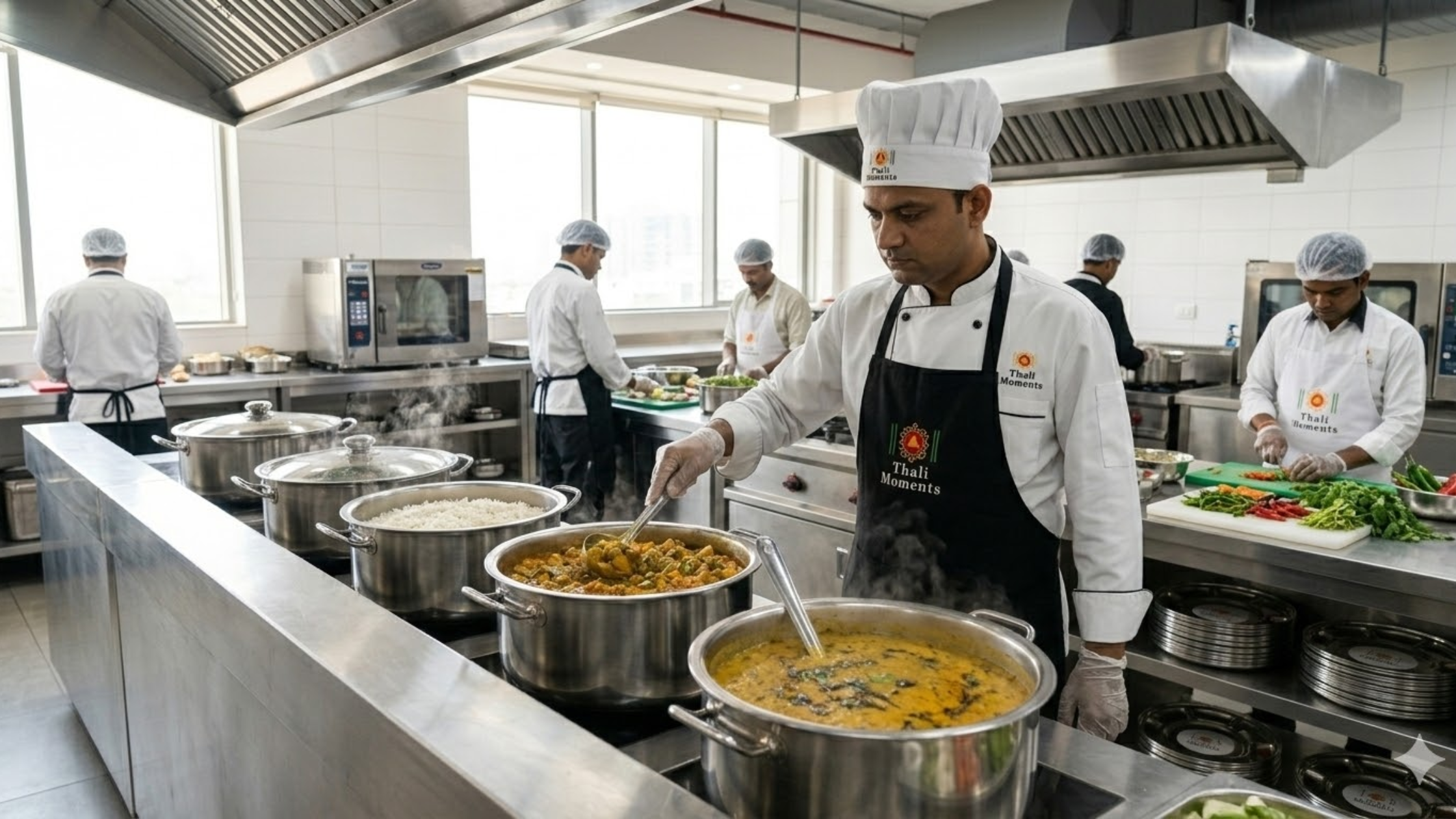
We prepare authentic Maharashtrian and Indian food using fresh ingredients and traditional recipes, with a focus on hygiene, consistency and timely service. Our trained and medically certified staff follow strict cleanliness practices, while our cooking avoids soda and harmful additives.
From a carefully prepared festive meal at home to food served for a large community gathering, the intention remains the same:
Food should bring people together.
And perhaps that is the real journey from naivedya to prasad. What begins as an offering ultimately becomes something everyone can share.
Also Read
Share On