From Naivedya to Prasad: The Story Behind Maharashtrian Festival Food
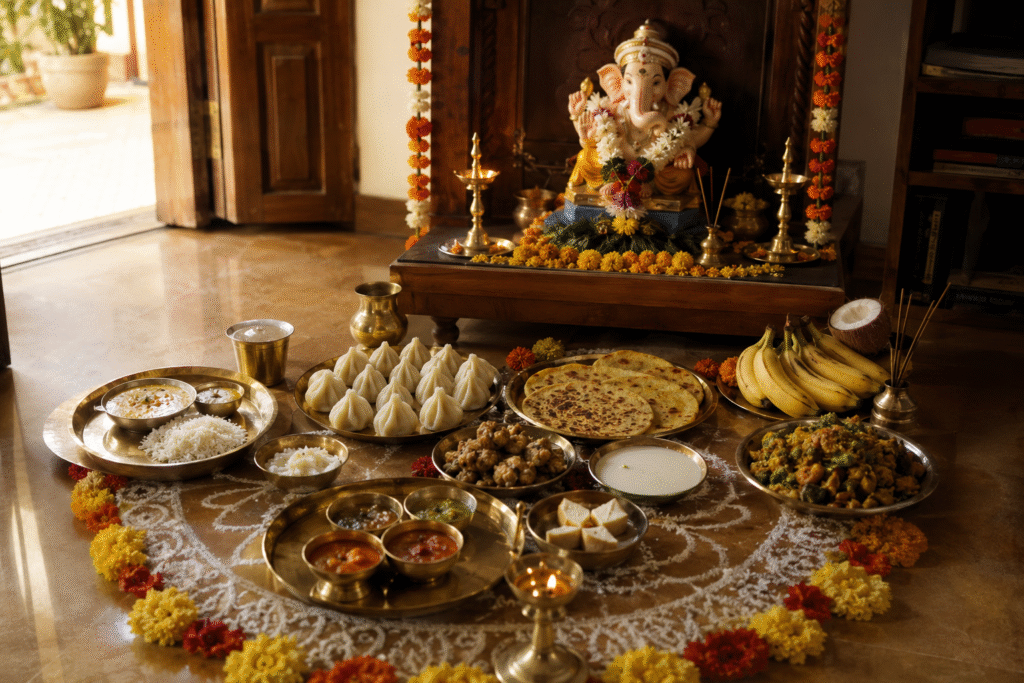
From Naivedya to Prasad: The Story Behind Maharashtrian Festival Food There is something different about food prepared for a festival. The same kitchen that makes everyday bhaji and poli suddenly feels a little more special. Ingredients are chosen with greater care. Recipes that may not appear on the table every day make an appearance. Someone is awake earlier than usual, preparing sweets, grinding spices or stirring a festive dish. And then comes that familiar moment.The food is placed before the deity. For a few moments, nobody touches it. What was prepared as naivedya is offered with devotion. Once the offering is complete, it becomes prasad, shared with family, friends and sometimes an entire community. The food hasn’t changed. But its meaning has. That simple transition tells us a lot about Maharashtra’s relationship with food, festivals and togetherness. What Is Naivedya? In Hindu traditions, naivedya refers to food offered to a deity as part of worship. The preparation itself is considered important. Food is prepared with care and cleanliness, and depending on the festival and family tradition, the offering may include sweets, rice preparations, vegetables, fruits or other specially prepared dishes. There isn’t one universal Maharashtrian naivedya. It changes with the festival, region, season and family customs. And that variety is what makes Maharashtrian festival food so fascinating. When Food Follows the Festival Maharashtra’s festivals have always been closely connected with food. During Ganesh Chaturthi, modak is perhaps the most recognisable example. Ukadiche modak, with its steamed rice-flour covering and coconut-jaggery filling, has become almost inseparable from Ganpati celebrations. But festive food extends well beyond modak. During Gauri celebrations, families may prepare an elaborate meal as part of welcoming and worshipping Gauri. Other festivals bring their own combinations of sweets, savouries, grains, vegetables and seasonal preparations. The dishes may differ, but the idea remains consistent: food becomes part of the celebration rather than simply something served alongside it. Seasonal Food Has Always Been Part of the Tradition Traditional Maharashtrian festival food is also closely connected to the seasons. Fresh coconut, jaggery, peanuts, seasonal vegetables, lentils, grains and fruits have historically found their way into festive preparations. This wasn’t simply about flavour. Before modern food distribution made almost every ingredient available year-round, seasonal cooking was a natural part of everyday life. Festivals gave these ingredients another role. They became part of recipes associated with particular times of the year, creating food traditions that people began to anticipate. From Offering to Sharing Perhaps the most beautiful part of the tradition comes after the offering. The food is shared. A portion may be given to family members. Neighbours may receive some. Children wait for their share. During larger celebrations, prasad can reach hundreds of people. This is where the journey from naivedya to prasad becomes more than a ritual. Naivedya is offered. Prasad is received. Sharing it turns an individual act of devotion into a collective experience. And this idea of sharing is deeply woven into Maharashtrian hospitality. Why Festival Food Carries So Much Nostalgia There is another reason festive food feels different: memory. A dish prepared only once or twice a year naturally becomes associated with anticipation. The first modak of Ganpati season. The first batch of Diwali faral. A particular sweet prepared exactly the way Aaji used to make it. The ingredients may be familiar, but the occasion changes the experience. Festive food becomes connected to decorations, prayers, family visits, music and childhood memories.That is why a single bite can sometimes take you straight back to your grandmother’s kitchen. Every Family Has Its Own Tradition Ask different Maharashtrian families what they prepare for the same festival, and you’ll rarely get exactly the same answer. One family may insist on a particular sweet. Another may prepare a specific vegetable. Someone else may have a recipe that exists only in their household. Many of these recipes aren’t preserved in cookbooks.They survive through memory. Someone remembers how much jaggery was used. Someone knows exactly how soft the dough should feel. Someone calls an older family member every year to ask, “How did you make this again?” That is how food heritage survives. Not just through written recipes, but through people cooking together. When the Home Kitchen Becomes a Community Kitchen As celebrations grow, so does the scale of preparation. A family meal can become a housing society celebration. A neighbourhood Ganpati can serve hundreds. A community festival may require food to be prepared and served for an even larger gathering. The challenge is to increase quantity without losing the character of the food. That requires planning, experienced cooks, ingredient management, careful timing and organised service. The principles, however, remain familiar. Fresh ingredients.Traditional flavours. Thoughtful preparation. And food made with the people eating it in mind. Keeping the Tradition Alive Festival food traditions aren’t preserved by simply talking about them. They’re preserved by cooking them. By teaching children why a particular dish is prepared. By asking grandparents about recipes before they disappear. By inviting neighbours to share a meal. By continuing to make traditional food even when convenience makes ordering everything easier. Tradition doesn’t have to remain frozen in time.It simply needs to remain alive. The Thali Moments Way At Thali Moments, we see festival catering as an opportunity to bring the warmth of the Maharashtrian home kitchen to larger gatherings. From Ganpati and Gauri celebrations to Diwali gatherings, community events, corporate celebrations and family functions, we create menus inspired by the flavours and traditions that make festive food special. We prepare authentic Maharashtrian and Indian food using fresh ingredients and traditional recipes, with a focus on hygiene, consistency and timely service. Our trained and medically certified staff follow strict cleanliness practices, while our cooking avoids soda and harmful additives. From a carefully prepared festive meal at home to food served for a large community gathering, the intention remains the same: Food should bring people together. And perhaps that is the real journey from naivedya to prasad. What begins as an offering ultimately becomes something
From Home Kitchen to Community Feast: How Festival Food Brings People Together
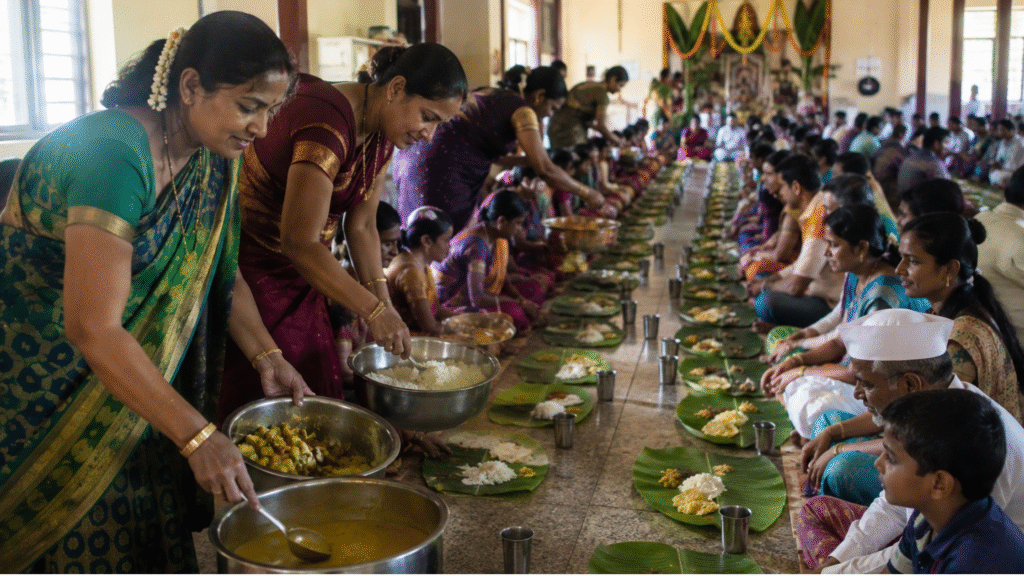
From Home Kitchen to Community Feast: How Festival Food Brings People Together There is something about a festival kitchen that makes an ordinary day feel different. The kitchen becomes busier. More vessels appear on the stove. Ingredients are bought in larger quantities. Family members who normally stay out of the kitchen suddenly have a job to do. Someone is chopping vegetables.Someone is preparing sweets.Someone is tasting the amti for the third time.And someone, usually a child, is waiting for the food to be ready.This is how many Maharashtrian festivals begin: with food being prepared together. But what starts in a home kitchen can grow into something much larger. A family meal can become a housing society gathering, a neighbourhood celebration or a community feast serving hundreds of people. The scale changes.The meaning doesn’t. Food Has Always Been Part of the Celebration In Maharashtra, festivals and food have always gone hand in hand. Ganpati brings modak and festive naivedya. Gauri celebrations bring elaborate meals. Diwali brings faral. Other festivals bring their own seasonal dishes and traditions. These aren’t simply menus associated with particular dates.They are food memories passed between generations. A recipe may remind someone of their grandmother. A particular sweet may mean that the festival has officially begun. A familiar aroma from the kitchen can bring back childhood celebrations almost instantly. Food gives a festival a flavour you can actually remember. The Home Kitchen Is Where It Starts Traditional festival cooking often begins long before guests arrive. Ingredients are purchased, cleaned and prepared. Some dishes are made in advance. Others are cooked closer to mealtime.And because festival food is rarely just one dish, the kitchen becomes a small exercise in coordination.One person prepares the vegetables. Another works on sweets. Someone handles the rice while another manages the breads. It’s not necessarily organised in the way a professional kitchen is. But somehow, everyone knows what needs to happen. That is part of the beauty of a traditional Indian household. Cooking becomes a shared activity rather than an individual task Then the Guest List Grows The transition from family celebration to community celebration changes the equation. Cooking for 15 people is one thing.Cooking for 300 is something else entirely. Suddenly, quantities need to be calculated carefully. Ingredients have to be sourced in bulk. Preparation needs to begin earlier. Cooking must happen in batches. Serving needs to be coordinated.Food also has to remain fresh and maintain its quality throughout service. This is where professional community catering in Pune becomes particularly important.The challenge isn’t simply making more food. It’s making more food without losing the flavour, consistency and character of the original dishes. The Community Feast Is About More Than Food Walk into a traditional community meal and you’ll notice something interesting.People who may never have met before are sitting beside each other. Volunteers are serving food.Someone is making sure an elderly guest is comfortable.Children are watching what everyone else is eating.Plates are being refilled. For a short while, the usual boundaries disappear.A feast creates a shared experience. Everyone receives the same food. Everyone sits together. Everyone participates in the same celebration.That is the quiet social power of food. Why Maharashtrian Food Works So Well for Community Celebrations Maharashtrian cuisine has a natural advantage when it comes to large gatherings.Many traditional dishes can be prepared in larger quantities while retaining their character when the cooking process is planned properly. Rice, dal, amti, usal, vegetable preparations, puris, sweets and several traditional accompaniments can come together to create a satisfying and varied meal.But large-scale cooking requires more than simply using larger vessels. Ingredient proportions, cooking time, spice balance, batch sizes and serving temperatures all need to be managed carefully.The recipe may remain the same.The process becomes much more sophisticated. The People Behind the Feast At a large festival gathering, guests see the final meal. Behind it is a team of people working long before the first guest arrives. Chefs prepare the food. Kitchen staff organise ingredients. Servers coordinate the buffet or dining area. Someone monitors replenishment. Someone checks whether everything is ready for the next service. And when hundreds of people are being served, timing becomes critical. Good catering often feels effortless to the guest precisely because so much effort happens out of sight. From Aaji’s Kitchen to Today’s Celebrations Festival traditions are changing. Families are smaller. People have busier schedules. Large community celebrations are increasingly common. Professional catering has become a practical way of preserving elaborate food traditions without placing the entire burden on one household. But this doesn’t mean the tradition disappears. The recipes can still remain. The flavours can still remain. And most importantly, the reason for preparing the food can remain. To bring people together. That may be the most important part of all. The Thali Moments Way At Thali Moments, we believe festival catering should retain the warmth of food prepared at home while having the organisation required to serve a much larger gathering. From Ganpati and Gauri celebrations to Diwali events, community gatherings, family functions and corporate festive celebrations, we create traditional Maharashtrian and Indian menus for different occasions and guest sizes. Our food is prepared using fresh ingredients and traditional recipes, with trained and medically certified staff following strict hygiene and cleanliness practices. We also avoid soda and harmful additives, keeping the focus on authentic flavour and quality. Whether it’s a family meal around a small dining table or a community feast serving hundreds, the purpose remains the same: Bring people together around good food. Because a festival isn’t remembered only by what we celebrated. It’s remembered by who sat beside us, what we ate together, and how it made us feel. Also Read How Much Food Should You Plan Per Guest? A Complete Catering Guide 7 Questions You Should Always Ask Before Hiring a Caterer The Last Hour Before Service: Inside the Most Critical Moment of Catering How to Keep Food Hot, Fresh, and Flavorful at Large Events Share On Recent Posts
How a Catering Kitchen Plans for Unexpected Challenges
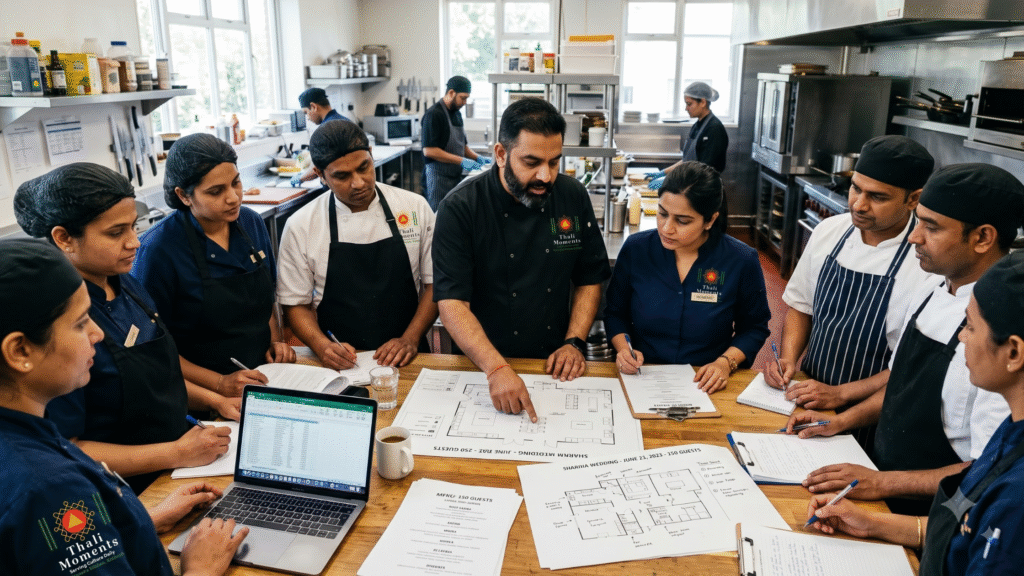
How a Catering Kitchen Plans for Unexpected Challenges A wedding is scheduled for 1:00 PM. The menu is finalised, the ingredients have been purchased, the kitchen team is ready, and the venue has been prepared. Then the phone rings. The venue entrance is delayed. Or the guest count has suddenly increased. Or rain has started just as the outdoor service area is being set up. For the host, these moments can feel like a crisis. For an experienced catering team, they are part of the job. Successful event catering in Pune isn’t about expecting everything to go exactly according to plan. It is about having enough planning, experience and flexibility to handle the things that don’t. Good Catering Starts With a Backup Plan Most guests see the final meal. They don’t see the planning behind it. Before a large event begins, a professional catering team considers more than the menu and guest count. They look at the venue, access points, kitchen facilities, transportation, service timing, staffing and possible points of disruption. The objective isn’t to predict every possible problem. That would require a rather heroic amount of crystal-ball work. The objective is to identify the most likely risks and have a response ready. That could mean keeping additional ingredients available, planning alternate transport routes, having extra serving staff on standby or ensuring that critical equipment has a backup. What If More Guests Arrive? One of the most common challenges in wedding catering is a guest count that changes at the last minute. A few additional guests may not sound significant, but when several hundred people are being served, even a small increase can affect portions and replenishment. Experienced caterers build a reasonable buffer into their food planning. They also monitor consumption during service rather than waiting until a dish is almost finished. This is where understanding food quantities, guest behaviour and menu composition becomes important. A good caterer doesn’t simply prepare “more food”. They plan intelligently. When Transportation Doesn’t Go According to Plan For off-site catering, the kitchen isn’t always next to the dining area. Food needs to travel from the preparation kitchen to the venue while maintaining quality, temperature and timing. Traffic, road closures, unexpected delays or venue access issues can affect that schedule. Professional catering teams account for travel time, loading sequences and unloading priorities. Food isn’t simply packed and sent off. The movement of each component needs to be coordinated with the service schedule. Because a dish arriving twenty minutes late isn’t particularly useful just because it was cooked perfectly. Weather Can Change Everything Outdoor events have their own set of challenges. Rain can affect the serving area. Heat can influence food holding conditions. Strong winds can make temporary setups difficult. This is especially relevant during Maharashtra’s monsoon season, when weather can change quickly. A good catering plan therefore considers whether the venue has covered service areas, alternative spaces and suitable arrangements for food storage and service. The best contingency plan is often the one guests never notice. Last-Minute Menu Changes Occasionally, a client may request a change close to the event. Perhaps a particular dish needs to be replaced. Perhaps additional vegetarian or dietary requirements emerge. Sometimes a family simply remembers one favourite dish that they forgot to include. Not every request can or should be accommodated at the last minute. But an experienced catering team knows how to assess what is realistically possible without compromising the quality of the rest of the menu. That distinction matters. Saying yes to everything sounds helpful until it creates problems elsewhere. Equipment and Power Issues Large-scale catering depends on equipment, electricity, refrigeration, cooking vessels and service infrastructure. A professional kitchen plans around these dependencies. Critical equipment should be checked before the event. Cooking schedules should account for the available facilities at the venue. Teams should know what alternatives are available if something doesn’t work as expected. Preparation is much cheaper than improvisation during service. The Most Important Contingency: The Team Plans are useful. People make them work. When something unexpected happens, the catering team needs to know who is responsible for what. One person may coordinate with the venue. Another may manage the kitchen. Someone else may monitor the service counters. Clear responsibilities prevent five people from trying to solve the same problem while nobody handles the actual issue. And perhaps most importantly, the team needs to remain calm. Guests don’t need to know that something went wrong behind the scenes. They simply need their meal to arrive as planned. Why Experience Matters There is a difference between knowing what should happen and knowing what to do when it doesn’t. An experienced catering team has usually encountered enough real-world situations to recognise problems early. They know when a dish needs to be replenished. They know when service is moving too slowly. They know when a transport delay could affect the next stage. They know which problems require immediate action and which ones can simply be monitored. That experience becomes invisible when everything goes smoothly. And that is precisely the point. The Thali Moments Approach At Thali Moments, planning for the unexpected is part of delivering reliable catering services in Pune. Whether we are catering a Maharashtrian wedding, corporate event, family celebration or a large gathering, our teams plan around guest numbers, menu requirements, venue logistics, food movement and service timing before the event begins. Our focus is on combining authentic Maharashtrian and Indian food with disciplined catering processes. We use fresh ingredients, avoid soda and harmful additives, and follow strict cleanliness and hygiene practices. Our medically certified and trained staff are prepared to manage large-scale service while maintaining the quality and consistency expected from every plate. Because good catering isn’t about having a perfect event. It’s about being prepared when the event isn’t perfect. Also Read How Much Food Should You Plan Per Guest? A Complete Catering Guide 7 Questions You Should Always Ask Before Hiring a Caterer The Last Hour Before Service: Inside the Most Critical Moment
8 Forgotten Maharashtrian Recipes That Deserve a Comeback
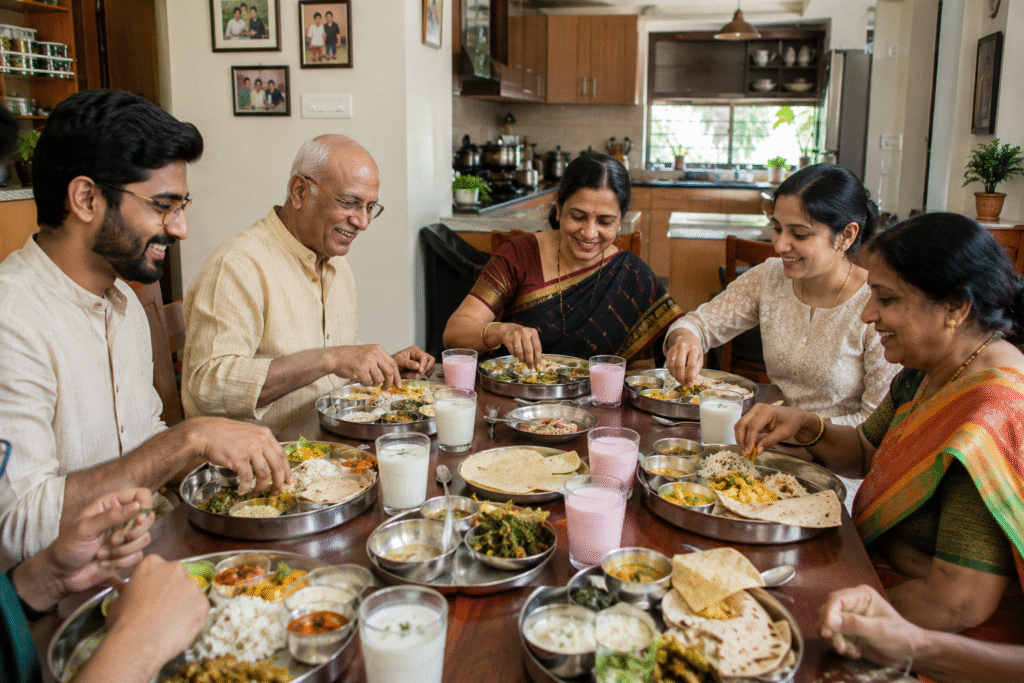
8 Forgotten Maharashtrian Recipes That Deserve a Comeback Ask someone about Maharashtrian food, and you’ll probably hear the same familiar names: Puran Poli, Misal Pav, Vada Pav, or Modak. While these dishes have rightly earned their place in the spotlight, they represent only a small part of Maharashtra’s rich culinary heritage. Step into an old family recipe diary or speak to your grandparents, and you’ll discover a completely different world of food. A world where seasonal vegetables, locally grown grains, and simple ingredients came together to create meals that were nourishing, flavourful, and deeply connected to everyday life. Over the years, changing lifestyles, faster cooking methods, and evolving food preferences have quietly pushed many traditional recipes out of our kitchens. Yet these forgotten dishes still carry the stories, wisdom, and flavours of Maharashtra. Here are eight authentic Maharashtrian recipes that deserve a comeback. 1. Patwadi Rassa Made from steamed gram flour (besan) layered, sliced, and simmered in a spicy coconut-based gravy, Patwadi Rassa is a perfect example of how Maharashtrian cooking transforms simple ingredients into something extraordinary. Popular in western Maharashtra, this dish offers rich flavours without relying on expensive ingredients. 2. Bharli Tondli Before flavoured drinks filled supermarket shelves, many Maharashtrian homes welcomed guests with Ghol. Prepared using buttermilk, roasted cumin, coriander, and fresh herbs, it was refreshing, light, and perfect for the summer heat. It also naturally supported digestion after a hearty meal. 3. Ghol 4. Alu Wadi Today, many people buy frozen versions from supermarkets, but homemade Alu Wadi remains unmatched. Fresh colocasia leaves are coated with a sweet, tangy, and spicy gram flour paste, rolled carefully, steamed, sliced, and lightly tempered. Every bite offers multiple textures and flavours, making it one of Maharashtra’s finest snacks. 5. Kakdichi Koshimbir Simple doesn’t mean ordinary. Kakdichi Koshimbir, made with cucumber, fresh coconut, roasted peanuts, and a delicate tempering, has long been an essential part of traditional Maharashtrian meals. It brings freshness, crunch, and balance to the thali while naturally cooling the body. 6. Ambat God Dal Unlike regular dal preparations, Ambat God Dal perfectly balances sweetness, tanginess, and spice. Jaggery, tamarind, peanuts, coconut, and goda masala come together to create a comforting dish that pairs beautifully with steamed rice. It reminds us that Maharashtrian cuisine has always celebrated balance rather than overpowering flavours. 7. Dashmi Often mistaken for an ordinary flatbread, Dashmi is made by kneading wheat flour with turmeric, chilli powder, sesame seeds, and spices. It stays soft for hours, making it ideal for travel, picnics, and long farming days. It reflects the practicality that shaped traditional Maharashtrian cooking. 8. Shevgyachya Shenga Amti Drumsticks are common in sambhar, but in Maharashtra, they become the highlight of a beautifully flavoured amti. Prepared with goda masala, coconut, tamarind, and jaggery, this dish is wholesome, aromatic, and surprisingly satisfying. It represents the region’s remarkable ability to turn seasonal vegetables into memorable meals. Why These Recipes Matter Today These dishes are more than recipes. They represent a way of cooking that valued local ingredients, respected the seasons, and minimised waste. Long before “farm-to-table” became a global movement, Maharashtrian kitchens were already practising it naturally. Many of these recipes are nutritious, economical, and built around ingredients that remain easily available today. Bringing them back isn’t simply about preserving tradition. It’s about rediscovering food that is wholesome, sustainable, and deeply rooted in our culture. The Thali Moments Way At Thali Moments, we believe authentic Maharashtrian cuisine is about celebrating the richness of our culinary heritage, not just serving popular favourites. Alongside beloved classics, we take inspiration from traditional recipes that have been passed down through generations, preserving the flavours, techniques, and values that make Maharashtrian food unique. Whether we’re catering weddings, family celebrations, corporate events, or creating customised menus, our focus remains the same: fresh ingredients, traditional cooking methods, hygienic preparation, and food free from harmful additives. By combining timeless recipes with professional catering standards, we strive to ensure that Maharashtra’s culinary traditions continue to be experienced and appreciated by every generation. Because every forgotten recipe carries a story worth serving again. Also Read The Art of Serving Guests: Timeless Maharashtrian Hospitality Traditions How to Serve an Authentic Maharashtrian Thali: What Goes Where on the Plate Why a Maharashtrian Thali Is the Most Balanced Indian Meal Share On Recent Posts
The Art of Serving Guests: Timeless Maharashtrian Hospitality Traditions
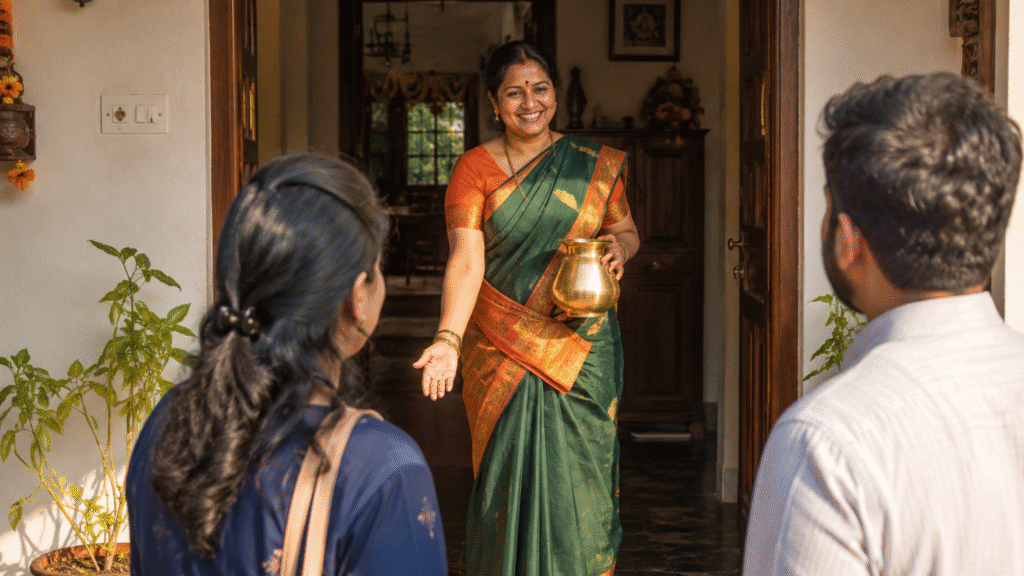
The Art of Serving Guests: Timeless Maharashtrian Hospitality Traditions “Pahile paani ghya…” (“First, have some water.”) If you’ve ever stepped into a Maharashtrian home, you’ve probably heard these words before you’ve even settled into your seat. Within minutes, a glass of water is followed by tea, homemade snacks, and the inevitable question, “Ajun thoda ghya na?” (“Please have a little more.”) Even after politely insisting you’re full, another serving somehow appears on your plate. It isn’t persuasion. It’s affection. Across Maharashtra, hospitality has never been measured by the size of the house or the number of dishes served. Instead, it has always been measured by one simple question: “Did our guest leave happy?” Long before hospitality became an industry, it was simply a way of life. These traditions continue to shape family gatherings, festive meals, weddings, and even modern Maharashtrian catering today. Atithi Devo Bhava: A Guest Is Like God The philosophy of “Atithi Devo Bhava” isn’t unique to Maharashtra, but Maharashtrian homes have quietly lived by it for generations. Guests are never considered an inconvenience. They are welcomed as blessings. Whether someone arrives with prior notice or unexpectedly in the afternoon, the first instinct is never, “Do we have enough food?” It’s, “Let’s make something quickly.” Sometimes that means fresh pohe. Sometimes it means hot tea with homemade chivda. Sometimes yesterday’s vegetables are transformed into a delicious new meal. Hospitality isn’t about abundance. It’s about making people feel they belong. Serving Guests Before Yourself One of the most beautiful customs still found in many Maharashtrian households is that the host eats last. The family’s attention remains on the guests. Is everyone comfortable? Does anyone need more bhaji? Should another chapati be served? Has everyone tasted the sweet? Only after every guest is satisfied do the hosts sit down to eat. This quiet act reflects something deeply rooted in Maharashtrian culture: Serving is considered an honour, not a duty. Why “One More Serving” Is Almost Mandatory Anyone who has attended a Maharashtrian wedding or visited a relative knows that saying “No, thank you” rarely ends the conversation. “Thoda ajun ghya.” “Just one more puran poli.” “A little more amti?” To an outsider, it may seem persistent. To Maharashtrians, it’s simply how affection is expressed. Food becomes the language of care. The second helping isn’t about quantity. It’s reassurance that the guest is truly welcome. The Importance of Serving Fresh and Hot In many Maharashtrian homes, food is rarely prepared hours in advance and left waiting. Chapatis are served fresh. Bhakris come straight off the tava. Dal is tempered just before lunch. Rice is fluffed moments before serving. The belief is simple: Hot food carries warmth beyond temperature. It tells the guest, “You were worth waiting for.” This philosophy continues to influence traditional Maharashtrian wedding catering, where freshly prepared food remains one of the most appreciated aspects of a meal. Every Place on the Plate Has a Purpose A Maharashtrian thali isn’t simply arranged for visual appeal. It follows a thoughtful order developed over generations. Salt sits at the top. Pickles and chutneys stay along the edge. Dry vegetables and curries each have their place. Rice occupies the centre. The sweet is served separately, allowing every flavour to shine. This arrangement isn’t accidental. It balances taste, digestion, and convenience while reflecting the discipline found in traditional Maharashtrian kitchens. Carrying Traditions into Weddings and Celebrations These customs don’t disappear when meals become larger. In weddings, naming ceremonies, anniversaries, and community gatherings, the same principles remain. Guests are welcomed warmly. Food is served generously. Refills are offered with genuine enthusiasm. The goal isn’t to impress with extravagance. It’s to ensure every guest leaves with fond memories of both the meal and the people behind it. This is why authentic Maharashtrian catering continues to resonate across generations. It preserves not just recipes, but values. Why These Traditions Still Matter Today Modern lifestyles have changed the way we gather. Meals are often quicker. Families are smaller. Schedules are busier. Yet these traditions continue because they answer something timeless. Everyone wants to feel welcomed. Everyone remembers being cared for. Long after guests forget the exact menu, they remember the warmth with which they were served. Hospitality leaves a deeper impression than decoration ever can. The Thali Moments Approach At Thali Moments, these traditions inspire every event we cater. Whether we’re serving a wedding, a family celebration, a corporate gathering, or customised meal trays, our approach begins with the same principle found in every Maharashtrian home: every guest deserves to feel genuinely welcomed. Our team prepares authentic Maharashtrian and Indian cuisine using fresh ingredients, traditional recipes, and cooking methods that never rely on soda or harmful additives. Every meal is prepared in hygienic kitchens by medically certified and trained staff, with strict cleanliness protocols followed from preparation to service. Combined with timely delivery and thoughtfully curated menus, we strive to offer more than great food—we create an experience that reflects the warmth and generosity of Maharashtrian hospitality. Because at Thali Moments, serving food isn’t just our profession. It’s our way of welcoming people. Also Read How to Serve an Authentic Maharashtrian Thali: What Goes Where on the Plate Inside a Wedding Kitchen: How We Prepare for 500 Guests and Still Keep It Authentic Share On Recent Posts
Food Safety in Corporate Catering: What Businesses Should Expect
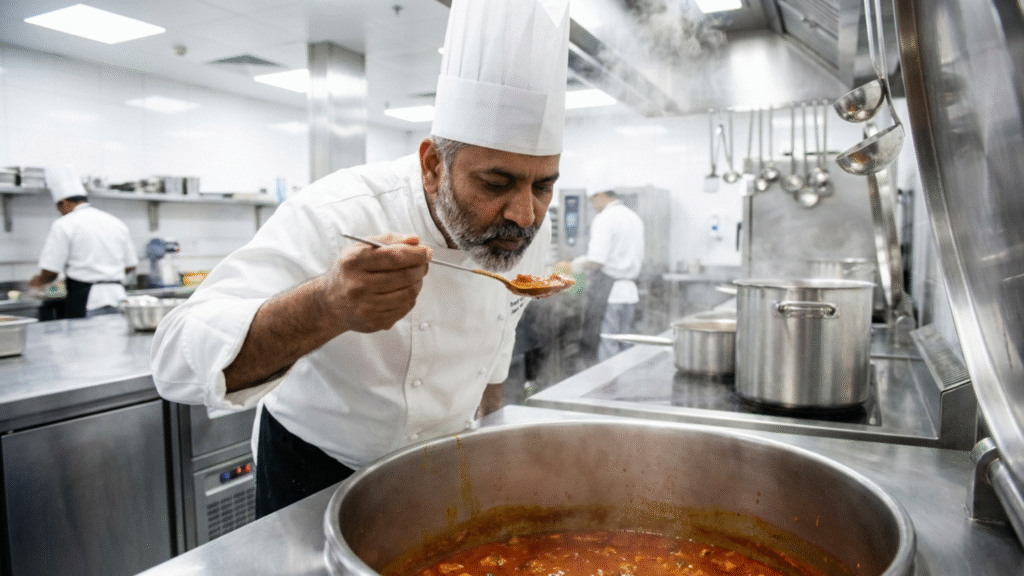
Food Safety in Corporate Catering: What Businesses Should Expect Food safety is not just a regulatory requirement—it is a responsibility. In corporate catering, where meals are served daily to large teams, maintaining hygiene and safety standards is essential. Companies searching for corporate catering in Pune should prioritise food safety as much as taste. Why Food Safety Matters Unsafe food handling can lead to health risks, reduced employee trust, and operational disruptions. Even minor lapses can have large consequences in corporate environments. Food safety ensures: employee well-being consistent quality long-term reliability Clean Kitchens and Processes A professional catering service operates with structured hygiene practices: sanitized kitchen spaces proper storage systems clean cooking equipment Cleanliness is not occasional—it is continuous. Trained and Certified Staff Food handlers must be trained in hygiene and medically fit. This ensures safe food preparation and reduces contamination risks. Companies should always verify: staff health certifications hygiene training kitchen discipline Safe Food Handling and Transport Food safety does not end in the kitchen. Transport plays a major role. Meals must be: stored at correct temperatures transported in sealed containers delivered quickly to avoid spoilage Avoiding Harmful Additives Some caterers use shortcuts like soda or artificial additives to speed up cooking. These affect both taste and health. Quality catering relies on proper cooking methods—not shortcuts. Consistency Is Safety Safe food is not just clean—it is consistently clean. Every batch, every meal, every day. This is what defines professional office catering services. The Thali Moments Approach At Thali Moments, food safety is built into every step of our process. Our kitchens follow strict cleanliness protocols, and our staff are medically certified and trained in safe food handling. We do not use soda or harmful additives in our cooking. Every meal is prepared with fresh ingredients, handled carefully, and delivered in hygienic conditions. Whether it is corporate catering, meal trays, or event services, our focus remains on safe, clean, and dependable food that organisations can trust every day. Share On Recent Posts
What a Maharashtrian Kitchen Teaches Us About Hospitality
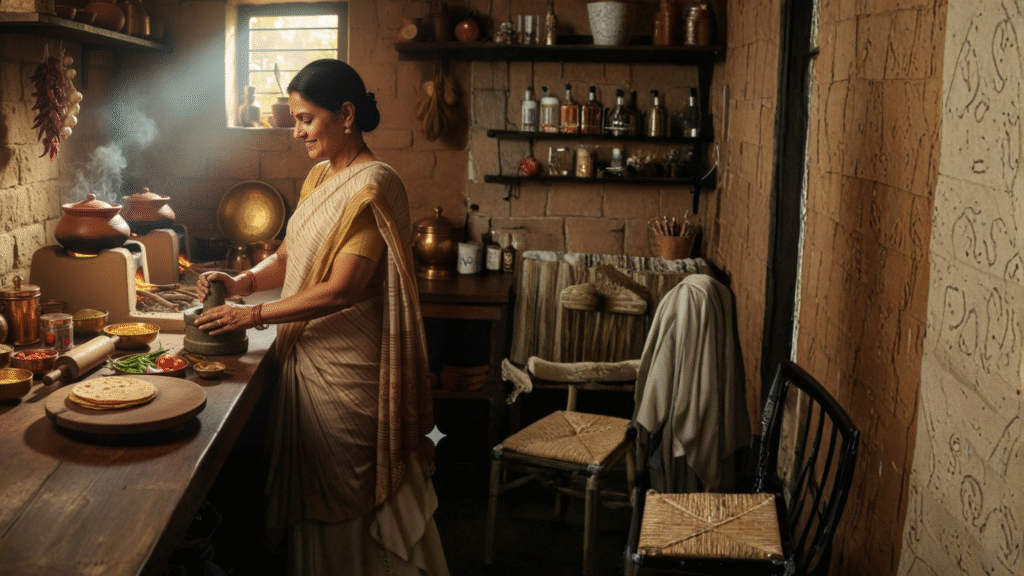
What a Maharashtrian Kitchen Teaches Us About Hospitality Step into a traditional Maharashtrian kitchen, and you’ll notice something immediately—it’s not built to impress. It’s built to serve. Hospitality here isn’t loud or performative. It’s quiet, consistent, and deeply sincere. The Guest Eats First In Maharashtrian homes, food is served without asking twice. Plates are filled before they’re empty. Seconds are assumed, not offered. This instinct carries into event catering. Good service isn’t reactive—it anticipates. Simplicity Is a Sign of Confidence A Maharashtrian kitchen doesn’t hide behind excess. The food speaks for itself.When recipes are honest, there’s no need for decoration or drama. This simplicity builds trust. Guests relax because the food feels familiar, even if it’s their first time eating it. Respect for Ingredients Nothing is wasted casually. Vegetable peels become chutneys. Leftover rice becomes Fodnicha bhaat.This respect creates mindfulness—about food, effort, and resources. At scale, this philosophy translates into responsible catering and minimal waste. Warmth Over Formality Hospitality here isn’t stiff. Servers smile. Conversations happen. Food is explained if asked, never forced. This warmth makes guests feel at home—even in large, formal events. Consistency Is Care Every day’s meal matters. There’s no concept of “this is just for today.”That mindset carries into weddings and events—every plate counts, every guest matters. The Thali as a Philosophy A Maharashtrian thali isn’t just food arranged on steel. It’s a worldview—balanced, generous, and inclusive. At Thali Moments, our kitchens follow the same principles.Serve sincerely. Cook honestly. Feed generously. Because true hospitality isn’t about showing off.It’s about making sure no one leaves hungry—or unheard. These values are deeply woven into how Thali Moments operates every day. Our kitchens follow the same quiet principles—serve generously, cook honestly, and treat every guest with respect. Whether we’re catering an intimate family function or a large wedding in Pune, the intention remains unchanged. Hospitality, for us, isn’t about scale or presentation. It’s about making people feel cared for, one plate at a time. Share On Recent Posts
Wedding Catering in Pune: From Haldi to Reception, The Story Told Through Food
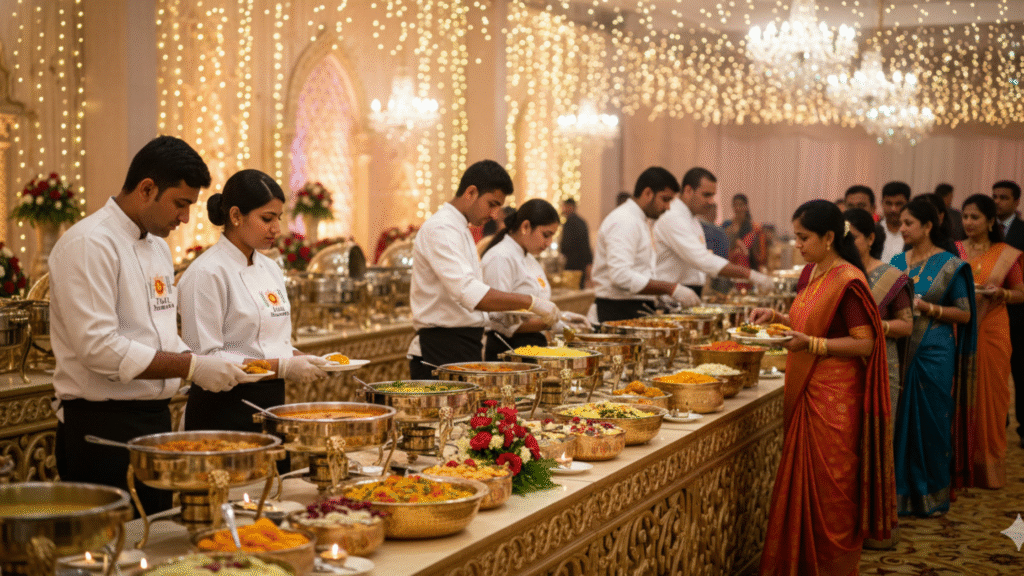
Wedding Catering in Pune: From Haldi to Reception, The Story Told Through Food A Maharashtrian wedding isn’t just a ceremony; it’s a celebration of flavors, emotions, and community. Every ritual, from the vibrant Haldi to the grand Reception, has its own mood and meaning, and the food served at each stage mirrors that perfectly. At Thali Moments, we’ve catered to countless weddings across Pune and Maharashtra, and one truth stands out: when food aligns with the ritual, the event feels complete. Why Food Matters in Every Wedding Ritual Food in a Maharashtrian wedding isn’t just part of the plan—it’s part of the emotion. It marks beginnings (Haldi), blessings (Wedding), celebration (Sangeet), and gratitude (Reception). When planned thoughtfully, each meal becomes a memory—of family sitting together, guests sharing laughter, and aromas that linger long after the event ends. That’s the essence of our work at Thali Moments, one of the best catering services near you in Pune. Our goal isn’t just to serve food—it’s to serve feeling. The Haldi Ceremony: Simplicity and Warmth The Haldi marks the beginning of wedding festivities. It’s an intimate gathering—family, laughter, and turmeric’s golden glow everywhere. Food Mood: Light, home-style, and comforting. Guests prefer simple dishes that refresh and energize without weighing them down. Suggested Menu: Poha, upma, or sabudana khichdi for breakfast. Batata bhaji, puri, and shrikhand for lunch. Cooling drinks like chaas or amrakhand. At Thali Moments, we keep the Haldi menu cheerful and uncomplicated—freshly cooked, beautifully plated, and just right for a morning full of joy. Sangeet or Mehendi: Fun, Fusion, and Flavor When the rituals pause and the dancing begins, the food shifts gears. The sangeet and mehendi functions bring vibrancy and variety, mixing Maharashtrian roots with a hint of modern flair. Food Mood: Playful, colorful, and easy to eat. Suggested Menu: Live counters for chaat, pav bhaji, and misal pav. Finger foods like mini kothimbir vadi, veg cutlets, or paneer tikka. Refreshing mocktails, solkadhi shots, and fruit platters. These menus let guests mingle freely while enjoying flavors that still feel local and nostalgic. The Wedding Ceremony: Sacred and Traditional The main wedding ritual is the soul of the celebration. The energy here is spiritual, sacred, and deeply cultural. The food, too, follows that tone—traditional, sattvik (pure), and balanced. Food Mood: Authentic Maharashtrian, wholesome, and vegetarian. Suggested Menu: Varan-bhaat with toop (ghee) — symbolizes prosperity and purity. Batatyachi bhaji, koshimbir, and amti dal for balance. Puran poli or modak for auspicious sweetness. Papad, pickle, and buttermilk to round off the meal. We focus on the essence of tradition here. Each item on the thali reflects joy, gratitude, and community—the heart of every Maharashtrian mangalashtak. The Reception: Grandeur on a Plate The reception marks the finale—a day of indulgence and elegance. It’s where tradition meets scale, and presentation matters as much as flavor. Food Mood: Royal, diverse, and abundant. Suggested Menu: Maharashtrian thali classics like masale bhaat, zunka bhakri, and bharli vangi. North Indian favorites like paneer butter masala, dal tadka, and naan. Sweet endings: basundi, gulab jamun, or amrakhand. Optional fusion live counters: pasta, mocktails, or dessert bar. At Thali Moments, our reception menus balance authenticity with grandeur—crafted for a Pune audience that loves tradition but welcomes innovation. Final Thought Every Maharashtrian wedding is a story told through rituals. The food, when chosen with care, becomes its language. So whether it’s a humble poha breakfast or a lavish thali for 500 guests, remember—what you serve is what they’ll remember. If you’re planning your wedding in Pune, let Thali Moments help you craft a menu that reflects every ritual and emotion beautifully. Share On Recent Posts
Diwali on a Plate: How Food Lights Up Maharashtra’s Festival of Joy
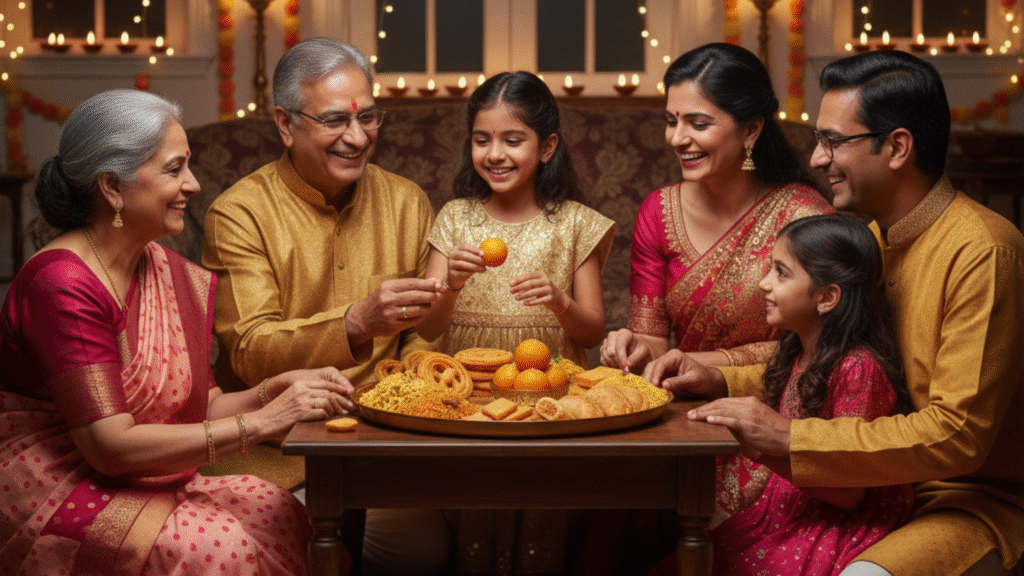
Diwali on a Plate: How Food Lights Up Maharashtra’s Festival of Joy Long before the streets glow with fairy lights, Diwali begins quietly in the kitchen. The crackle of frying oil, the sweet aroma of roasting gram flour, the rustle of aluminium boxes being cleaned for faral storage. Every Maharashtrian home hums with a rhythm that feels both festive and familiar. For many of us, Diwali isn’t just seen or heard; it’s tasted. The Season of Faral and Family Days before Diwali, the house slowly transforms. Mothers and grandmothers tie up their hair, spread old newspapers across the floor, and begin the sacred ritual of faral. The kitchen fills with the sound of the chakli press creaking, children stealing bits of raw shankarpali dough, and the smell of ghee wrapping every corner of the home. Each item made carries its own story and purpose: Chakli – The golden spirals symbolized continuity, strength, and patience. Crisp and spiced, they were a reward for steady hands and careful timing; something every mother seemed to have mastered effortlessly. Karanji – The delicate half-moon pastries, stuffed with roasted coconut and cardamom, were made with a kind of devotion. Watching them puff into golden crescents was a small miracle in itself. Shev – Fried in batches, it added a salty balance to the sweetness around. And the first few strands were always handed over to whoever wandered near the stove. Laddoos – Round, soft, and sweet, they carried warmth in every bite. Whether besan, rava, or copra, each version had one rule, made by hand, never hurried. Anarse and Shankarpali – Reserved for patient hearts. Anarse with its jaggery sheen and shankarpali with its gentle crunch were the essence of a Maharashtrian Diwali with a simple, homemade joy. Even before the first diya was lit, the faral tins sat neatly on the table, covered with embroidered napkins which denotes a promise of celebration ready to unfold. Mornings of Ritual and Aroma Narak Chaturdashi mornings had a ritual order: oil massage, abhyangasnan, new clothes, and the first meal of the season. The fragrance of poha, batata bhaji, and hot jalebis mingled with that of freshly lit incense. The elders would insist on tasting every dish, smiling knowingly as the younger ones rushed through the rituals just to get to the food. That breakfast wasn’t just about eating; it was about welcoming light, starting the new year with warmth and togetherness. The Diwali Thali: A Feast of Balance By the afternoon of Laxmi Pujan, the dining table transformed into a full thali, a true portrait of harmony. Varan-bhaat with ghee for grounding. Batatyachi bhaji and koshimbir for balance. Puran poli, sweet and soft, for prosperity and grace. Papad, pickle, and taak for joy and ease. The plate mirrored life itself containing sweetness and spice, warmth and simplicity, all existing side by side. A Taste That Travels Through Time Ask anyone who grew up in Maharashtra what Diwali tastes like, and you’ll rarely hear just one answer. It’s the first bite of puran poli after prayers, the crunch of chakli shared with cousins, or the lingering smell of roasted besan on a cool October night. Even today, when life has grown faster and kitchens quieter, those flavors call us back. Maybe you don’t make faral from scratch anymore; maybe you order it, or pick it up on your way home. But the first bite still carries that memory. The laughter, the waiting, the togetherness. The Diwali Spirit at Thali Moments At Thali Moments, this nostalgia is what we try to preserve every Diwali. In our kitchen, the process still feels personal; spices roasted in small batches, sweets shaped by hand, and thalis assembled with the same care our grandmothers showed. Because for us, cooking isn’t just about food. It’s about memory. About honoring the light that shines from shared meals and familiar tastes. Diwali is more than rows of diyas and fireworks; it’s the quiet warmth of people coming together, sharing a thali, and remembering where joy truly lives. This season, may your plate hold more than just flavour, may it hold the sweetness of old memories, the spice of laughter, and the comfort of knowing that some traditions never fade, they simply find new homes. Happy Diwali! Share On Recent Posts
The Legacy of the Maharashtrian Thali: More than Just a Meal
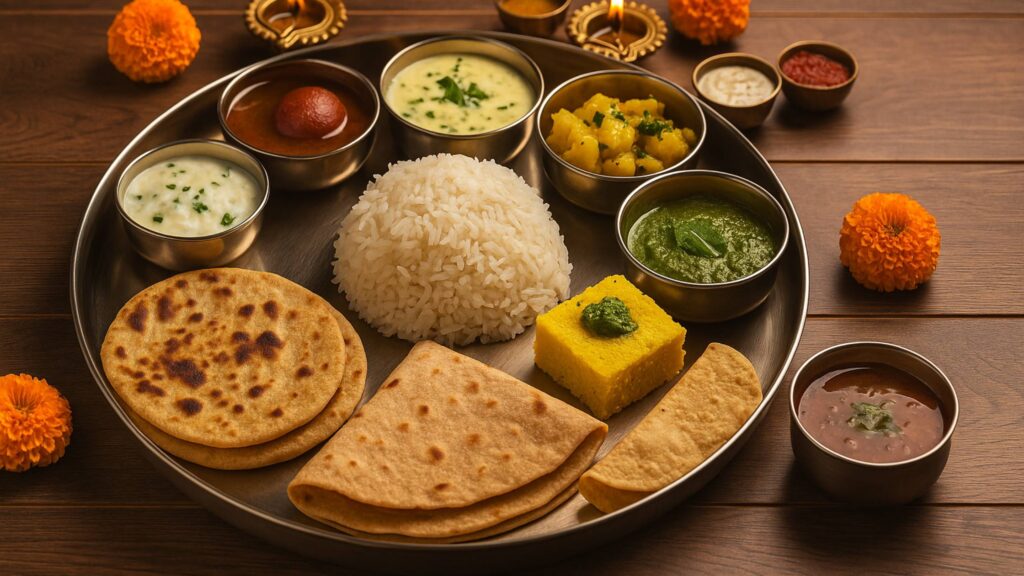
The Legacy of the Maharashtrian Thali: More than Just a Meal In Maharashtra, food has always been about more than merely filling the stomach. It is about the stories passed down in kitchens, the warmth of hospitality, and the unspoken bond between those who share a plate. Nowhere is this more beautifully captured than in the Maharashtrian Thali. A Maharashtrian thali is, in its truest sense a canvas of traditions, festivals, and everyday joys. Each portion on the plate carries a tale of geography and culture. From the earthy comfort of varan-bhaat (simple dal-rice) to the celebratory sweetness of puran poli, the thali mirrors the life of the people of this land. Every bite is grounded yet full of flavour. A Plate of Seasons and Celebrations The thali changes as the seasons do. In summer, aamras makes its way to the plate, cooling the body and celebrating the arrival of mangoes. During Ganesh Chaturthi, modaks sweeten the offering. Weddings see lavish spreads with multiple vegetables, farsan, pickles, and sweets—an abundant display of joy and togetherness. Each festival brings with it a new chapter in the story of the thali. The Philosophy of Balance What makes the Maharashtrian thali truly special is the balance it maintains. Spices are not just about heat; they are about harmony. A spoonful of tangy solkadhi cools the tongue after a spicy bhaaji. A crisp papad adds crunch to the softness of rice and curry. Even nutrition plays its role naturally – grains, pulses, vegetables, dairy, and sweets come together to nourish both body and soul. A Gesture of Love and Respect In Maharashtrian homes, offering a thali is an act of care. Guests are not just served; they are honoured. The host ensures the plate is never empty, a sign that love is endless and hospitality knows no bounds. In villages, it is common for neighbours to send across portions of their festive meals-extending the thali beyond the home, weaving bonds within the community. Beyond Food—A Shared Identity For Maharashtrians living far from home, the thali is often their strongest connection back to their roots. A bite of Jhunka-Bhakri or the first taste of Shrikhand can instantly bring back memories of grandparents’ kitchens, family gatherings, and festivals filled with laughter. It is food as identity, a reminder that traditions live on as long as they are cooked, shared, and savoured. The Maharashtrian thali is not just about what is on the plate—it is about what it represents. It is heritage served in stainless steel, a culture carried forward one meal at a time, and a reminder that food, at its heart, is always about people. Share On Recent Posts